How this guide was researched: This guide is based on manufacturer specifications, independent expert sources (Wirecutter, Pack Hacker, Better Trail, Half Half Travel, Nomads Nation), and verified customer feedback aggregated across multiple review platforms. It does not reflect hands-on testing by Trusted Buyer Report. Updated June 2026.
This article was drafted with AI assistance and fact-checked by our editorial team before publishing. We may earn a commission when you use our links to make a purchase — this never influences our rankings.
TL;DR: Quick Picks for 2026
- Best overall backpack: Cotopaxi Allpa 35L — full clamshell access, carry-on compliant, universally cube-friendly
- Best premium system: Peak Design Travel Backpack 45L + Peak Design Packing Cubes — purpose-built, best-in-class organization
- Best budget-friendly backpack: Osprey Farpoint 40 / Fairview 40 — ergonomic, proven, widely compatible
- Best compression cubes: Nomatic Compression Packing Cubes — actively reduce volume for bulky fabrics
- Best structured cubes: Tortuga Packing Cubes — hold shape when half-empty, calibrated for travel backpacks
- Best for light packers: Fyro Levo 30L + Topo Designs Pack Bag 10L — ultralight combination under 3 lb
Why Almost Every Travel Backpack Guide Gets This Wrong
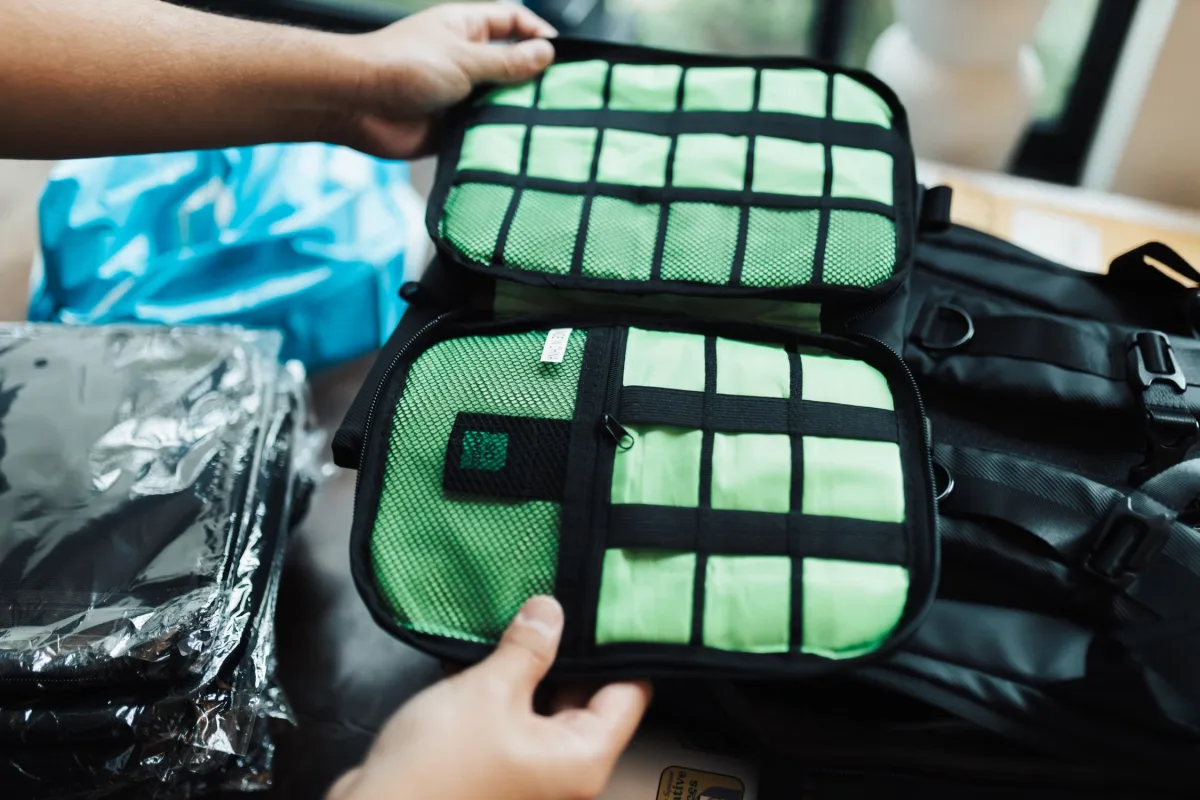
Most roundups treat backpacks and packing cubes as two separate shopping decisions. That's the mistake.
The backpack you choose determines which cubes actually fit, how easily you can reach them mid-trip, and whether your whole packing system survives a two-connection itinerary. Buy the wrong cube for the wrong bag and you'll find yourself repacking on a hostel floor at midnight.
This guide treats the backpack-and-cube combo as a single purchasing decision — because it is. Here's exactly what to look for, which combos work in practice, and which popular pairings create real-world friction.
Before diving in: if you're still planning the broader trip, our complete 2026 travel buyer's guide covering hotels, flights, and vacations is a useful starting point. And if you're debating whether to check a bag or go carry-on only, the best luggage and suitcase guide for 2026 covers that decision in detail.
The 2026 Head-to-Head Snapshot
| Backpack | Capacity | Opening Style | Best Cube Match | Purpose-Built? |
|---|---|---|---|---|
| Peak Design Travel Backpack | 45L | Clamshell + dual side zips | Peak Design Packing Cubes | ✅ Yes |
| Cotopaxi Allpa 35L | 35L | Full 3-sided clamshell (YKK) | Most standard sets | ❌ Universal |
| Yeti Crossroads 35L | 35L | Panel-load | Nomatic Compression Cubes | ❌ Universal |
| Patagonia Black Hole MLC 45L | 45L | Clamshell | Tortuga or Topo Designs | ❌ Universal |
| Osprey Farpoint/Fairview 40 | 40L | Panel-load | Standard cube sets | ❌ Universal |
| Fyro Levo 30L / 36L | 30–36L | Clamshell | Topo Designs 10L | ❌ Universal |
Opening Style: The Factor That Changes Everything
Here's the thing most reviews skip entirely — and the reason for most post-purchase regret.
Clamshell bags (Cotopaxi Allpa, Peak Design, Patagonia Black Hole MLC) open flat like a suitcase. You can see every cube at once and pull out a specific one without disturbing the others. According to Pack Hacker, a clamshell bag "opens literally like a clam — you can easily open it up flat and see everything inside, so it tends to be easier to organize all your travel gear." If you're building a cube-based packing system, this is the opening style you want.
Top-load bags stack cubes vertically. The practical problem: the cube you need is almost always at the bottom. This format predates packing cubes as a product category and it shows.
Panel-load bags (Osprey Farpoint, Yeti Crossroads) are the middle ground — a wide front zip that opens most but not all of the compartment. More accessible than top-load, but you'll still partially unpack to reach items at the back.
One standout: the Peak Design Travel Backpack adds two dedicated side zippers as additional access points — a feature no other bag in this comparison offers. Better Trail's testers found these side sleeves genuinely useful for grabbing a phone or wallet without opening the main compartment at all.
Bottom line: If you use packing cubes, choose a clamshell bag. The organizational gains from good cubes are immediately offset by a top-load bag.
Best Travel Backpacks of 2026: Detailed Breakdown
1. Peak Design Travel Backpack 45L — Best Premium System

Best for: Frequent travelers who want maximum organization and don't mind the price
Peak Design's camera-gear heritage shows in the Travel Backpack's layout. The main compartment opens via a full clamshell zip plus two additional side zippers — three distinct access points that no competing bag offers. Better Trail's testing confirmed the main compartment simultaneously fits a 21L and a 13L packing cube alongside a toiletries bag, a real-world data point that doesn't appear on the spec sheet.
The dorsal pocket houses multiple sleeves for travel essentials; an opposite panel unzips to expand the main compartment. Build quality is exceptional: self-healing zippers, weatherproof fabric, and reinforced shoulder strap stitching that holds up after years of use.
Honest limitation: This is a premium product. Add the purpose-built Peak Design Packing Cubes and the total investment is substantial. Worth it for frequent travelers — harder to justify for one or two trips a year.
Pairs best with: Peak Design Packing Cubes (purpose-built fit) or Nomatic Compression Cubes (for bulky clothing)
2. Cotopaxi Allpa 35L — Best Overall

Best for: Most travelers who want carry-on compliance, easy access, and universal cube compatibility
The Allpa's defining feature is a large YKK zipper that runs around three sides, causing the bag to fall fully open like a hard-sided suitcase. Wirecutter confirmed this makes it one of the most packing-cube-friendly designs on the market — you load cubes side by side, see everything at once, and close the bag without re-stacking.
At 35L, it sits at the upper limit of most airline carry-on size policies. Verify dimensions against your specific carrier before purchasing. The Del Día colorway uses unique fabric combinations, meaning no two bags are identical — a minor but genuinely interesting differentiator.
Why it beats most competitors: Unlike the Peak Design, you're not locked into a proprietary cube ecosystem. Any standard cube set works cleanly.
Pairs best with: Tortuga Packing Cubes, Nomatic Compression Cubes, or most standard cube sets
3. Osprey Farpoint 40 / Fairview 40 — Best Entry-Level Choice
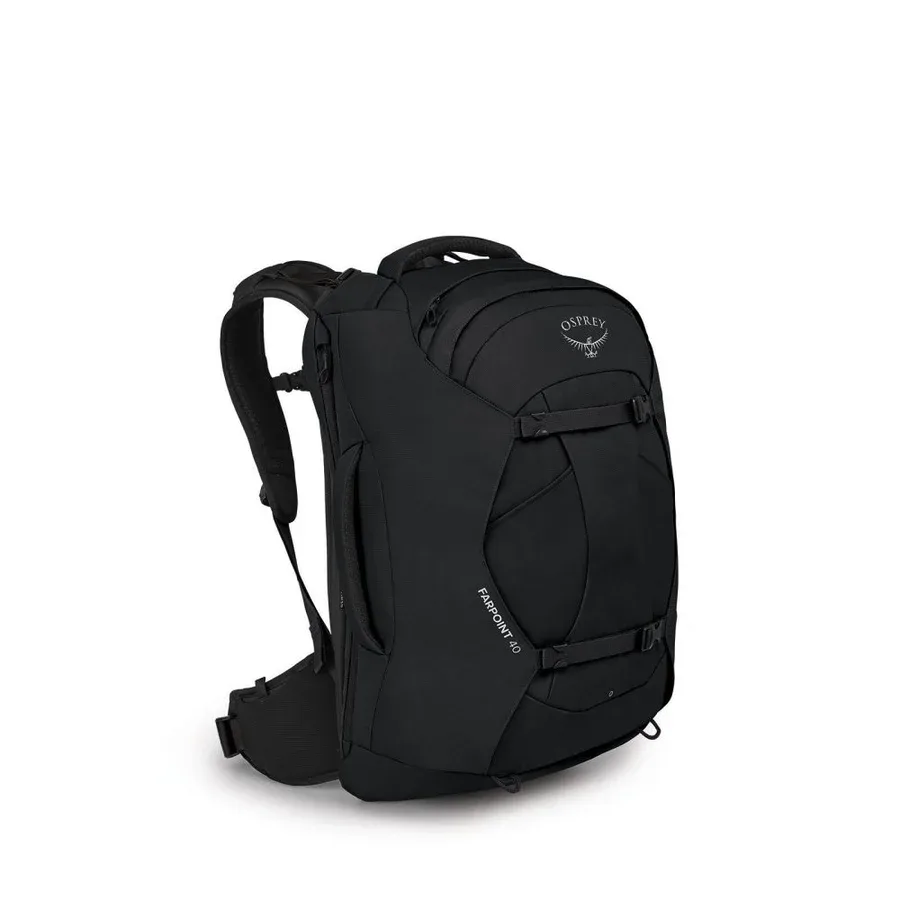
Best for: Budget-conscious travelers and first-time backpack buyers
The Farpoint (men's fit) and Fairview (women's fit) are the most accessible entry point in this category. The lockaway harness tucks straps behind a zip panel for checked baggage or tight overhead bins. The ergonomic back panel distributes weight well for longer carry distances.
Organization is more basic than the Peak Design or Cotopaxi — which is exactly why pairing it with a quality cube set matters most here. The bag's interior becomes whatever your cubes make it.
Honest limitation: Panel-load access creates more friction than a clamshell when you need a specific item quickly.
Pairs best with: Any standard cube set; Tortuga or Topo Designs work especially well given the bag's no-frills interior
4. Patagonia Black Hole MLC 45L — Best for Urban + Outdoor
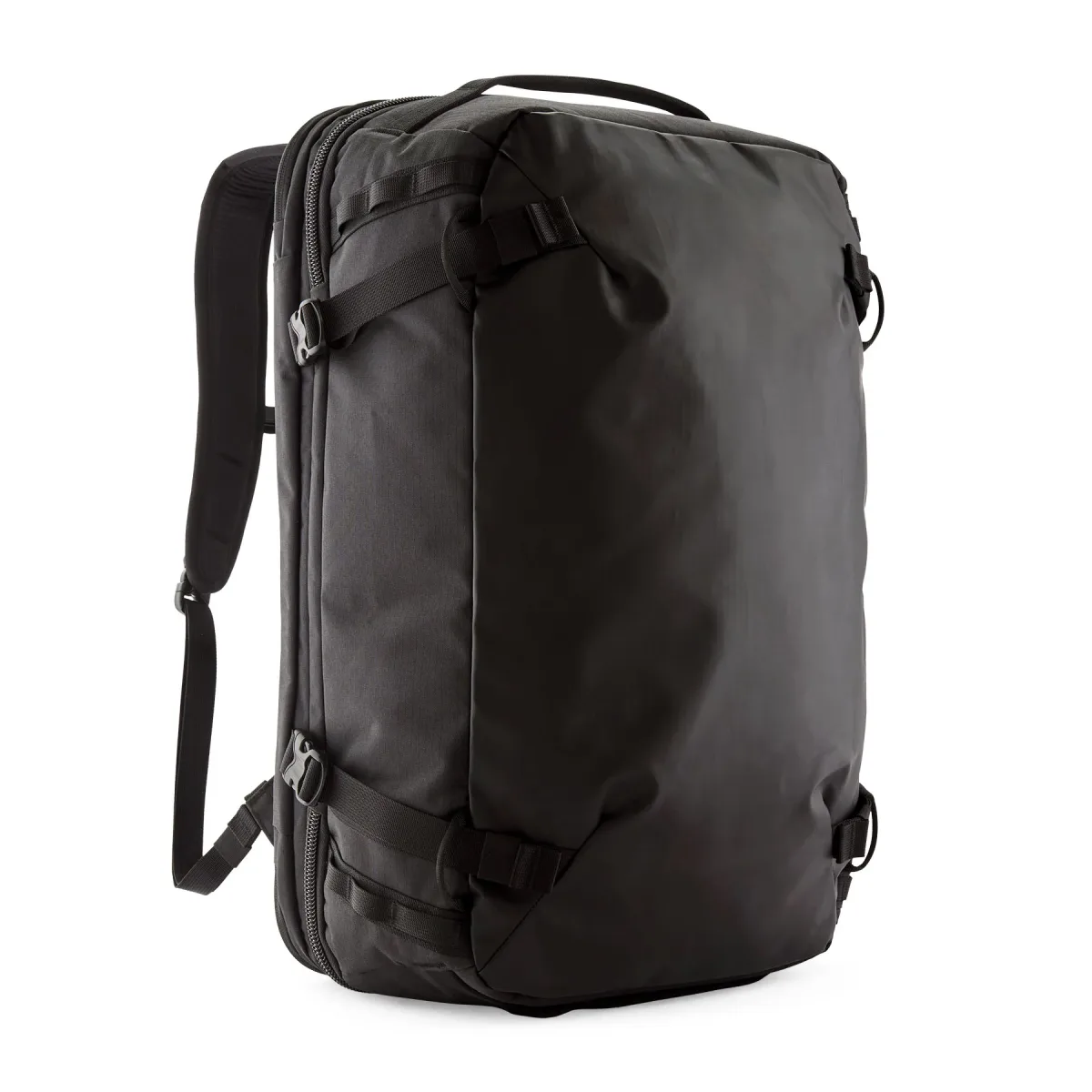
Best for: Travelers who move between city environments and light outdoor settings
MLC stands for Maximum Legal Carry-on — Patagonia designed this bag to hit the largest dimensions most airlines allow. Its weather-resistant exterior handles rain without a separate cover. Multiple carry options (backpack straps, top handle, side handle) add flexibility in crowded transit situations.
Pairs best with: Tortuga Packing Cubes or Topo Designs Pack Bag — matches the bag's durable, practical aesthetic
5. Yeti Crossroads 35L — Best Structured Carry-On Alternative
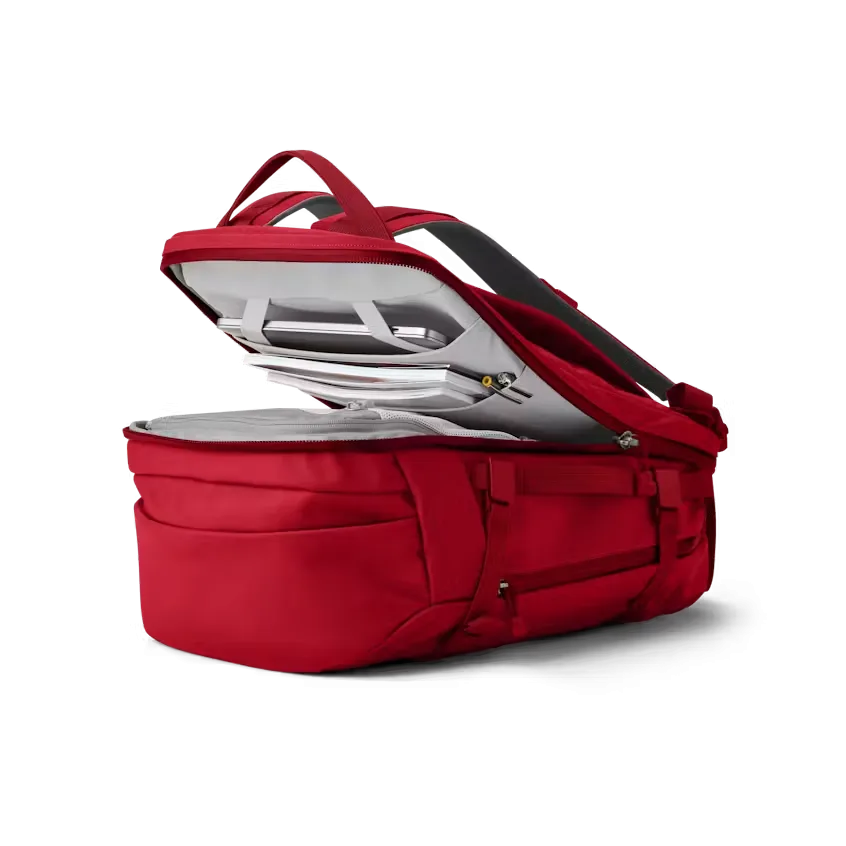
Best for: Travelers who want a structured, laptop-friendly bag that works like rolling luggage
The Crossroads includes a dedicated laptop sleeve and a front zip pocket accessible without opening the main compartment — useful for documents and notebooks at security. Yeti's characteristically durable build is the main draw.
Honest limitation: The panel-load design limits cube accessibility compared to a clamshell. Verify carry-on compliance against your specific airline — at 35L, some low-cost carriers may flag it. For tips on navigating budget airline policies, see our 2026 budget airline comparison covering Spirit, Frontier, and Southwest.
Pairs best with: Nomatic Compression Cubes — their structured shape works well with the bag's panel-load access
6. Fyro Levo 30L / 36L — Best Ultralight Option
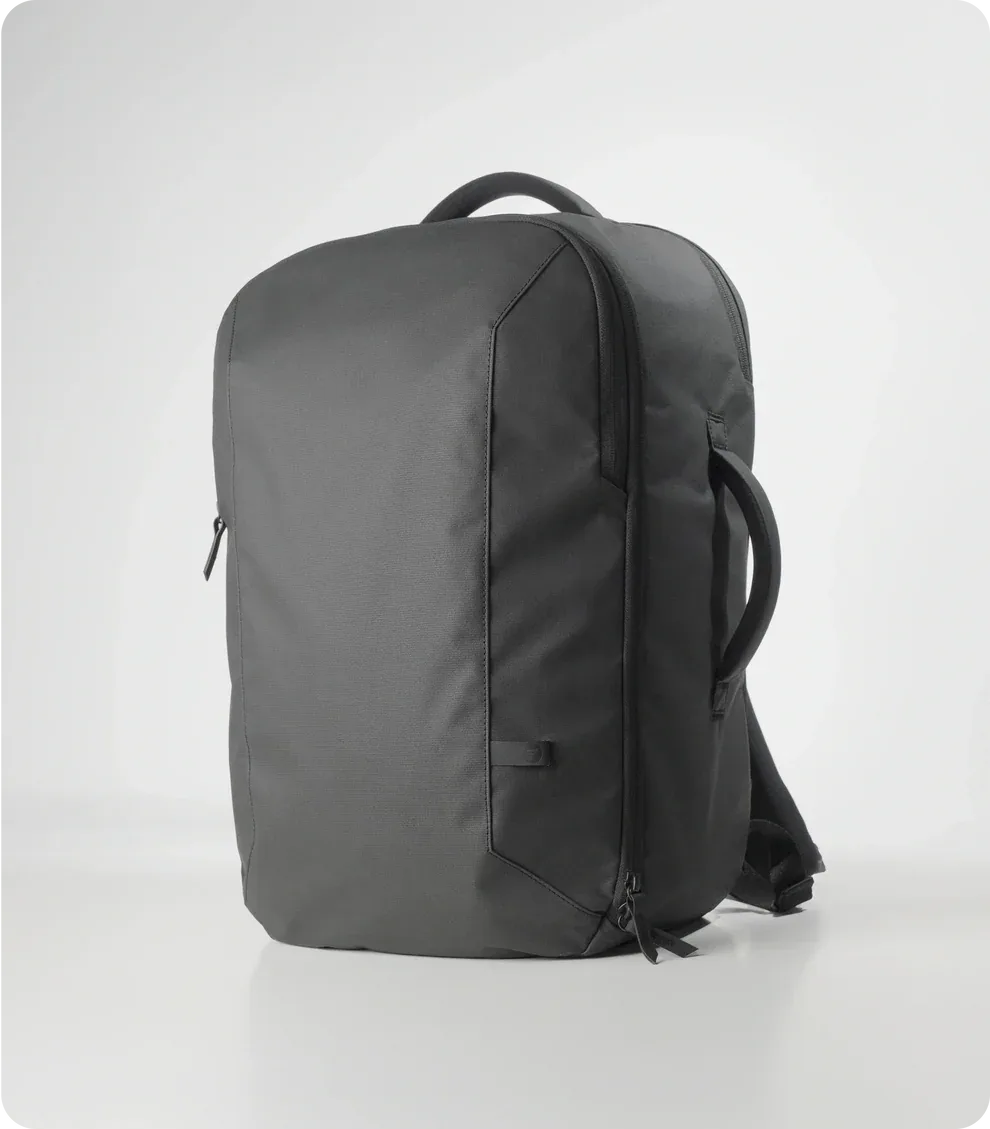
Best for: Minimalist one-bag travelers who prioritize weight
Nomads Nation highlights the Fyro Levo's coated 330D Kodra nylon as a solution to the peeling issues common in cheaper weather-resistant fabrics. The clamshell opening pairs with a bright copper ripstop interior that makes items easy to spot. At 2.3 lb (30L) and 2.5 lb (36L), it's among the lightest options in this comparison.
The simple internal layout leans heavily on cubes for organization — which is not a criticism, just something to know before buying. If your packing system is already cube-based, this works perfectly.
Pairs best with: Topo Designs Pack Bag 10L or lightweight standard cubes
Best Packing Cubes of 2026: What the Testing Shows
Wirecutter's team tested 36 packing cubes over eight years before arriving at their 2026 recommendations — far more rigorous evaluation than most gear categories receive. Their framework organizes the market into four functional types: best for most people, best for light packers, best compression cubes, and best upcycled materials. That structure is more useful than a simple ranked list because it forces you to identify your travel style first.
Peak Design Packing Cubes — Best for Peak Design Backpack Owners
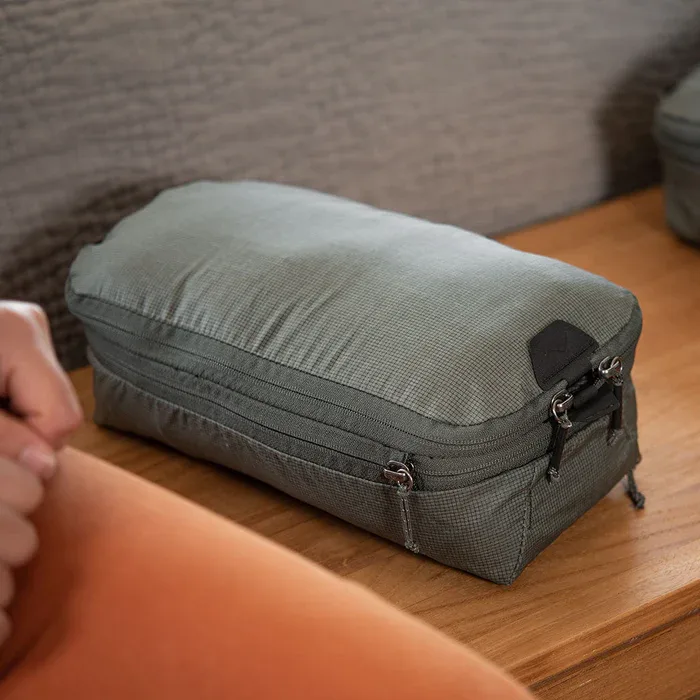
Made specifically for the Peak Design Travel Backpack, these cubes use a self-healing 70D nylon and polyester blend that handles zipper stress better than standard nylon over time. Compressible but not full-compression cubes. Dimensioned to fit the Travel Backpack's interior precisely.
The trade-off: Available in only two sizes. If you don't own the matching backpack, a set that includes small, medium, and large options will likely serve you better.
Nomatic Compression Packing Cubes — Best Compression Option
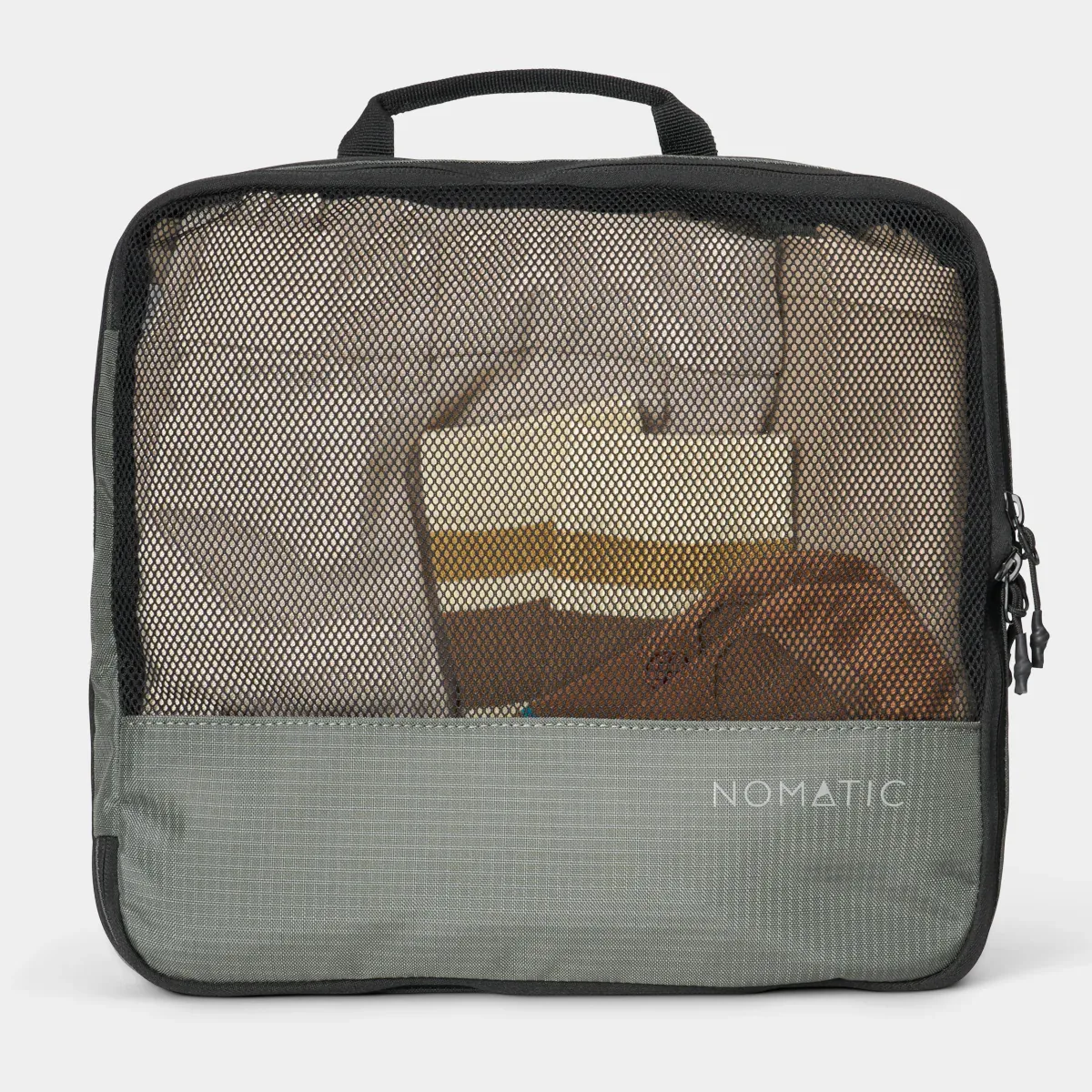
Half Half Travel's author has used Nomatic Compression Cubes across multiple trips since 2022 and describes them as "a dream to use." Their compression mechanism actively reduces volume — most valuable when you're packing bulky fabrics like fleece, down layers, or heavy cotton into a carry-on-sized bag. Compatible with most clamshell and panel-load backpacks.
Who needs compression cubes: Travelers packing in climates that require layering, or anyone struggling to close a 35L bag with a week's worth of clothes.
Tortuga Packing Cubes — Best Structured Option
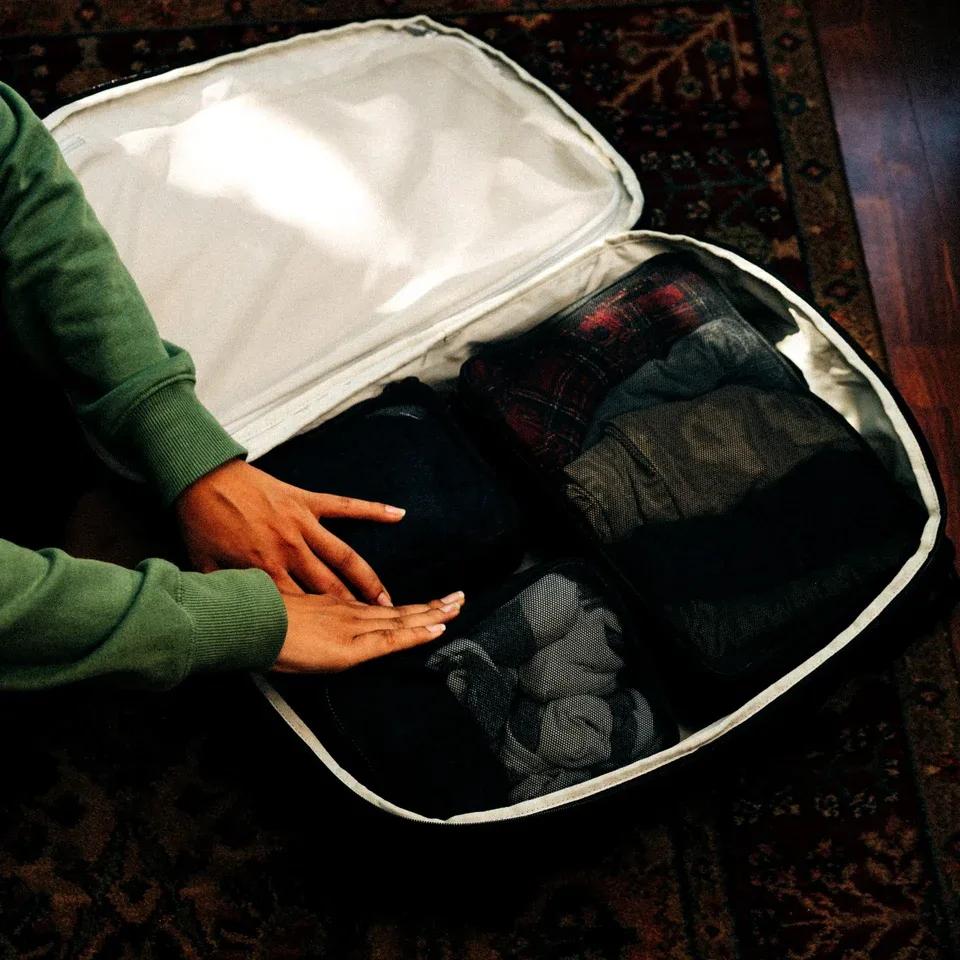
Tortuga takes a deliberate anti-feature stance. Nomads Nation describes them as prioritizing simplicity and durability over extras. The structured X Pac fabric holds its shape in a way that soft cubes don't — preventing the collapse that makes loose cubes harder to stack and access when the cube is only half-full.
Sizing is specifically calibrated to work inside travel backpacks rather than suitcases. If you've been frustrated by cubes that go limp when not completely packed, Tortuga's structured build solves that problem directly.
Topo Designs Pack Bag 10L — Best for Durability and Ethics
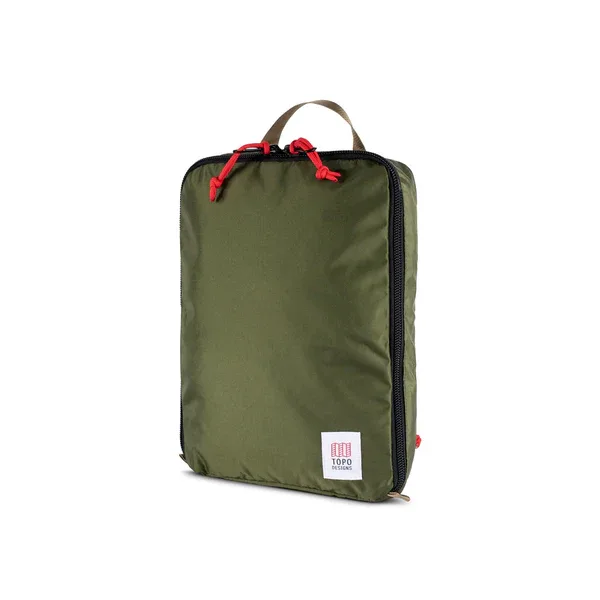
Built from 400D nylon pack cloth with heavy-duty YKK zippers, the Topo Designs 10L cube is one of the most durable single-cube options available according to Half Half Travel. It holds a Fair Wear certification, which matters to travelers who factor ethical sourcing into purchasing decisions.
The honest limitation: The 10L size works best for bulkier items — shoes, sweaters, jackets — rather than as a full clothing system. Wirecutter notes it lacks a mesh viewing panel, a genuine limitation if you rely on visual identification to find items quickly.
Lean Travel Compression Cubes — Best Compression, But Size-Dependent
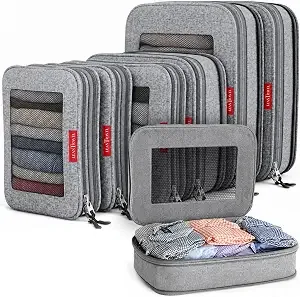
Expert testing found a clear size-to-use mapping: small cube handles undergarments and cotton t-shirts well, medium fits sweaters and jeans, large accommodates jackets and heavy sweatshirts. The significant caveat: their extremely structured shape made them challenging to pack into bags other than suitcases. For backpack travelers with tapered or irregular main compartments, this rigidity is a real compatibility issue.
Bagail 7-Piece Set — Budget Option With Important Caveats
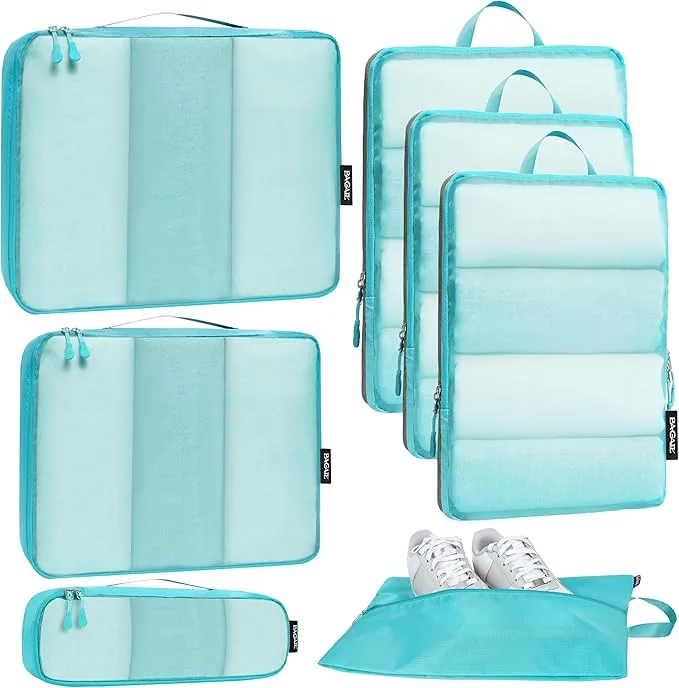
The set includes three standard cubes, three compression cubes, and a zippered shoe bag. Testing found them ultra-lightweight — but only half the cubes offer compression, and only one standard cube has a mesh viewing panel. A mixed compression/non-compression set forces you to remember which cubes do and don't compress, which defeats the organizational logic. If you want a compression-based packing system, every cube in the set needs to compress consistently.
Compression Cubes vs. Standard Cubes: When Is the Upgrade Actually Worth It?
Standard packing cubes organize your gear. Compression cubes organize and reduce volume. The distinction sounds simple — the practical implications depend entirely on what you pack.
Standard cubes are right for you if:
- You already pack within your bag's natural capacity
- You don't travel with bulky cold-weather layers
- You want the simplest possible system
Compression cubes earn their premium when:
- You're packing a down jacket, fleece layers, or heavy cotton into a carry-on
- You regularly struggle to close a 35L bag
- You're taking a trip that spans multiple climates and can't avoid layering fabrics
The rigidity trade-off (underreported): Lean Travel's structured compression cubes are challenging to fit into backpacks with tapered compartments — a problem that doesn't appear in suitcase use. If your bag has a rectangular interior like the Cotopaxi Allpa or Peak Design, rigid compression cubes fit more cleanly. In bags with irregular main compartments, softer compression cubes like Nomatic conform better.
One key insight: The Bagail set's inconsistency — only half the cubes compress — illustrates a common budget-set problem. Building a compression packing system requires every cube to compress. A mixed set defeats the organizational purpose.
How to Choose the Right Combination for Your Travel Style
Here's the decision framework, broken down by use case:
Weekend trips and city travel (2–4 days)
- Bag: Cotopaxi Allpa 35L or Fyro Levo 30L
- Cubes: 2–3 standard cubes (small + medium)
- Why: You don't need compression at this trip length. Simple standard cubes keep categories separated without adding cost or complexity.
One-week trips, carry-on only
- Bag: Cotopaxi Allpa 35L, Osprey Farpoint 40, or Yeti Crossroads 35L
- Cubes: Standard cube set (3 sizes) or Nomatic Compression for cold-weather destinations
- Why: At 7 days, cube organization genuinely earns its value — you're unpacking and repacking at multiple hotels. A clamshell bag pays off.
Two-week trips or longer
- Bag: Peak Design 45L or Patagonia Black Hole MLC 45L
- Cubes: Nomatic Compression (for bulky layers) + 1–2 standard cubes for lighter items
- Why: Compression pays off when you're packing for variable weather or multi-city itineraries. The extra volume of a 45L bag gives you flexibility.
Minimalist one-bag travel
- Bag: Fyro Levo 30L or Cotopaxi Allpa 35L
- Cubes: Topo Designs 10L + one small standard cube
- Why: Lightweight cubes keep the base weight low. The structured Topo 10L prevents the "half-empty collapse" problem.
Frequent flyers dealing with low-cost carrier restrictions
Budget airlines often have stricter personal item and carry-on rules. Before finalizing your bag, check our 2026 budget airline guide and our round-up of the best flight deal sites and apps — knowing your carrier's policies before you buy saves an expensive surprise at the gate.
What Else Belongs in Your 2026 Travel Stack
A well-chosen backpack and cube system is the gear foundation — but the rest of your travel setup matters just as much. A few areas worth reviewing:
- Staying connected abroad: Our best international eSIM and travel Wi-Fi device guide for 2026 covers how to avoid roaming charges on long trips.
- Trip protection: If you're traveling with expensive gear like a Peak Design system, travel insurance in 2026 is worth reviewing — some plans cover gear theft and trip interruption.
- Maximizing rewards: A well-chosen travel credit card can offset gear costs over time. See our best travel credit cards for 2026 and best travel rewards programs for current options.
- Accommodation tradeoffs: Where you stay affects how you pack. Airbnb units often have laundry; hotels rarely do. Our Airbnb vs. Vrbo vs. Hotels comparison for 2026 lays out the tradeoffs.
Frequently Asked Questions
What size travel backpack is best for carry-on? 35–40L is the sweet spot for most airlines' carry-on allowances. The Cotopaxi Allpa 35L and Osprey Farpoint 40 are both designed with carry-on compliance in mind. Always verify your specific carrier's dimensions — low-cost airlines often apply stricter limits.
Do I need packing cubes if I have a well-organized backpack? Yes, with a caveat. Even the best-organized bag (like the Peak Design) benefits from cubes because the organizational burden should sit with the cubes, not the bag's built-in dividers. Wirecutter puts it plainly: some pockets are useful, but major organizing is better managed with packing cubes. The exception is very short trips (1–2 days) where the overhead isn't worth it.
Are compression packing cubes worth the extra cost? Only if you pack bulky fabrics. For lightweight clothing (t-shirts, light pants, undergarments), standard cubes at a fraction of the price work equally well. Compression cubes pay off with fleece, down jackets, jeans, or cotton sweatshirts — particularly for cold-weather destinations.
Can I mix packing cube brands inside one backpack? Yes. Only the Peak Design system benefits from matched cubes because the dimensions are calibrated to the bag's interior. All other bags in this guide work with any standard cube dimensions.
What is the most durable travel backpack under $200? The Osprey Farpoint 40 / Fairview 40 is the strongest answer in this price range. Osprey's All Mighty Guarantee — a lifetime repair or replacement policy — backs the build quality claim in a way that marketing language alone cannot.
Is the Cotopaxi Allpa worth the price? For most travelers: yes. Its full clamshell access eliminates the biggest pain point of travel backpacks, its universal cube compatibility means you're not locked into an ecosystem, and its carry-on dimensions fit most airline policies. The Del Día colorway makes it identifiable on a crowded baggage carousel — a genuinely useful bonus.
The Bottom Line
The backpack-and-cube decision comes down to one primary question: how do you access your gear mid-trip?
If the answer involves frequent access across multiple stops — a clamshell bag (Cotopaxi Allpa, Peak Design, Patagonia Black Hole MLC) combined with structured cubes (Tortuga, Topo Designs) or compression cubes (Nomatic) is the right system.
If you pack light, move fast, and want the lowest possible base weight — the Fyro Levo 30L with a Topo Designs 10L cube is the cleanest ultralight combination in this comparison.
The one combination to avoid: a top-load bag with a compression cube system. You'll be repacking from the bottom every time.
Trusted Buyer Report may earn a commission when you use our links to make a purchase. Our editorial recommendations are completed before any affiliate link is applied and are never influenced by commercial relationships. This article was drafted with AI assistance and fact-checked by our editorial team before publishing. Full disclosure → · How we review →