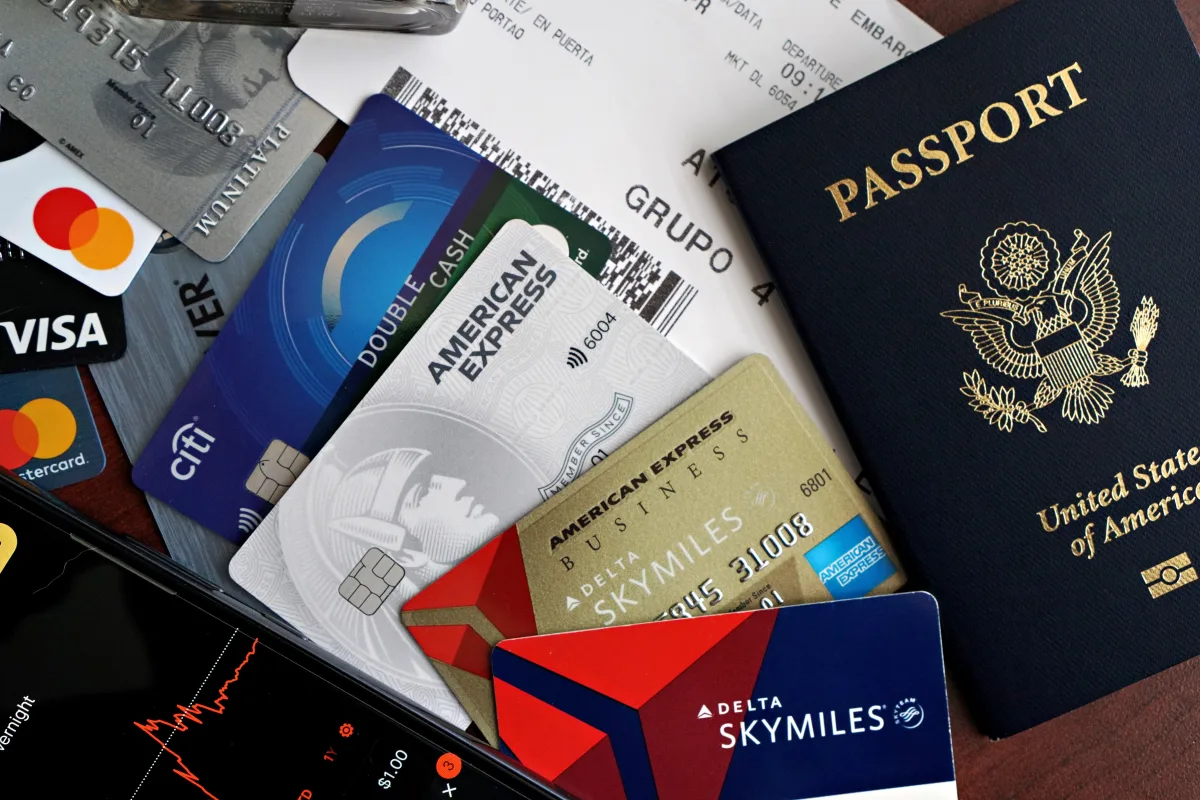
How this guide was researched: This guide is based on publicly available card terms from Chase, Capital One, and other issuers, supplemented by editorial analysis from CreditCards.com, NerdWallet, The Points Guy, and Upgraded Points. It does not reflect hands-on card testing by Trusted Buyer Report. Annual fees and benefits are accurate as of July 2026; always verify current terms on the issuer's website before applying.
TL;DR — Best Travel Cards for Each Traveler Type
| Traveler Type | Best Pick | Annual Fee |
|---|---|---|
| Frequent traveler (6+ trips/year) | Chase Sapphire Reserve® | $795 |
| Mid-range traveler (3–6 trips/year) | Chase Sapphire Preferred® | $95 |
| Premium alternative / lounge fan | Capital One Venture X | $395 |
| Loyal United flyer | United Quest℠ Card | $250 |
| Occasional traveler / no fee | Discover it® Miles | $0 |
| International traveler, no fee | Wells Fargo Autograph℠ | $0 |
The Problem With Most Travel Card Rankings

Here's a number that should give you pause before you click "Apply Now": the Chase Sapphire Reserve now carries a $795 annual fee in 2026 — up from $550 just two years ago. That's over $66 per month before you've booked a single flight.
Yet it consistently tops "best travel card" lists. Why the disconnect?
Most rankings are structured around welcome bonuses. A card dangles 100,000 points, the headline shouts about it, and readers sign up chasing that number. What those guides rarely ask is the question that actually determines whether a card is worth keeping: after the welcome bonus posts and year two begins, does this card still earn its keep for the way you travel?
This guide is structured around that question — not around which card has the flashiest launch offer.
Before you evaluate a single card below, answer these three questions honestly:
- How many times do you travel per year? Two annual trips and twelve require completely different cards.
- Do you prefer flexibility or loyalty? Transferable points give you options; co-branded miles reward commitment.
- Will you actually use the credits offered? A $300 airline credit is worthless if you rarely fly that carrier.
How Travel Rewards Work in 2026: Points, Miles & the Flexibility Spectrum

Travel rewards fall into three distinct currencies. Conflating them leads to mismatched expectations and wasted spending.
Transferable bank points — Chase Ultimate Rewards, Capital One Miles, and American Express Membership Rewards — are the most flexible. You can redeem them through the issuer's travel portal at a fixed rate, or transfer them to airline and hotel loyalty programs where the per-point value can increase significantly.
Here's why that matters: 75,000 Chase Ultimate Rewards points redeemable for $937 through Chase's portal could be worth $1,500 or more when transferred to the right partner (World of Hyatt, Air Canada Aeroplan, or United MileagePlus) for a premium cabin award. That gap between portal value and transfer value is where experienced cardholders extract the most benefit.
Co-branded airline and hotel miles earn faster within their home ecosystem but lose much of their value outside it. A United MileagePlus mile earned on the United Quest Card is worth more on a United flight than on merchandise or gift cards.
Flat-rate miles, like those on the Discover it® Miles, work differently: every purchase earns the same rate, redemption happens as a statement credit against travel, and there's no transfer game. Simple, but capped.
What Changed in 2026 — and Why It Matters for Your Wallet

The 2026 card landscape is meaningfully different from even two years ago. Here's what shifted:
Fee inflation at the premium tier. The Chase Sapphire Reserve's $795 annual fee is a $245 jump from its 2023 fee, according to Upgraded Points. That increase raises the break-even threshold considerably — you need to extract more value from credits just to reach neutral.
Capital One tightened lounge guest access. As of February 1, 2026, Capital One Venture X cardholders can no longer automatically bring guests to Priority Pass lounges without paying a per-guest fee or hitting a $75,000 annual spend threshold. This meaningfully reduces the card's value for cardholders who travel with family.
Chase Sapphire Preferred got better — without a fee increase. Effective June 15, 2026, the Sapphire Preferred doubled its annual hotel credit to $100, added TSA PreCheck/Global Entry coverage, and expanded earning to gas/EV charging and vacation rentals — all at the same $95 annual fee. However, the Hyatt transfer ratio was reduced from 1:1 to 4:3 for new cardholders.
Multiply-credit structures are now the norm. Where a premium card once offered a single travel credit, today's top cards bundle airline credits, hotel credits, dining credits, streaming credits, and lifestyle credits into the annual fee. The complexity creates more opportunity — and more ways to overpay if credits go unused.
Premium Travel Cards Worth the High Annual Fee in 2026

These cards carry fees above $395. The math only works in your favor if you're honest about how much of the credit stack you'll actually use.
Chase Sapphire Reserve®
Annual fee: $795 (+ $195 per authorized user)
Welcome offer: 100,000 bonus points after $6,000 in purchases in the first 3 months
Best for: Frequent travelers who fly 6+ times per year, use airport lounges regularly, and can extract value from the full credit suite
The Reserve earns 8x points on Chase Travel, 3x on dining, and 1x on everything else. Its credit stack in 2026 includes:
- $300 annual travel credit — applies automatically to any travel purchase, reducing the effective fee to $495
- Up to $500 The Edit hotel credit — for prepaid stays at Chase's curated hotel collection (changed in January 2026; the old H1/H2 split was removed)
- $300 dining credit — via Sapphire Exclusive Tables on OpenTable, split into two $150 windows
- $300 StubHub credit — for tickets via StubHub or Viagogo, also split into two $150 windows
- Priority Pass + Chase Sapphire Lounge access — 1,300+ lounges worldwide with up to two complimentary guests
- Global Entry or TSA PreCheck credit — up to $120 every four years
Here's the catch: card analysts estimate the Reserve advertises around $3,000 in annual value, but that number assumes you use every credit, stay at The Edit properties, and visit lounges regularly. For most cardholders, the realistic offset is lower.
The honest break-even math: If you use the $300 travel credit + $300 dining credit + lounge access a few times per year, you can realistically get to $800–$1,000 in value — making the $795 fee defensible. If you skip the dining credit (restricted to specific restaurants in major metros) and never enter a lounge, you're paying $495 net for purchase protections and a travel card. That's overpriced.
Who should skip it: Anyone who travels fewer than six times per year, flies out of airports without Chase Sapphire lounges, or finds the Exclusive Tables program unavailable in their city.
Capital One Venture X Rewards Credit Card
Annual fee: $395
Welcome offer: 75,000 bonus miles after $4,000 in purchases in the first 3 months (worth at least $750 in travel)
Best for: Frequent travelers who want premium benefits at a lower price point; ideal if your home airport has a Capital One lounge
The Venture X earns 10x miles on hotels and rental cars booked through Capital One Travel, 5x on flights, and 2x on everything else — the highest flat rate among premium cards.
Its core annual benefits:
- $300 Capital One Travel credit — must be used through Capital One's portal (unlike the Reserve's broad credit)
- 10,000 anniversary miles — worth at least $100 in travel, effectively cutting the net fee to ~$0 for travelers who use the portal
- Capital One Lounge access — currently at Dallas-Fort Worth, Denver, Washington Dulles, Las Vegas, JFK, and LaGuardia (new in February 2026)
- Priority Pass Select membership — 1,300+ lounges worldwide
The key trade-off vs. the Sapphire Reserve: the $300 credit is portal-restricted, meaning you give up some booking flexibility. The lounge guest access change in 2026 also weakens the case for cardholders who frequently travel with others — free guest access now requires $75,000 in annual spend or a per-visit fee.
Bottom line: For solo frequent travelers whose home airport has a Capital One lounge, this card outperforms the Reserve on a net-fee basis at $395. For families or cardholders who value booking flexibility over portal credits, the calculus shifts.
Mid-Tier Travel Cards: Strong Value Without the Steep Fee
The $95–$250 range contains some of the best sustained travel value, particularly for cardholders who travel regularly but don't need the full premium benefit suite.
Chase Sapphire Preferred® (Best overall mid-tier pick)
Annual fee: $95
Welcome offer: 100,000 bonus points after $5,000 in purchases in the first 3 months (as of June 2026)
Best for: Travelers making 3–6 trips per year who want access to Chase's transfer partner network without the Reserve's fee
As of the June 2026 refresh, the Sapphire Preferred now earns 3x on gas and EV charging and vacation rentals (Airbnb, Vrbo), in addition to its existing 5x on Chase Travel, 3x on dining, and 2x on all other travel. New benefits include a $100 annual hotel credit (doubled from $50), TSA PreCheck/Global Entry coverage up to $120 every four years, and a complimentary Apple TV subscription through December 2026.
What it gives up vs. the Reserve: no lounge access, lower points multiplier on Chase Travel (5x vs. 8x), and the new 4:3 Hyatt transfer ratio for new cardholders. What it keeps: access to the same partner network — Air Canada Aeroplan, United MileagePlus, World of Hyatt, Southwest, and more.
The pairing strategy worth knowing: A $95 Sapphire Preferred paired with the no-fee Chase Freedom Unlimited (which earns 1.5x on all purchases) often outperforms a standalone $795 Reserve for travelers who spend heavily in everyday categories but don't maximize lounge access. The Freedom Unlimited's earnings transfer into the Sapphire Preferred's Ultimate Rewards at 1:1, effectively turning every purchase into transferable points.
United Quest℠ Card
Annual fee: $250
Welcome offer: Up to 100,000 bonus miles (90,000 miles + 3,000 PQPs after $4,000 in the first 3 months, plus 10,000 miles for adding an authorized user)
Best for: Committed United flyers targeting Premier status
The Quest earns 10x miles on eligible United flights, 5x on hotel stays through select booking, 4x on other United purchases, 2x on travel/dining/streaming, and 1x elsewhere. The 3,000 PQPs included in the welcome offer count toward Premier Silver qualification — a meaningful head start for status chasers.
Be honest about this one: if you fly United twice a year on leisure trips, a general travel card almost certainly delivers better net value. The elevated earning rates and PQP credit only justify the $250 fee for travelers who fly United four or more times annually and actively pursue status.
No-Annual-Fee Travel Cards: Who They're Right For
No-fee travel cards are often dismissed as entry-level products. That framing misses their genuine use cases.
Discover it® Miles
Annual fee: $0
Best for: Occasional travelers, those building credit, or heavy spenders who want a no-commitment first-year test
The Discover it Miles earns 1.5x miles on all purchases with a notable first-year twist: the Discover Match program doubles all miles earned at the end of year one, making the effective rate 3x for the first 12 months. That's competitive with mid-tier paid cards for cardholders who spend heavily across varied categories.
Year two and beyond, the flat 1.5x rate becomes the ceiling — and the opportunity cost of not holding a card with bonus categories starts to accumulate for active spenders. The math: if you spend $3,000/month, the difference between 1.5x flat and 3x on dining/travel on a $95 card exceeds that annual fee within months.
Wells Fargo Autograph℠ Card
Annual fee: $0
Best for: International travelers who want primary rental car coverage without paying an annual fee
The Autograph earns 3x points on travel, dining, gas, streaming, phone plans, and transit — an unusually broad category range for a no-fee card. Its standout benefit for international travel: primary rental car insurance when renting abroad. Most cards offer secondary domestic coverage (meaning your personal auto policy pays first). Primary coverage abroad means the card pays first, protecting your personal insurance record. Most travelers overlook this until they need it.
If you're planning a road trip abroad — or evaluating the best car GPS navigation systems for 2026 to supplement in-car navigation — the Autograph's primary rental coverage adds meaningful protection at zero annual cost.
Co-Branded Airline & Hotel Cards: When Loyalty Pays Off
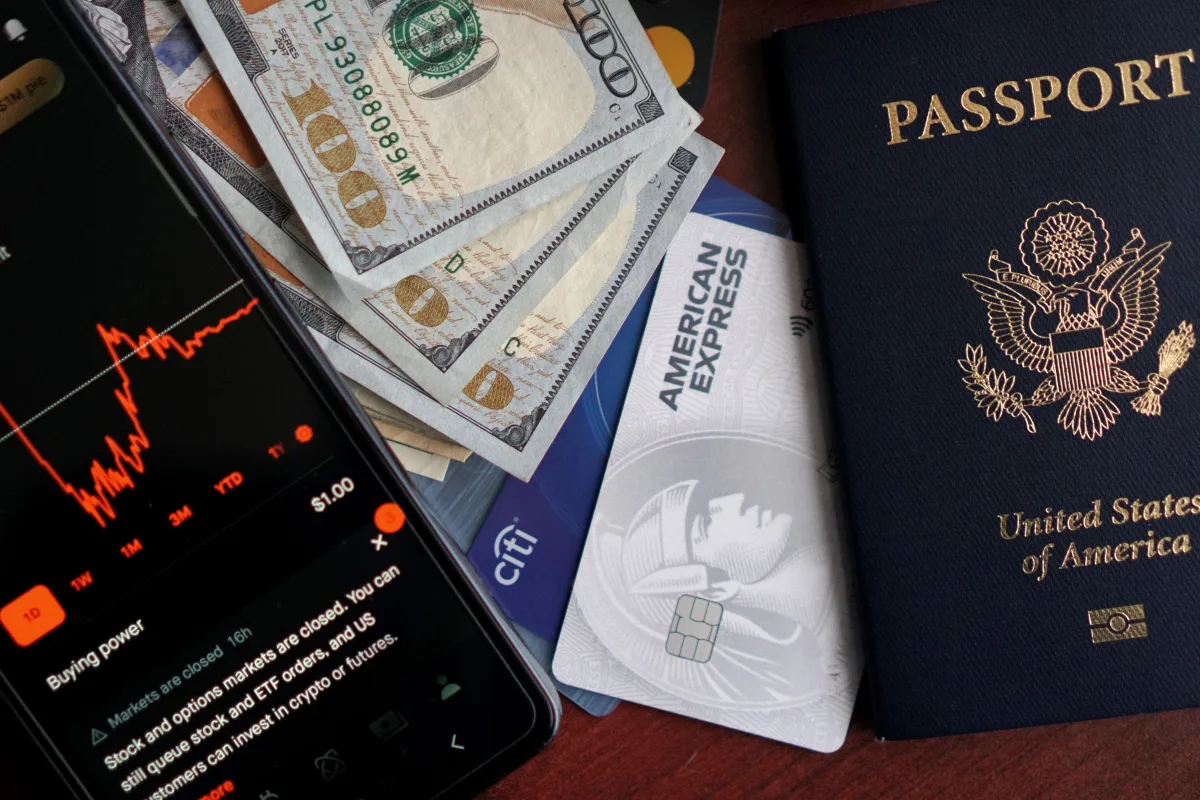
Co-branded cards are the most misused category in travel credit. They're marketed broadly but deliver their best value to a narrow audience: travelers who genuinely concentrate flying or hotel stays within one brand's ecosystem.
When co-branded cards win:
A single round-trip with a checked bag saves roughly $60–$80 on most major carriers. An airline co-branded card that offers a free checked bag for the cardholder and a companion on the same reservation can pay for itself on a single domestic round trip. Add priority boarding and in-flight credits, and the math can work for frequent flyers on that airline.
The Southwest Companion Pass remains one of the most valuable perks in domestic travel when earned strategically. In 2026, the qualification threshold is 100 qualifying one-way flights or 135,000 qualifying points in a calendar year. The strategic timing play: qualify as early in the year as possible, since the pass covers the remainder of the qualification year plus the entire following calendar year.
When co-branded cards lose:
If you don't fly a specific airline at least four to six times per year, the math rarely works. A general transferable-points card almost always delivers better net value for travelers who book the cheapest available flight rather than staying loyal to one carrier. Transferable points can be sent to that airline's program anyway when a sweet spot emerges.
Side-by-Side Card Comparison
| Card | Annual Fee | Best Earning Rate | Transfer Partners | Lounge Access |
|---|---|---|---|---|
| Chase Sapphire Reserve® | $795 | 8x Chase Travel | 14 airlines + hotels | Priority Pass + Chase Sapphire Lounges |
| Capital One Venture X | $395 | 10x hotels/cars via portal | 15+ airlines + hotels | Priority Pass + Capital One Lounges |
| Chase Sapphire Preferred® | $95 | 5x Chase Travel | 14 airlines + hotels | None |
| United Quest℠ | $250 | 10x United flights | United/Star Alliance | United Club (limited) |
| Discover it® Miles | $0 | 1.5x all purchases (3x yr 1) | None | None |
| Wells Fargo Autograph℠ | $0 | 3x travel/dining/gas | None | None |
The Decision Framework: 5 Questions That Actually Determine Your Best Card
Rather than ranking cards and telling you #1 is best, here's the framework that matches cards to actual travelers:
1. Count your annual trips.
- Fewer than 3 trips/year → no-fee card or Sapphire Preferred
- 3–6 trips → Sapphire Preferred ($95) or Venture X ($395)
- 6+ trips with lounges → Sapphire Reserve or Venture X
2. Identify your home airport's lounge network. If your home airport has a Capital One lounge (DFW, DEN, IAD, LAS, JFK, LGA), the Venture X's lounge benefit is real. If the nearest Priority Pass lounge is an airport restaurant with a per-drink credit, the benefit is nearly worthless.
3. Audit the credits honestly. List every credit a card offers. Cross out any you won't use based on your actual spending patterns. If the remaining credits don't offset the annual fee, the card isn't right for you.
4. Decide: flexibility or loyalty? If you book the cheapest available flight regardless of airline, choose a transferable-points card (Sapphire Preferred or Venture X). If you consistently fly one carrier and value free bags and priority boarding, a co-branded card may outperform.
5. Consider the pairing strategy. A $95 Sapphire Preferred paired with a no-fee Freedom Unlimited often outperforms a standalone $795 Reserve for travelers spending heavily across everyday categories who don't maximize premium perks.
Frequently Asked Questions
Is the Chase Sapphire Reserve worth $795 per year in 2026?
It depends entirely on credit utilization. The $300 travel credit reduces the effective fee to $495. If you also use the dining credit, visit lounges regularly, and stay at The Edit properties, the value can comfortably exceed the fee. For travelers who fly fewer than six times per year or who can't access the Exclusive Tables dining program, the math rarely works at $795.
What's the difference between transferable points and airline miles?
Transferable points (Chase Ultimate Rewards, Capital One Miles, Amex Membership Rewards) can be moved to multiple airline and hotel programs or redeemed through the issuer's travel portal. This flexibility lets you optimize for whichever program offers the best value at booking time. Airline miles are locked to one program's ecosystem — they earn faster within it but offer fewer options outside it.
Which travel card has the best lounge access in 2026?
The Chase Sapphire Reserve offers the broadest access: Priority Pass (1,300+ lounges), Chase Sapphire lounges (own-brand, higher quality), and Air Canada lounges. The Capital One Venture X offers Capital One's own growing lounge network plus Priority Pass, but note the 2026 change: free guest access now requires $75,000 annual spend. For solo travelers, both are competitive; for families, the Reserve has the edge.
Can I use a travel credit card for everyday car-related expenses?
Yes — and the category coverage matters. The Chase Sapphire Preferred now earns 3x on gas and EV charging (as of June 2026), making it useful for road-trip spending. If you're also comparing options for EV charging networks, note that some charging network subscriptions code as travel or utilities depending on the card.
Should I get multiple travel cards?
A two-card strategy often outperforms a single premium card. The classic pairing: Chase Sapphire Preferred (5x travel/dining, transfer access) + Chase Freedom Unlimited (1.5x everything, no fee). The Freedom Unlimited's points pool into your Sapphire account and become transferable, effectively giving you 1.5x transferable points on every non-bonus purchase. For in-depth car purchase research to pair with your travel planning, the how to buy a used car online guide for 2026 covers financing considerations that intersect with card rewards strategies.
What's the best no-annual-fee travel card in 2026?
For pure simplicity: Discover it Miles (1.5x all purchases, 3x in year one via Match). For broader bonus categories plus international rental car coverage: Wells Fargo Autograph (3x on travel/dining/gas/streaming). For occasional travelers building credit: either card works as a foundation before upgrading to a paid card as travel frequency increases.
This article was drafted with AI assistance and fact-checked against issuer websites and major financial publications before publishing. Card terms, annual fees, and benefits can change; always verify current offers at the issuer's website. Trusted Buyer Report may earn a commission from purchases made through links on this page. Read our full disclosure →
Reviewed by the Trusted Buyer Report editorial team. How we review →