We may earn a commission when you use our links to make a purchase. This article was researched and drafted with AI assistance, then reviewed and fact-checked by our editorial team. Our rankings are completed before any affiliate link is applied. Read our full disclosure →
TL;DR — Best International eSIMs at a Glance
Not ready to read the full guide? Here's the short version:
- Best for budget travelers: Airalo — 200+ countries, starting around $1.50, loyalty points for repeat users
- Best for heavy data users / hotspot sharing: Holafly — unlimited data plans, 160+ countries
- Best for security-conscious travelers: Saily — built-in VPN + ad blocker, built by the NordVPN team
- Best for digital nomads and frequent travelers: Ubigi — 5G included at no extra cost, top up without WiFi
- Best for cruises and in-flight use: GigSky — the only mainstream provider with dedicated maritime and airborne plans
- Best for groups / multi-device travelers: A portable WiFi device (pocket router) may beat individual eSIMs on cost — run the math for your group size
You're three days out from an international trip. Your phone is eSIM-capable. And you're staring at fourteen browser tabs, each one crowning a different provider as number one.
Here's why: the travel eSIM market has exploded. According to Business Research Insights, the global travel eSIM market was valued at $2.75 billion in 2026 and is projected to reach $6.07 billion by 2035 — a 9.79% compound annual growth rate that has attracted dozens of new entrants, ranging from established telecoms to lean startups reselling wholesale data.
The result: more options, more noise, and more affiliate-driven rankings that tell you what earns the most commission rather than what fits your trip.
This guide cuts through that. You'll find a direct provider comparison, a framework for evaluating any eSIM, a traveler-type matching guide, and — critically — what to do when your eSIM fails at the airport. If you're also sorting out flights, hotels, and the rest of your logistics, our Complete Travel Buyer's Guide 2026 covers the full picture.
Head-to-Head Comparison: Top eSIM Providers & Travel WiFi Devices (2026)
| Provider | Countries | Unlimited Data | Entry Price | 5G | Security Extras | Best For |
|---|---|---|---|---|---|---|
| Airalo | 200+ | No | ~$1.50 | Varies | Standard | Budget, multi-country |
| Holafly | 160+ | Yes | ~$6.99 | Varies | Standard | Heavy data, hotspot sharing |
| Saily | 200+ | Yes | ~$2.99 | Varies | VPN + ad blocker + web protection | Security-conscious travelers |
| Mobimatter | Global | Yes | Varies by region | Yes | Real-time usage tools | All-round value seekers |
| Ubigi | 200+ | Yes | Varies | Yes (no extra cost) | WiFi-free top-up | Digital nomads, frequent flyers |
| GigSky | 200+ | Yes (1–30 days) | Varies | Varies | Standard | Cruises, in-flight connectivity |
| Flexiroam | Global | Yes | Varies | Varies | Voice + data | Travelers needing calls + data |
| Jetpac | 150+ | Yes | Varies | Varies | Standard | Casual travelers, perk seekers |
| Portable WiFi Device | Device-dependent | Plan-dependent | Hardware + plan | Device-dependent | Standard | Groups, 3+ devices at once |
Important caveats before you use this table:
- Entry prices reflect the smallest available plans — often impractical for trips longer than 2–3 days. Calculate cost per gigabyte, not headline price (more on this below).
- "Unlimited" almost always means speed-throttled after a threshold, sometimes as low as 1GB. Read the fine print for your specific destination.
- "200+ countries" coverage tells you almost nothing about quality in your specific destination. Rural coverage within a country can differ dramatically from capital city service.
- Portable WiFi devices require carrying extra hardware plus a battery to charge daily. If that device dies, everyone in your group loses connectivity simultaneously.
eSIM vs. Physical SIM vs. Portable WiFi: Which Connectivity Type Fits Your Trip?
Before comparing providers, settle the more fundamental question: which type of connectivity is right for your situation?
eSIM: Best For Solo Travelers With a Compatible, Unlocked Device
An eSIM is a digital SIM profile installed directly onto your phone's embedded chip. You purchase a plan online, receive a QR code or app activation link, and your phone connects to a local network at your destination — no physical card required. You can activate it before you leave home, so you land with data already running.
The limitation most guides skip: According to Business Research Insights, 28% of potential eSIM users are blocked by device compatibility issues. Your phone can be eSIM-capable in hardware but still unable to install third-party eSIM profiles if it's carrier-locked — common with phones purchased on installment plans. Carrier unlocks typically take several business days. Do this before your trip, not at the airport.
Physical SIM: Still Worth Considering in Specific Scenarios
Physical SIMs remain relevant when: local SIM pricing dramatically undercuts any eSIM plan (common in Southeast Asia and parts of Africa), eSIM network agreements in your destination are sparse, or as a backup when eSIM activation fails. The trade-offs are sourcing a SIM on arrival, possible language barriers at local shops, and managing a small card you can lose.
Portable WiFi Device: The Right Call for Groups and Multi-Device Travelers
A pocket router creates a personal hotspot that multiple devices — phones, tablets, laptops — can share simultaneously. For a family of four, one data plan powering four devices can be more cost-effective than four individual eSIM plans. The math changes when you factor in hardware cost, daily charging, and single-point-of-failure risk.
How to Evaluate Any eSIM Provider: The 6 Metrics That Actually Matter
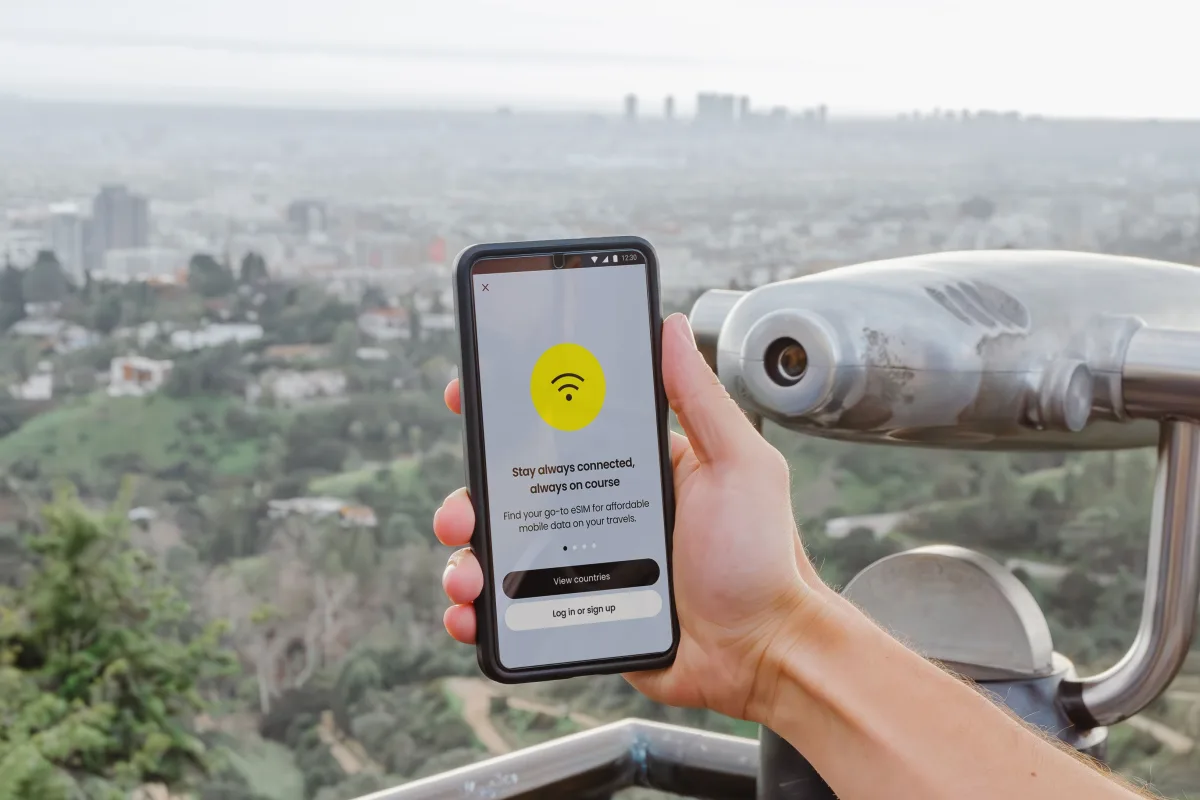
Most comparisons rank by headline price and call it done. That fails real travelers. Here's a repeatable framework that works for any provider, including new entrants that appear after this guide is published.
1. Price Per Gigabyte (Not Entry Price)
Do the math: a $1.99 plan for 500MB costs $3.98 per GB. A $7 plan for 10GB costs $0.70 per GB. Entry prices are marketing; per-GB math is the honest comparison. Calculate this for the plan size you'll actually use based on your typical daily data consumption.
2. Country Coverage Depth (Not Just Count)
"200+ countries" is a marketing headline. What matters is which specific local network operators the provider has agreements with in your destination — and whether those operators have strong infrastructure in the regions you'll actually visit, not just the capital. Ask: does this provider have a direct agreement with a top-tier operator in my destination, or are they routing through a reseller?
3. Data Throttling and Fair-Use Policy
Read the specific plan terms, not the marketing summary. "Unlimited" can mean: truly unlimited at full speed (rare), throttled after a threshold to 512kbps (usable for messaging, unreliable for maps or calls), or throttled to 128kbps (barely functional). The speed after the threshold matters as much as whether one exists.
4. 5G Availability and Cost
Some providers, like Ubigi, include 5G access at no extra cost wherever infrastructure supports it — a meaningful advantage for remote workers uploading large files or running video calls. Others charge a premium tier, and some don't offer it. According to Business Research Insights, 34% of eSIM providers are now integrating AI and analytics to improve network performance — a trend that will increasingly separate providers on connection quality, not just coverage maps.
5. Activation Reliability and Customer Support
An eSIM that fails to activate when you land is not a minor inconvenience. It can leave you without navigation, your accommodation address, or the ability to contact anyone. Look for providers with documented support response times, in-app troubleshooting tools, and a clear escalation path. Mobimatter's 4.8-star customer rating reflects consistent activation and post-purchase support quality — a stronger signal than pre-purchase marketing copy.
6. Security and Privacy Features
Built-in VPN, ad blocking, and encrypted connections are now standard on select providers and represent a real upgrade for travelers who regularly use airport or hotel WiFi. Saily, built by the NordVPN team, includes these features at no extra charge — the primary reason to choose it over alternatives with similar coverage and pricing, according to travel reviewers who've tested it in multiple countries.
What Happens When Your eSIM Fails — and How to Prepare
Most comparison guides skip failure scenarios entirely. This is a significant gap: eSIM activation failures are more common than provider marketing suggests, and the consequences in an unfamiliar country are serious.
The Most Common Failure Points
Device compatibility lock: As noted above, 28% of potential users are affected. The fix — requesting a carrier unlock — must be done before your trip. This takes several business days and often requires a phone call to your carrier.
QR code scanning errors: Usually fixable by increasing screen brightness, scanning in better lighting, or having someone else hold the QR code screen while you scan it.
Network provisioning delays: The eSIM activates but takes hours to connect to a local network in certain regions. This is a provider-side issue; contacting support and requesting a network reset usually resolves it.
Plan mismatches: Purchasing a plan for the wrong country or region is more common than it sounds. Double-check that your plan covers your entry point, especially if you're transiting through a third country.
A Pre-Trip Checklist That Actually Prevents Problems
- Verify your device's unlock status with your carrier at least 7 days before departure.
- Download your eSIM provider's app before leaving home — you may need it to troubleshoot without WiFi.
- Save the QR code as a screenshot stored offline in your camera roll.
- Save your provider's support contact (phone, chat link) in your notes app — offline accessible.
- Test the eSIM activation at home if your provider allows it; any issues are far easier to resolve before you travel.
- Keep a backup option: Roamless is a widely recommended backup eSIM provider for this purpose. Ubigi's ability to top up your data without needing an existing WiFi connection directly solves the catch-22 of running out of data in a location where you can't find WiFi to buy more.
The principle from Mobimatter's research guide holds: "The best provider is not always the cheapest or most advertised; it's the one that fits your itinerary, data usage, security needs, and expectations." That applies equally to failure planning.
Best eSIM by Traveler Type
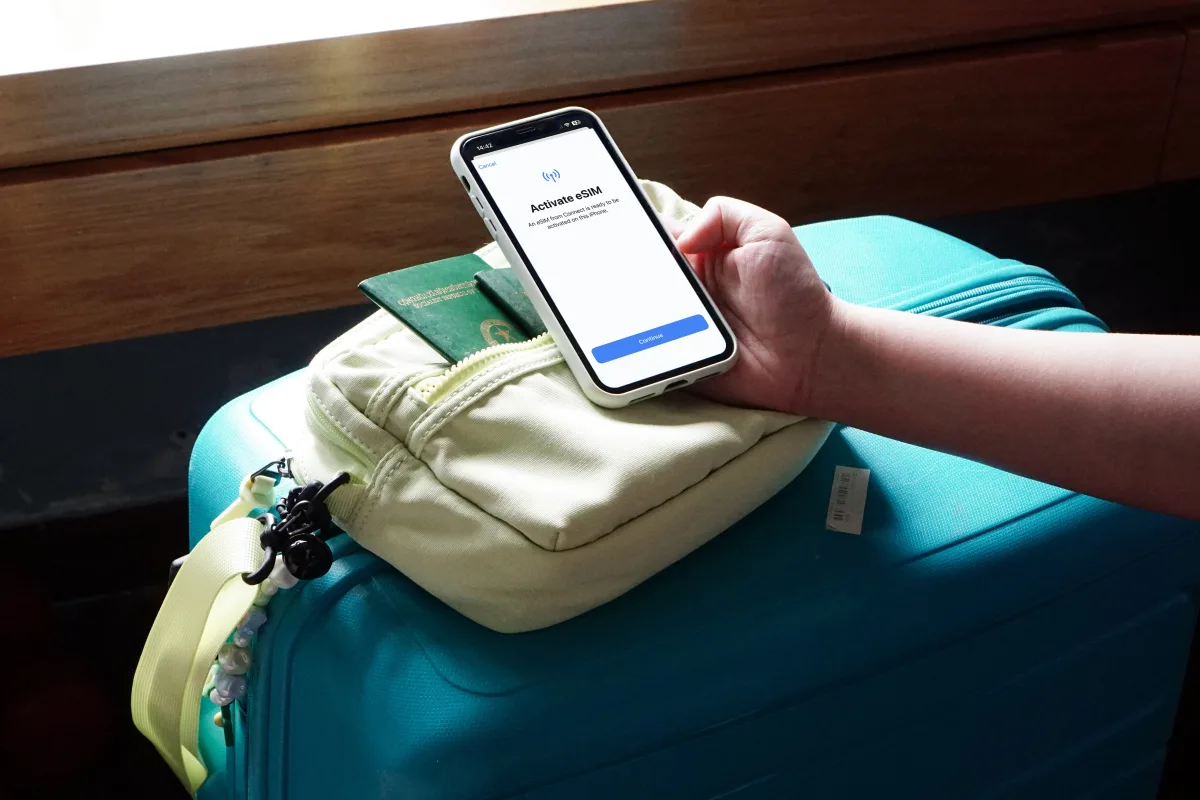
Rather than a single ranked list, this framework matches provider strengths to real travel scenarios.
Budget Backpacker — Solo, Single Country, Data-Light
→ Airalo. Starting around $1.50 with coverage across 200+ countries, Airalo is the practical choice for data-light single-country trips. Its loyalty points system adds cumulative value for repeat users — a meaningful differentiator if you travel frequently and want a consistent provider.
One trade-off: Airalo doesn't offer unlimited plans, which matters less if you're managing data carefully. If you're budget-conscious about the bigger picture — flights, bags, gear — our guides to finding the best flight deals and choosing budget airlines wisely cover those decisions in depth.
Heavy Data User or Remote Worker
→ Holafly or Mobimatter. Holafly's unlimited plans cover 160+ countries with explicit hotspot support — critical if you're tethering a laptop. The key question before purchasing: what speed do you receive after the fair-use threshold in your specific destination? Confirm this before buying, not after landing.
Mobimatter is the stronger alternative if you want to calculate actual cost rather than pay for unlimited headroom. Its combination of competitive per-GB pricing and 5G availability makes it worth pricing out for trips where you know your data usage.
Multi-Country Itinerary Traveler
→ Airalo or Saily. Airalo's 200+ country breadth and regional plan options make it the most flexible choice for complex itineraries crossing multiple regions. Saily matches the coverage while adding built-in security — particularly valuable when you're connecting through diverse network environments across a long trip.
If your multi-country trip is also a packing and logistics challenge, our 2026 travel backpack and packing cube guide covers how to optimize what you're carrying.
Security-Conscious Traveler or Journalist
→ Saily. Built by the NordVPN team, Saily includes a built-in VPN, ad blocker, and web protection as standard features — not add-ons. Plans start around $2.99. For travelers regularly connecting through public WiFi in airports, hotels, or cafes, these features provide meaningful protection against data interception, especially in countries with less robust cybersecurity infrastructure. It can also help bypass local internet censorship in restricted-access countries.
Family or Group Traveler
→ Holafly (if hotspot-sharing) or a portable WiFi device. Holafly's unlimited plans explicitly support hotspot sharing, making them viable for families where multiple people share one connection. For larger groups or travelers carrying multiple devices (phone, tablet, laptop), run the numbers: if the total cost of individual eSIM plans exceeds the cost of a portable WiFi device plus one data plan, the hardware option wins. The break-even point is usually around 3–4 devices.
For the broader trip, our Airbnb vs. VRBO vs. Hotels guide covers how to pick accommodations that fit a group's needs.
Cruise or In-Flight Traveler
→ GigSky. Standard eSIM plans from other providers typically don't include in-flight or maritime coverage. GigSky's dedicated connectivity plans for airborne and at-sea use — reviewed by TechRadar as the specialist choice — fill a niche that no other mainstream provider addresses directly. Coverage extends to 200+ countries with fixed plan options up to 100GB.
Study Abroad or Long-Term Traveler (30+ Days)
→ Ubigi. Monthly and annual plan options, 5G included at no extra cost, and the ability to top up your plan without needing an existing WiFi connection make Ubigi the strongest choice for extended stays. The no-WiFi top-up feature is especially valuable when you're in a new location and your data runs out before you've found reliable WiFi.
Why the eSIM Market Has Exploded — and What It Means for You
Context matters when evaluating provider claims. A few data points:
- 51% of eSIM users first tried the technology for international travel — making it the primary adoption driver globally, per a TechCrunch and GSMA survey cited by Cellesim.
- Travel eSIM users are projected to grow 440% over the next five years, according to Juniper Research.
- North America leads adoption: 41% of US international trips now use eSIM connectivity, with 65% of travelers preferring eSIM over physical SIM cards for international use (Business Research Insights).
- Retail spending on travel eSIM services is expected to grow 500% between 2023 and 2028, per Kaleido Intelligence data.
This market explosion has a double edge for travelers: more competition generally drives prices down and improves features, but it also means quality varies dramatically. Some providers have deep direct agreements with local network operators; others resell thin wholesale capacity that degrades under load or in less-traveled regions. Coverage maps don't tell you which is which — customer reviews and throttling policies do.
eSIM and the Rest of Your Travel Planning
Connectivity is one piece of a larger travel preparation puzzle. If you're also comparing:
- Travel insurance that covers device loss or failure: our Best Travel Insurance Plans 2026 covers which plans include electronics protection.
- Credit cards that reimburse international data or lounge WiFi: see our Best Travel Credit Cards 2026 for cards that cover travel tech expenses.
- Rewards programs that include connectivity perks: our Best Travel Rewards Programs 2026 covers loyalty programs that bundle data or tech benefits.
- Luggage with built-in device charging or organization: the Best Luggage & Suitcases 2026 guide covers carry-on options with USB charging ports.
Frequently Asked Questions
Does my phone need to be unlocked to use an international eSIM?
Yes. Even if your phone supports eSIM hardware, carrier-locked devices may block installation of third-party eSIM profiles. Contact your carrier to request an unlock at least a week before your trip — the process can take several business days.
Can I use an eSIM and keep my regular SIM active at the same time?
Most modern smartphones support dual-SIM functionality — your regular SIM stays active for calls and texts while the eSIM handles data. This is a key advantage over physical travel SIMs, which require swapping out your home SIM.
What's the difference between "unlimited" eSIM plans?
"Unlimited" covers a wide range. Some plans throttle speeds after 1GB to 512kbps (usable for messaging, unreliable for navigation). Others throttle to 128kbps after 5GB (barely functional). A few providers offer genuinely unthrottled unlimited plans for specific regions. Read the fair-use policy for your destination before purchasing, not the headline.
Is it safe to use public WiFi if I have an eSIM?
Having an eSIM doesn't protect your data on public WiFi networks — these are two separate concerns. If you're connecting through airport or hotel WiFi, your data is exposed to potential interception regardless of your eSIM provider. Saily's built-in VPN addresses this directly. For other providers, using a separate VPN app when on public WiFi is recommended.
Can I buy an eSIM after I land in my destination country?
Yes, in most cases — as long as you have WiFi access to complete the purchase and download. The risk is being without connectivity between landing and finding reliable WiFi. Purchasing before departure eliminates that gap.
Which eSIM providers work on iPhones?
Most major providers (Airalo, Holafly, Saily, Ubigi, GigSky) are compatible with eSIM-capable iPhones (iPhone XS and later). Verify compatibility for your specific model on the provider's site before purchasing, as iOS version requirements and carrier lock status can affect installation.
How This Guide Was Researched
This guide is based on manufacturer and provider specifications, independent expert analysis, and verified traveler reviews aggregated from Mobimatter's Definitive eSIM Comparison Guide, TechRadar's international eSIM review, CN Traveller, MyVeganTravels, and GlobalHolidays.us. Market data is drawn from Business Research Insights, Cellesim's 2026 eSIM Statistics, and Juniper Research. It does not reflect hands-on testing by Trusted Buyer Report. Scores and rankings were finalized before affiliate links were applied.