
This guide is based on manufacturer disclosures, issuer terms, and aggregated consumer research from Bankrate, WalletHub, Experian, CNBC Select, and Discover's official documentation. Trusted Buyer Report has not applied for or held any of the cards reviewed here. This article was drafted with AI assistance and fact-checked by our editorial team before publishing. We may earn a commission if you apply through our links — this does not affect our rankings.
Most college freshmen assume they need an existing credit score to get approved for a credit card. That assumption is wrong — and it costs many students years of credit-building time. Student credit cards are evaluated on enrollment status and income, not FICO scores, which means the majority of first-year students qualify today.
Our top pick for most students: The Capital One Savor Student Cash Rewards Credit Card earns 3% on dining, entertainment, and streaming — the three categories where most students concentrate their spending — with no annual fee and an explicit "No Credit History Required" designation. The Discover it® Student Cash Back is the strongest first-year value thanks to its Cashback Match program, which doubles all cash back earned in your first 12 months.
Here is the full comparison and the reasoning behind each recommendation.
Quick Comparison: Best Student Credit Cards for 2026 With No Credit History
| Card | Annual Fee | Best Rewards Rate | Intro Offer | Ongoing APR | Best For |
|---|---|---|---|---|---|
| Capital One Savor Student | $0 | 3% dining/streaming; 8% Capital One Entertainment | None listed | 18.49%–28.49% variable | Dining, streaming, entertainment spenders |
| Capital One Quicksilver Student | $0 | 1.5% flat on everything | None listed | 18.49%–28.49% variable | Simplicity seekers |
| Discover it® Student Cash Back | $0 | 5% rotating categories; 1% all else | Cashback Match — year 1 doubled | 0% intro 6 months, then 12.99%–21.99% variable | Maximizing first-year value |
| Discover it® Student Chrome | $0 | 2% gas & restaurants; 1% all else | Cashback Match — year 1 doubled | Variable | Gas + restaurant spenders |
| Chase Freedom® Student | $0 | 1% base | Varies | 14.99% variable | APR-sensitive applicants |
How This Guide Was Researched
This guide synthesizes publicly available issuer terms, rates published by Bankrate, WalletHub, Experian, CNBC Select, and College Finance, as well as official documentation from Capital One and Discover. According to WalletHub, their editorial team spent 26 research hours reviewing 104 student and starter credit cards across 67 companies to identify top options for 2026. We used that research base as a cross-reference rather than a starting point, comparing recommendations across multiple sources to surface the options that appear most consistently.
Trusted Buyer Report has not applied for or received any of these cards. All rates and terms are accurate as of May 2026 and subject to change by the issuer.
Why Your First Credit Card Decision Matters More Than Most Students Realize
The most common misconception about student credit cards: having no credit history means you cannot get approved. That is simply not accurate. Student cards are a distinct product category designed for applicants with no credit file — evaluated on enrollment status, income, and banking history, not a FICO score.
Here is what that distinction means in practice. A typical college freshman who applies for a standard travel rewards card will likely be rejected within seconds — not because she is a poor credit risk, but because she applied for the wrong product category. A student card would approve the same applicant. That rejected inquiry now sits on her credit report unnecessarily.
The timing of your first card also carries long-term weight. Your account open date is recorded permanently. A student who opens a responsible first card at 18 will have a six-year credit history by the time she applies for her first apartment lease at 24 — and lenders weight that length of history significantly. A student who waits until graduation starts four years behind.
According to NerdWallet, citing the Consumer Financial Protection Bureau's Consumer Credit Card Market Report, earlier CFPB methodology significantly overstated credit card ownership among adults under 25 by counting only "scored" consumers — those who already had enough history to generate a FICO score. The true share of young adults with a credit card is roughly half what earlier estimates suggested. Most of those unscored young adults are not credit risks. They are simply invisible to the system. A student card is the first step that changes that.
For a broader look at how credit cards fit alongside insurance products and investment accounts, the Financial Services Guide 2026: Credit Cards, Insurance & Investing provides a useful framework for thinking about these financial products together at the start of your adult financial life.
What "No Credit History Required" Actually Means

When an issuer labels a card "No Credit History Required," they are not waiving underwriting entirely. They are switching to a different evaluation framework:
Enrollment status is typically the primary qualifier. Being enrolled at an accredited college or university does the work that a credit score would do for a standard card applicant. Some issuers verify this through a school email address; others rely on self-attestation.
Income is the second factor — and this is where the Credit CARD Act of 2009 matters. Federal law requires applicants under 21 to demonstrate independent income or have a co-signer. What counts as income is broader than most students assume: part-time job earnings, regular allowances that are deposited into your account, and scholarship disbursements that cover living expenses can all qualify. The threshold is not high. Issuers are looking for evidence you can make payments.
Banking history can supplement these factors for applicants who already have a checking account with the issuer — some banks give additional consideration to existing deposit customers.
One practical note that every applicant should know: each credit card application generates a hard inquiry on your credit report. Once you have a credit file, hard inquiries temporarily lower your score. Apply to one card at a time, and wait six to twelve months before applying for a second card.
The 5 Best Student Credit Cards for 2026 (No Credit History Needed)
1. Capital One Savor Student Cash Rewards — Best Overall
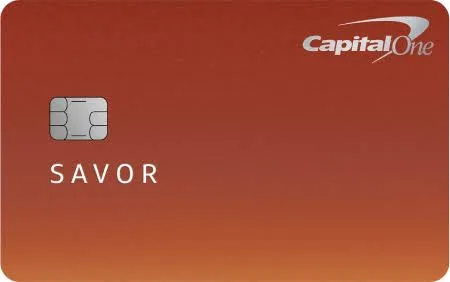
Bankrate rates this card 4.6 out of 5 and labels it the best overall student card for 2026, citing its "No Credit History" designation and rewards structure that competes with non-student cards in key categories.
Rewards: 8% cash back on Capital One Entertainment purchases; 5% on hotels, vacation rentals, and rental cars booked through Capital One Travel; 3% on dining, entertainment, popular streaming services; 1% on everything else.
Annual fee: $0
APR: 18.49%–28.49% variable
Credit history required: None
Why it stands out: The 3% rate on dining and streaming reflects how most college students actually spend. Many student cards cap rewards at 1% or 1.5% on general categories. WalletHub names the Savor Student "Best to Build Credit With" in the no-credit student segment — a designation that reflects both the approval accessibility and the reporting practices.
The honest downside: The upper APR of 28.49% is among the highest in this comparison. If you carry a balance even occasionally, the interest charges will erase your rewards quickly. This card works best for students who pay the full statement balance every month without exception.
Who should choose this: Students who spend heavily on food delivery, restaurants, streaming subscriptions, and entertainment — and who will pay in full monthly.
2. Capital One Quicksilver Student Cash Rewards — Best for Simplicity
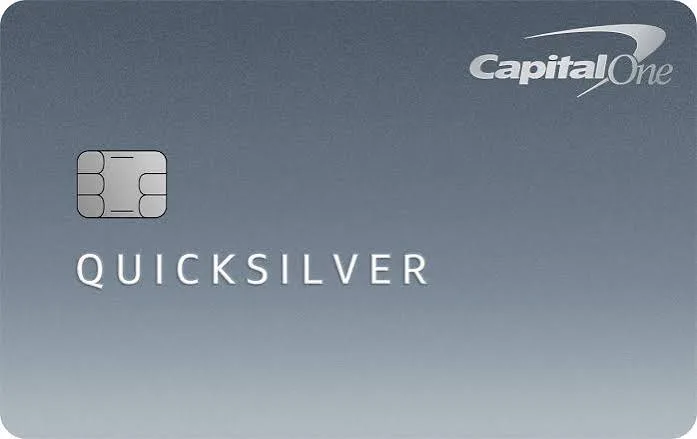
According to Experian, the Quicksilver Student earns 1.5% to 5% cash back with no annual fee. WalletHub designates it "Best Mastercard" in the student no-credit category.
Rewards: 1.5% cash back on all purchases; 5% on hotels and rental cars booked through Capital One Travel
Annual fee: $0
APR: 18.49%–28.49% variable
Credit history required: None
Why it stands out: You earn 1.5% on every purchase without tracking rotating categories or activating quarterly bonuses. For students who spend across many different categories without a clear concentration — or who simply will not remember to activate anything — this card removes the cognitive overhead entirely.
The honest downside: It earns less than the Savor Student in dining and streaming categories, which are where most students concentrate spending. Over a four-year college period, that difference compounds.
Who should choose this: Students who want a single card that works everywhere without mental overhead, and who find category tracking tedious.
3. Discover it® Student Cash Back — Best First-Year Value
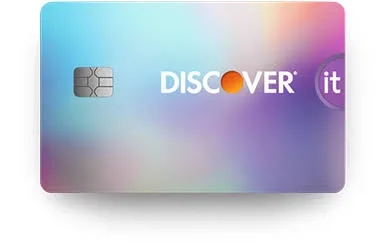
This card's defining feature is the Cashback Match program. According to Discover, Discover automatically matches all cash back earned in your first year at the end of that year — with no cap and no minimum spend requirement. A student who earns $150 in cash back during year one receives an additional $150 from Discover at the end of that year.
Rewards: 5% cash back on rotating quarterly categories (historically including groceries, gas, restaurants, and Amazon.com — requires quarterly activation); 1% on all other purchases
Annual fee: $0
APR: 0% introductory APR for the first 6 months, then 12.99%–21.99% variable
Credit history required: None
Why it stands out: Two meaningful structural advantages over the Capital One student cards. First, the Cashback Match effectively doubles your first-year earnings. Second, the ongoing APR ceiling of 21.99% is lower than Capital One's 28.49% ceiling — a meaningful safety net if you occasionally carry a small balance. Per College Finance, the 0% intro APR for the first six months provides additional buffer during the transition to independent financial management.
The honest downside: The 5% rotating categories require quarterly activation and alignment between the active category and your actual spending. In quarters where the active category does not match your spending pattern, you earn only 1% on most purchases.
Who should choose this: Students who are willing to spend 60 seconds each quarter activating a bonus category and whose spending patterns align with Discover's typical category rotation.
4. Discover it® Student Chrome — Best for Gas and Restaurant Spenders
Rewards: 2% cash back at gas stations and restaurants (on up to $1,000 combined per quarter); 1% on everything else; Cashback Match in year one
Annual fee: $0
APR: Variable (check Discover's site for current range)
Credit history required: None
Why it stands out: For students who commute or drive regularly and eat out frequently, the 2% in these two fixed categories is simpler than the rotating structure of the Cash Back version. The Cashback Match in year one still applies.
Who should choose this: Students with a car on campus or who commute, spending consistently at gas stations and restaurants, who prefer a fixed rather than rotating reward structure.
5. Chase Freedom® Student Card — Best for APR-Sensitive Applicants
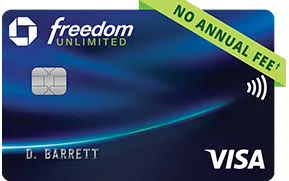
College Finance lists the Chase Freedom Student at a 14.99% variable APR — the lowest rate ceiling in this comparison by a significant margin.
Rewards: 1% base cash back on purchases
Annual fee: $0
APR: 14.99% variable
Credit history required: None (student status required)
Why it stands out: For a student who is genuinely uncertain about consistently paying the full balance — whether because of irregular income or the unpredictability of college expenses — the rate protection is real. At 14.99% versus 28.49%, the cost of carrying a balance is dramatically lower.
The honest downside: The rewards structure is the least competitive in this comparison. You earn 1% on everything, with no rotating bonuses and no first-year matching program.
Who should choose this: Students who anticipate occasionally carrying a balance and who prioritize rate protection over rewards optimization.
How to Choose: A Decision Framework by Spending Pattern
Rather than declaring a single winner for every applicant, here is a use-case-based framework:
- Dining, food delivery, streaming, entertainment are your primary expenses → Capital One Savor Student. The 3% in these categories and 8% on Capital One Entertainment purchases rewards exactly how most college students spend.
- You want one card that works everywhere without tracking anything → Capital One Quicksilver Student. The 1.5% flat rate simplifies your entire spending life.
- Maximizing total cash back in your first year is the priority → Discover it® Student Cash Back. The Cashback Match program doubles your year-one earnings with no cap.
- You drive regularly and eat out consistently → Discover it® Student Chrome. The fixed 2% on gas and restaurants, plus year-one Cashback Match, is the most straightforward rewards structure for this spending pattern.
- You are concerned about carrying an occasional balance → Chase Freedom® Student. The 14.99% variable APR provides meaningful protection compared to the 28.49% ceiling on Capital One's student products.
Regardless of which card you choose, the behaviors that determine your outcome are identical: pay the full statement balance every month, keep utilization below 30%, never miss a payment, and keep your first card open even after you qualify for products with higher limits or better rewards. The account age continues to benefit your credit file as long as the account stays open.
How Student Cards Build Credit — The Mechanics That Matter

A student credit card builds credit through a specific, mechanical process. Card issuers report your account activity to the three major credit bureaus — Equifax, Experian, and TransUnion — monthly. That report includes your credit limit, current balance, payment history, and account age. Experian explicitly advises students to confirm a card reports to all three bureaus, since a card that only reports to one bureau builds a thinner credit profile.
Your FICO score is calculated from five weighted factors:
- Payment history (35%) — the most important factor. A single missed payment on a new credit file has a disproportionately large negative impact because there is no established positive history to absorb it.
- Credit utilization (30%) — your balance as a percentage of your credit limit. Keeping utilization below 30% is the widely cited guideline; below 10% produces better results.
- Length of credit history (15%) — the age of your oldest account and average age across all accounts. This is why opening your first card at 18 rather than 22 produces a measurable long-term advantage.
- Credit mix (10%) — a mix of revolving credit (cards) and installment credit (loans) over time.
- New credit inquiries (10%) — each application generates a hard inquiry that temporarily lowers your score. Apply to one card at a time.
The practical takeaway: set up autopay for at least the minimum payment as a backstop, then pay the full balance manually each month. Credit utilization is dynamic — it is calculated based on the balance on your statement closing date, not the due date — so you can improve your reported utilization by paying down your balance before the statement closes.
As you build your credit profile over time, you will likely want to diversify beyond a single credit card. Our guides on best personal loans for 2026 and best balance transfer credit cards can help you understand what products become available once you have 12–24 months of positive history on file.
What to Watch Out For: APRs, Fees, and Habits That Undermine Credit Building

The APR problem. Every card in this comparison carries a variable APR tied to the prime rate, which can increase when the Federal Reserve raises benchmark rates. A $500 balance on a card charging 28.49% APR, paid down only via minimum payments, will cost significantly more than $500 by the time it is cleared. At that rate, annual interest on a $500 balance approaches $142 — money that produces no credit benefit, no asset, and no rewards. Pay the full statement balance every month.
Foreign transaction fees. Experian includes foreign transaction fees in its four-point student card evaluation checklist. Some student cards charge 3% on international purchases. If you plan to study abroad or travel internationally, verify this fee before applying — it can eliminate the value of all rewards earned abroad.
International students face a separate challenge. Most student cards in this comparison require a Social Security Number. Products specifically designed for students without SSN requirements — such as the Deserve EDU Mastercard — exist but are not covered in this guide. If you are an international student, SSN requirements should be your first filter when researching options.
Minimum payment trap. Paying only the minimum payment each month is the most common and most financially damaging habit students develop with their first card. Minimum payments are calculated as a small percentage of the balance or a flat dollar amount. At that pace, a modest balance can take years to pay off, and total interest paid often exceeds the original purchase amount. This is not a credit-building strategy — it is a debt accumulation strategy.
The Credit CARD Act of 2009 protects applicants under 21 by requiring income verification or a co-signer. It does not cap the interest rate issuers can charge. Consumer protection in this space governs access, not cost. Cost management is entirely your responsibility.
Managing credit responsibly is a skill that extends across all the major financial decisions ahead of you — from renting an apartment to qualifying for a mortgage. If you are also thinking ahead to renter's insurance as you move off campus, our best renters insurance guide for 2026 covers policies that are both affordable and comprehensive for students and young adults. And if you are starting to think about building long-term wealth alongside your credit profile, our comparison of best robo-advisors for 2026 covers low-cost automated investing options that work well at any income level.
Frequently Asked Questions
Can I get a student credit card with absolutely no credit history?
Yes. Student credit cards are specifically designed for applicants with no credit file. Issuers evaluate enrollment status and income rather than a FICO score. Both Capital One student cards and both Discover student cards carry explicit "No Credit History Required" designations according to Bankrate and WalletHub.
What income do I need to qualify for a student credit card?
The Credit CARD Act of 2009 requires applicants under 21 to demonstrate independent income or have a co-signer. Part-time job earnings qualify. Regular deposits from parents (such as allowances) qualify. Scholarship or grant disbursements that cover living expenses may qualify. The threshold is not high — issuers are assessing the ability to make payments, not full financial independence.
Do student credit cards report to all three credit bureaus?
Most major student cards — including the Capital One and Discover products reviewed here — report to all three bureaus (Equifax, Experian, and TransUnion). Confirming three-bureau reporting before applying is recommended, as cards that report to only one bureau build a thinner credit profile.
Should I get a student card or be added as an authorized user on my parent's card?
Being added as an authorized user on a parent's account — if the parent has a strong credit history — can give you a head start by adding that account's history to your credit file. However, a student credit card in your own name builds a tradeline that you own and control, which is ultimately more durable. Both approaches can coexist; they are not mutually exclusive.
What happens to my student credit card when I graduate?
Most student card issuers will convert your account to a standard credit card product upon graduation rather than closing the account. Keeping the account open (even if you move to a card with better rewards) preserves the credit history on that account, which continues to benefit your average account age.
Is it better to have a student card or a secured credit card?
If you are enrolled in college and qualify for a student card, a student card is almost always the better choice. Student cards typically have no deposit requirement, earn rewards, and offer better credit limits than secured cards. Secured cards are better suited to non-students or adults rebuilding credit after derogatory marks.
What credit score will I have after one year of responsible student card use?
There is no precise answer, but building on a thin file, consistent on-time payments and low utilization over 12 months typically generate a FICO score in the 680–720 range for applicants starting from zero — enough to qualify for better products and lower rates on auto loans and apartment applications. Results vary based on utilization, payment history, and whether any hard inquiries or derogatory events occurred.
Affiliate Disclosure
Trusted Buyer Report may earn a commission if you apply for a card through links on this page. This does not affect our rankings or recommendations. Our editorial assessment was completed before any affiliate link was applied. Read our full affiliate disclosure →