
This guide was researched with AI assistance and fact-checked by our editorial team before publishing. We synthesize manufacturer specs, independent lab tests, and verified buyer reviews, and cite our sources. Affiliate commissions may apply — added only after our assessment is final. How we review · Affiliate disclosure
You've probably already tried one meal kit service, got burned by the price jump after week four, and are now doing more careful research before committing again. That's exactly the right instinct.
The single most useful thing this guide can do is show you what these services actually cost once the introductory discount disappears — and which ones hold up under that honest lens. We aggregated independent multi-week tests from Serious Eats, Wirecutter, NBC News, CNET, and DeliveryRank so you don't have to read each one separately.
The short version: EveryPlate is the budget anchor for ready-to-cook meals; HelloFresh is the most versatile all-rounder; Factor is the best option if you don't want to cook at all; and Green Chef is the strongest pick for certified-organic households. Everything else has a specific use case — which we'll break down below.
How this guide was researched: This guide is based on manufacturer specifications, independent expert testing, and verified customer feedback aggregated from multiple sources, including Serious Eats, Wirecutter, NBC News, CNET, and DeliveryRank. It does not reflect hands-on testing by Trusted Buyer Report.
We may earn a commission when you use our links to make a purchase.
Head-to-Head: Top Meal Kit Services at a Glance (2026)
According to Serious Eats, which tested and reviewed services across multiple weeks, the per-serving cost spectrum in 2026 looks like this:
| Service | Cost Per Serving | Meal Style | Best For |
|---|---|---|---|
| EveryPlate | ~$5.00 | Ready to cook | Budget households |
| HelloFresh | ~$9.00 | Ready to cook | Variety & families |
| Marley Spoon | ~$9.00 | Ready to cook | Recipe variety |
| Blue Apron | ~$9.50 | Ready to cook | Experienced cooks |
| Home Chef | ~$9.50 | Ready to cook | Flexible plans |
| Green Chef | ~$12.00 | Ready to cook | Organic-focused |
| Purple Carrot | ~$11.23 | Hybrid | Plant-based eaters |
| Hungryroot | ~$10.50 | Hybrid grocery | Mixed dietary needs |
| Factor | ~$10.99 | Ready to eat | No-cook convenience |
| Mosaic Foods | ~$8.64 | Ready to eat | Budget prepared meals |
| CookUnity | ~$13.23 | Ready to eat | Chef-quality prepared meals |
Two patterns emerge immediately. First, the less cooking a service requires, the more you pay per serving — the gap between EveryPlate and CookUnity reflects real differences in labor and ingredient sourcing, not just branding. Second, introductory offers typically run 30–50% off your first order, which means the prices above are closer to what you'll pay from month two onward.
Here's a wrinkle that surprises most first-timers: shipping can significantly change your effective per-serving cost. Most services offer free delivery only on orders above a threshold (typically $40–$60), so smaller households ordering fewer meals per week pay more in real terms than the base price suggests.
Why 2026 Is a Different Meal Kit Market Than You Remember

The meal kit industry has matured significantly since Blue Apron's IPO hype and HelloFresh's aggressive coupon campaigns. According to Fortune Business Insights, the global meal kit delivery market is projected to grow from $7.65 billion in 2026 to $14.68 billion by 2034, at a CAGR of 8.55%. That's not a fad — it's a maturing market with consolidation, specialization, and meaningful quality gaps between services.
The biggest structural shift: the rise of "heat and eat." According to Market Data Forecast, the ready-to-eat segment is projected to grow at the fastest CAGR of 17.5% through 2034. The driver is simple: the average American spends approximately 40 minutes per day on food preparation and cleanup (per Bureau of Labor Statistics data), and a growing share of subscribers have decided that's 40 minutes they'd rather spend elsewhere.
Services like Factor and CookUnity exist precisely to capture that demand — and they've grown fast because of it.
Ownership changes also matter for real subscribers. When a parent company acquires a smaller service, ingredient sourcing, recipe development budgets, and customer service staffing can all shift — sometimes improving, sometimes not. Hungryroot's emergence as a hybrid grocery-plus-meal-kit model represents a different kind of disruption entirely: it doesn't fit neatly into the traditional meal kit category, which makes it harder to compare but genuinely useful for households with varied or evolving dietary needs.
One practical concern worth flagging: as noted by Market.us, FDA oversight of meal kit services in the U.S. remains inconsistent, affecting labeling standards and food safety accountability across the industry. If you have allergies or specific dietary restrictions and rely on accurate ingredient labeling, this is worth keeping in mind when evaluating any service.
The Real Cost of Meal Kits: What You Pay After Week One
Let's be direct: the introductory discount is not a price — it's a marketing mechanism. Every major service leads with 30–50% off your first order, which makes comparison at the point of signup almost meaningless. What matters is the standard ongoing rate and how your household size interacts with it.
According to NBC News, which tested services independently, the pricing tiers break down as follows:
- Budget tier: EveryPlate and Dinnerly start around $5–$6 per serving at standard rates — the lowest in the ready-to-cook category.
- Mid-tier: HelloFresh runs between $9 and $11 per serving at standard rates, depending on plan size.
- Premium tier: Green Chef and Sunbasket cost approximately $12–$14 per serving.
Wirecutter puts Green Chef specifically at $12–$14 per serving, noting that this pushes it into "takeout or restaurant territory" — a useful framing for anyone trying to decide whether organic certification justifies the cost. Blue Apron, by contrast, offers subscription rates as low as $9–$10 per serving, making it a more accessible mid-range option despite its premium reputation.
On the prepared-meal end, CNET identifies Mosaic Foods as the cheapest prepared option at approximately $8.64 per serving for family meals — a notable outlier in the ready-to-eat category where Factor sits at $10.99 per serving. Factor's per-serving cost is comparable to a fast-casual restaurant meal in most U.S. cities, which reframes the value question: you're not comparing it to cooking at home — you're comparing it to ordering out.
A note on shipping costs for smaller households. If you're a solo subscriber ordering four meals per week from HelloFresh, your order total may fall below the free-shipping threshold, adding $7–$10 per delivery to your effective cost. That can push a nominally $9-per-serving service to $11 or more in real terms. Ordering at the minimum required for free shipping — even if it means having leftovers — is almost always the better financial decision.
If you're evaluating meal kits as part of a broader subscription budget, our complete guide to the best subscription services in 2026 puts food delivery costs in context alongside streaming, fitness, and entertainment subscriptions to help you prioritize spending.
Taste and Recipe Quality: Which Services Actually Deliver on Flavor
Here's the uncomfortable truth about meal kit retention: most people don't cancel because the food is bad. They cancel because it gets boring.
Services that fall into predictable patterns — protein over pasta, protein with potatoes, protein with rice — lose subscribers not because the recipes fail, but because repetition erodes the novelty that justified the subscription in the first place. Menu depth is the most underrated factor in long-term value.

Wirecutter named HelloFresh its best all-around meal kit after independent testing, citing the breadth of its weekly rotating menu at roughly 70–80 options per week. That volume matters practically: even if you're only selecting three or four meals per delivery, a larger pool means you're less likely to see the same combinations repeat within a month. Green Chef, by comparison, offers roughly 40 weekly options — similar to Blue Apron — which is adequate but noticeably more limiting for long-term subscribers.
Factor takes a different approach to flavor entirely. Rather than teaching you to cook, it delivers chef-crafted meals that are fully prepared and designed to taste restaurant-quality without any kitchen effort. Whether that justifies the $10.99 per serving depends entirely on what you're comparing it to — cooking from scratch or ordering takeout.
For health-conscious eaters who don't want to sacrifice flavor for nutrition, DeliveryRank identifies Purple Carrot as the most holistically healthy service, citing its "food as medicine" philosophy and reliance on natural flavors rather than processed ingredients. If you've tried generic vegan meal kits and found them bland, Purple Carrot's approach is meaningfully different — the meals are built around nutritional intentionality, not just the absence of meat.
One practical caveat on taste claims: any single-box review reflects introductory menu curation, which services use to put their best foot forward. Reliable taste assessments require testing across multiple weeks and multiple meal categories, which is why sourced reviews from Wirecutter, Serious Eats, and NBC News carry more weight than single-delivery impressions.
Convenience Compared: Prep Time, Packaging, and the Cook-vs-Heat Spectrum

The most important decision you'll make when choosing a meal kit service isn't which one has the best recipes — it's where you want to sit on the cook-versus-heat spectrum. Everything else is secondary.
The spectrum breaks into three practical tiers:
Tier 1 — Ready to eat: Factor, CookUnity, Mosaic. Meals arrive fully cooked. Reheating takes 2–5 minutes. No chopping, no measuring, minimal cleanup. Highest cost per serving.
Tier 2 — Hybrid semi-prepared: Hungryroot, Purple Carrot. Pre-portioned ingredients with some elements already prepped — sauces made, proteins marinated, grains partially cooked. Typically 10–20 minutes of active time.
Tier 3 — Ready to cook: HelloFresh, EveryPlate, Green Chef, Blue Apron, Home Chef. Full ingredient kits with recipe cards. Expect 25–45 minutes of active cooking. Lowest cost per serving in each tier.
The heat-and-eat segment's rapid growth — projected at 17.5% CAGR through 2034 per Market Data Forecast — reflects a genuine behavioral shift. Consumers are trading cooking engagement for time savings, not abandoning meal kits.
For households that do want to cook, recipe card quality is a genuine differentiator. NBC News specifically praises HelloFresh's recipe cards for being accessible to non-cooks, with clear step sequencing and accurate time estimates. That accessibility is not universal — some services assume culinary knowledge that casual home cooks don't have, which leads to frustration and abandoned subscriptions.
Packaging quality affects more than aesthetics. Insulation longevity, ice pack duration, and ingredient organization all affect food safety and the actual cooking experience. HelloFresh, for example, delivers ingredients in brown paper bags with meat kept separate — a simple but effective approach that reduces cross-contamination risk and makes it easier to pull out what you need without unpacking the entire box.
Dietary Fit: Matching Your Eating Style to the Right Service

"Dietary options available" appears in the marketing copy of nearly every meal kit service. It means almost nothing without specifics.
The relevant question is whether a service offers genuine depth within your dietary category — multiple weekly options, not just one or two token meals labeled "keto" or "vegan" to check a marketing box. Here's how the major services actually stack up:
Green Chef holds USDA organic certification, making it the credible choice for shoppers who care about verified sourcing. DeliveryRank ranks it as the best certified organic meal delivery service in 2026. The certification matters because it's externally verified — unlike "natural" or "clean" labels, which have no regulatory definition in the U.S.
Factor offers structured dietary programming with over 90 unique recipes across tracks including keto, high-protein, and calorie-smart, per DeliveryRank. For someone following a specific macronutrient protocol, that depth is meaningful — you're not piecing together a keto week from a service that designed its menu for general audiences and added a filter afterward.
HelloFresh's family-friendly positioning reflects something specific: its weekly menu is broad enough to include options that work for picky eaters, kids, and adults with different preferences without requiring a specialized subscription tier. Both DeliveryRank and NBC News identify it as the best family-friendly service, and 70–80 weekly options mean parents can usually find something that satisfies competing household preferences.
Hungryroot occupies a different category entirely. Its hybrid grocery-and-meal-kit model gives households with mixed dietary needs more flexibility than a traditional subscription allows. Rather than committing to a fixed set of recipes, Hungryroot subscribers can blend prepared elements with fresh grocery items — which suits households where one person eats plant-based and another doesn't.
Meal kits are just one piece of the broader subscription-box landscape. If you're also considering options in wine, clothing, health, or entertainment — or want to see how subscription fatigue affects overall household spend — our roundup of the best subscription box services for 2026 covers all major categories in one place.
Service-by-Service Breakdown: Who Each Meal Kit Is Actually For
HelloFresh — Best All-Around for Most Households
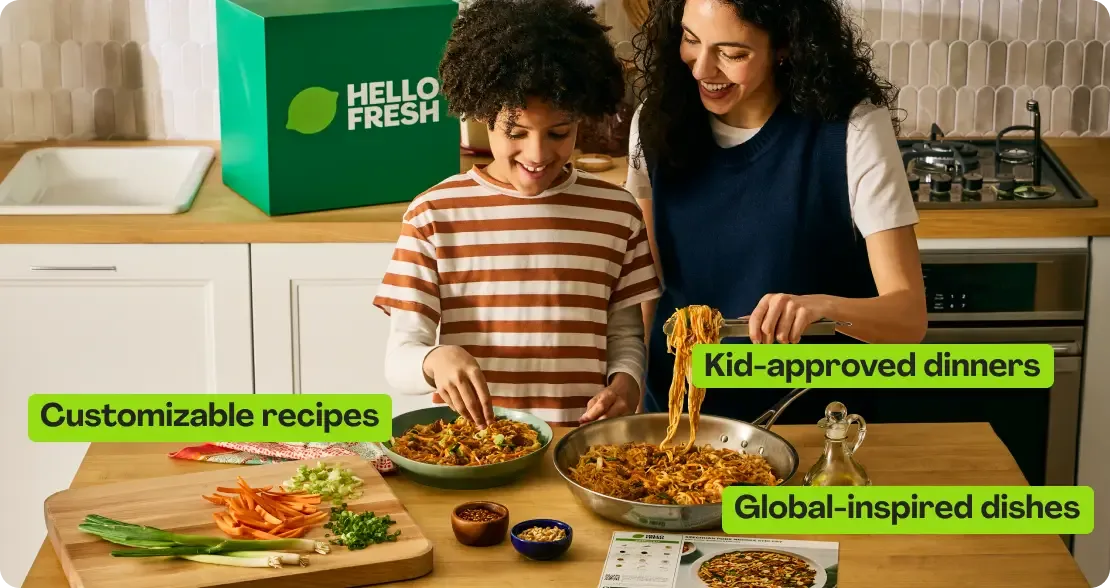
Best for: Households that want variety, ease, and family-friendly options at a mid-range price.
With 70–80 weekly recipes, recipe cards designed for non-cooks, and pricing between $9–$11 per serving at standard rates, HelloFresh hits the widest range of use cases. Wirecutter named it the best all-around meal kit after independent testing. The main limitation: it's a cooking service. If you want to skip the 30–40 minutes of active prep, it's not the right fit.
Skip if: You want fully prepared meals or you're a solo subscriber ordering the minimum plan, where shipping costs push effective per-serving cost up significantly.
Factor — Best for No-Cook Convenience
Best for: Busy professionals or anyone who wants restaurant-quality meals without cooking.
Fully prepared, chef-crafted, and available across keto, high-protein, and calorie-smart tracks. At $10.99 per serving, it's expensive relative to ready-to-cook services, but competitive with takeout. DeliveryRank ranks it as the best overall meal delivery service in 2026 when convenience is the primary criterion.
Skip if: Budget is the primary driver. Factor's ongoing cost adds up fast for households ordering five or more meals per week.
Green Chef — Best for Certified Organic Households
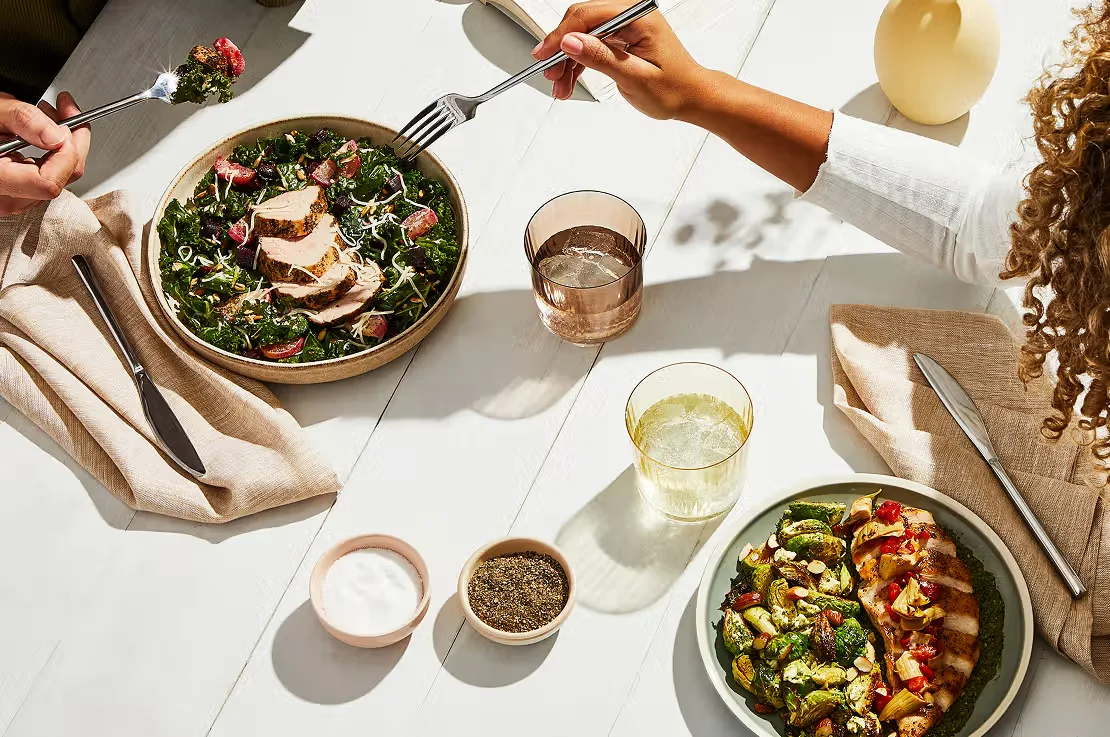
Best for: Organic-focused eaters who are willing to pay a premium for verified sourcing.
The USDA certification is externally verified — not marketing language. Roughly 40 weekly options and pricing at $12–$14 per serving mean you're paying a meaningful premium. If you wouldn't use the organic certification or the veggie-forward menus, a different service offers better value per dollar.
Skip if: You care more about menu variety than sourcing credentials. The 40-option weekly menu gets limiting for long-term subscribers.
EveryPlate — Best Budget Option
Best for: Budget-conscious households where cooking is not a burden.
At approximately $5.00 per serving in Serious Eats testing, it's the most affordable ready-to-cook option by a meaningful margin. The trade-off is fewer menu options and less ingredient variety than mid-tier services. For households primarily concerned with reducing the grocery bill while still cooking at home, it's the clearest choice.
Skip if: Recipe variety matters to you long-term. The smaller menu makes repetition more likely within a few weeks.
Hungryroot — Best for Mixed Dietary Households
Best for: Households with varied dietary needs or those who want more flexibility than a traditional meal kit subscription provides.
The hybrid grocery-and-meal-kit model is genuinely different from anything else in the category. At approximately $10.50 per serving, it's priced in the premium tier — which means the flexibility needs to justify the cost for your specific household.
Skip if: Everyone in your household eats the same things. Hungryroot's flexibility is most valuable when individual dietary needs vary.
Purple Carrot — Best for Plant-Based Nutrition Depth
Best for: Plant-based eaters who prioritize nutritional quality and flavor depth over convenience.
The "food as medicine" philosophy produces meals that are more nutritionally intentional than standard vegan options. At approximately $11.23 per serving, it's reasonably priced for a specialty service.
Skip if: You're not committed to a plant-based diet. Purple Carrot doesn't offer meat options, so mixed households will find it limiting.
Blue Apron — Best for Experienced Home Cooks
Best for: Experienced home cooks who want creative recipes with quality ingredients at a mid-range price.
Subscription rates as low as $9–$10 per serving make it accessible, and its recipe development has historically emphasized culinary creativity. The weekly menu is smaller than HelloFresh, which matters more the longer you stay subscribed.
Skip if: You're new to cooking. Blue Apron's recipes assume a baseline of culinary knowledge that can frustrate beginners.
Mosaic Foods — Best Budget Prepared Option
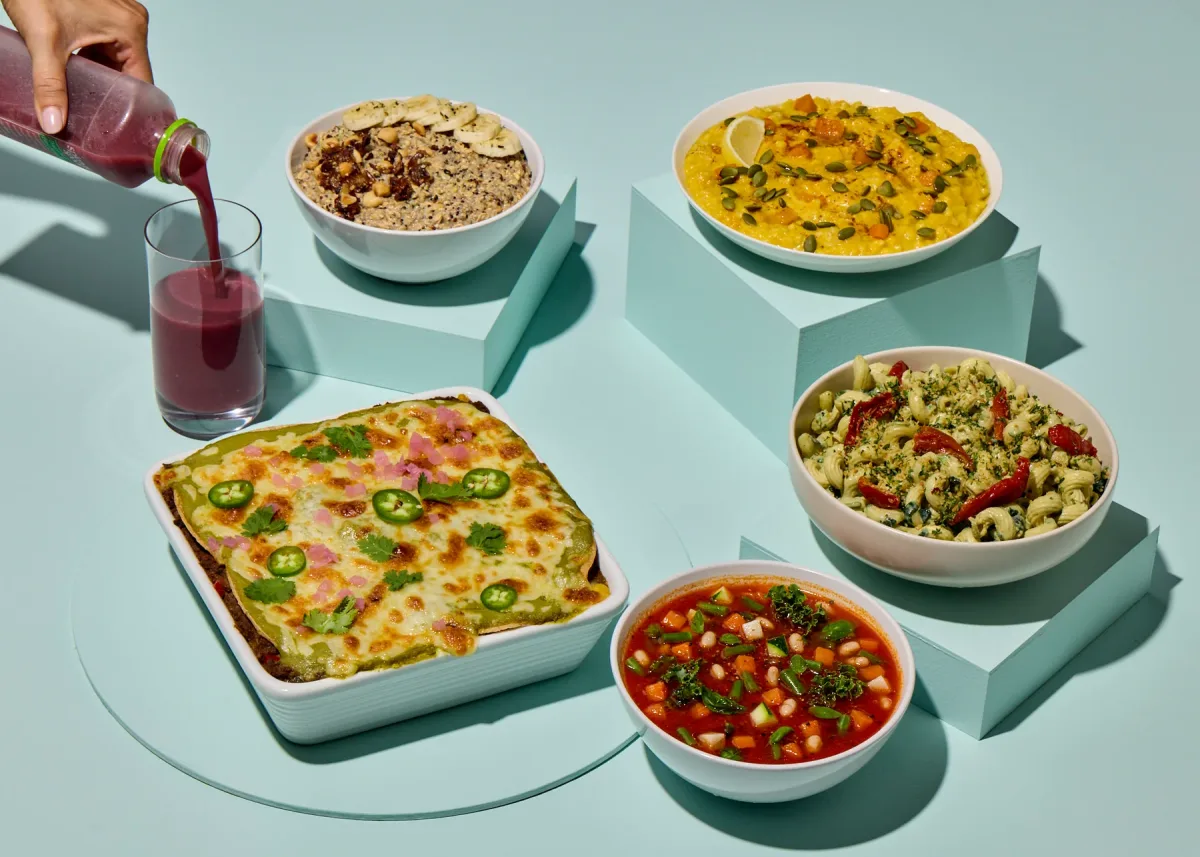
Best for: Households that want fully prepared meals without Factor's price tag.
CNET identifies Mosaic Foods as the cheapest prepared option at approximately $8.64 per serving for family meals — a significant outlier in the ready-to-eat category. If you want the convenience of no cooking at a lower price point than Factor or CookUnity, Mosaic is worth evaluating.
Skip if: You want a wide variety of chef-crafted individual meals. Mosaic focuses on family-style servings, not individual-portioned gourmet options.
Frequently Asked Questions
What is the most affordable meal kit delivery service in 2026?
EveryPlate and Dinnerly are consistently the most affordable ready-to-cook options, with per-serving costs starting around $5–$6 at standard rates, according to both CNET and NBC News. EveryPlate tested at approximately $5.00 per serving in Serious Eats' cost breakdown, making it the budget anchor for the category. If you want the cheapest prepared meal option, Mosaic Foods offers family meals at approximately $8.64 per serving, per CNET.
Which meal kit service is best for families in 2026?
HelloFresh is the most consistently recommended family-friendly service, cited by both DeliveryRank and NBC News. Its 70–80 weekly recipe options give parents enough variety to satisfy different household preferences, and its recipe cards are designed to be accessible to cooks of all skill levels. Pricing between $9–$11 per serving at standard rates is manageable for family-sized orders.
Is it worth paying more for a fully prepared meal delivery service?
It depends on your baseline comparison. Factor at $10.99 per serving is expensive relative to ready-to-cook services, but comparable to fast-casual dining. If your alternative is ordering takeout three nights a week, a prepared service like Factor may actually cost less while delivering better nutritional control. If your alternative is cooking from scratch, the premium is harder to justify unless time is genuinely scarce.
How do meal kit services handle dietary restrictions?
Depth matters more than labels. Green Chef holds USDA organic certification — externally verified, unlike "natural" or "clean" labels. Factor offers over 90 recipes across structured dietary tracks (keto, high-protein, calorie-smart), per DeliveryRank. Purple Carrot is the strongest option for plant-based eaters who want nutritional intentionality, not just the absence of meat. For any service, look at how many meals per week actually fit your dietary category, not just whether the category is listed.
What happens to meal kit prices after the introductory period ends?
Introductory discounts of 30–50% are standard across every major service. After the discount period — typically after your first 2–4 orders — prices revert to standard rates. The per-serving figures in this guide reflect standard rates, not introductory pricing, specifically to give you an accurate picture of ongoing cost. If a service's standard pricing doesn't fit your budget, the introductory discount doesn't change that long-term.
How do meal kit delivery services compare to other subscription categories?
Meal kits represent one of the more hands-on subscription categories — they require active engagement (cooking, schedule management, skip week reminders) compared to passive subscriptions like streaming. If you're comparing subscription spending across categories, it's worth noting that services like Netflix, Hulu, and Disney+ run $8–$18/month regardless of how much you use them, while meal kits charge per serving based on how many meals you order. For households already managing multiple subscriptions — streaming, gaming, books, fitness — meal kits add the highest per-month variable cost in most budgets. If you're also looking at health and fitness subscriptions alongside a meal kit, factor in combined monthly spend before committing to both.
The Bottom Line: Which Meal Kit Should You Choose?
Here's the decision tree in plain terms:
- You want to cook and you have a family or need variety → HelloFresh
- You want to cook and price is the top priority → EveryPlate
- You don't want to cook at all → Factor (or Mosaic Foods if budget is tighter)
- You care about certified organic sourcing → Green Chef
- You eat plant-based and want nutritional depth → Purple Carrot
- Your household has mixed dietary needs → Hungryroot
- You're an experienced cook who wants creative recipes → Blue Apron
No meal kit service is the best for every household. The right answer is determined by how much you want to cook, what your dietary requirements are, and what you're comparing the cost to — takeout, restaurant meals, or from-scratch grocery shopping.
One final tip: almost every service on this list offers a free trial or heavily discounted first box. Use that first order to evaluate the recipe card quality, ingredient freshness, packaging, and shipping reliability — not just the food itself. Those operational factors are what determine whether a subscription is sustainable past the introductory period.
Reviewed by the Trusted Buyer Report editorial team. This article was drafted with AI assistance and fact-checked before publishing. How we review →
We may earn a commission when you use our links to make a purchase. This helps fund this independent site and never influences our editorial recommendations. Full disclosure →