Affiliate disclosure: Trusted Buyer Report may earn a commission when you click links and make a purchase, at no extra cost to you. Scores are finalized before affiliate links are applied. Full disclosure → | This article was researched and drafted with AI assistance and reviewed by our editorial team before publishing. Editorial standards →
TL;DR — Best Auto Tools for DIY Mechanics (2026)
- Best first purchase: A click-type torque wrench ($65–$120) — prevents the most expensive DIY mistakes
- Biggest gap most home mechanics have: A mid-range OBD2 scanner ($120–$300) with live data, not just a code reader
- Most useful cordless tool: A 3/8" or 1/2" drive cordless impact wrench from Milwaukee, DeWalt, or Makita
- Brake job essentials beyond sockets: Brake piston wind-back tool + bleeder kit + jack stands
- Best budget move: Buy fewer, better tools matched to your actual repair patterns — not large sets with fillers
The Real Reason DIY Mechanics Waste Money on Tools
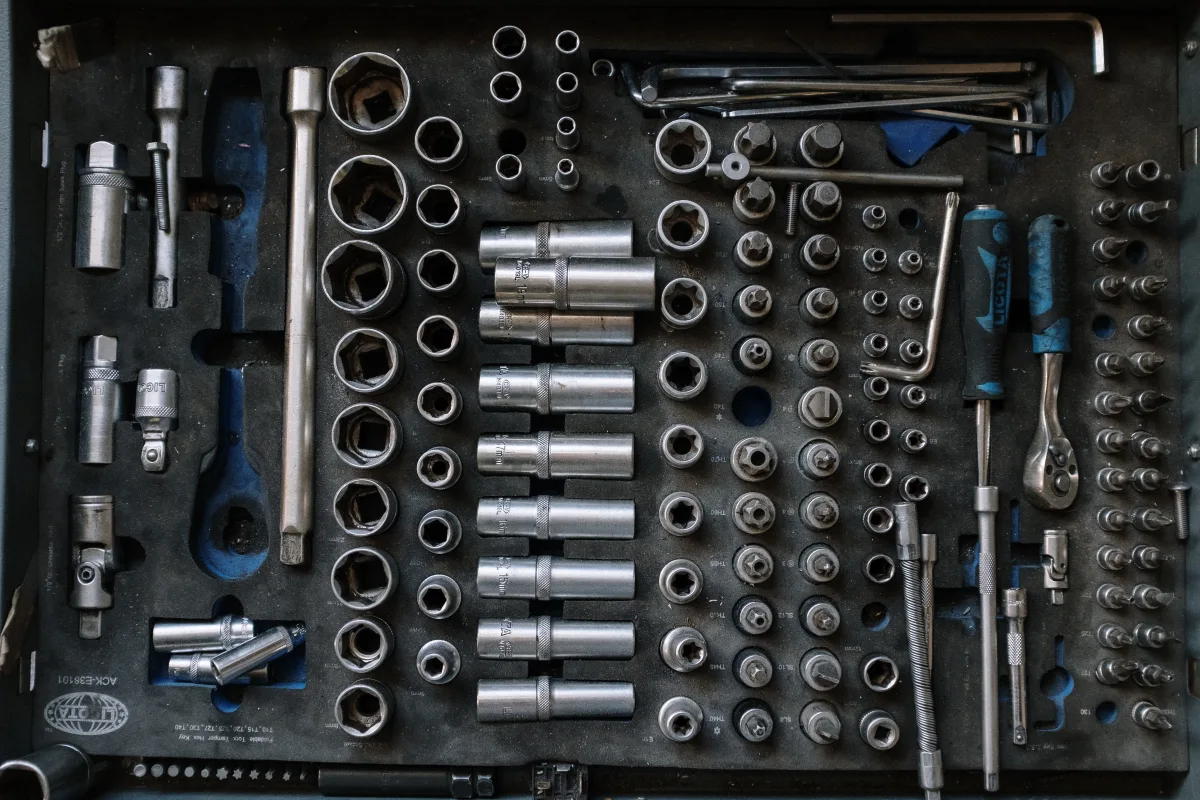
Most home mechanics don't have a tool quantity problem. They have a tool selection problem.
A 300-piece socket set looks impressive on the shelf. But it won't save you when a seized caliper bolt strips because you didn't have a torque wrench — or when a check engine light comes back three days after you cleared it because your $29 code reader can't show live oxygen sensor data.
The best auto tools for DIY mechanics in 2026 aren't the most expensive or the most numerous. They're the ones matched precisely to the repairs you actually do.
This guide is built on that principle. Every recommendation here draws on survey data about what home mechanics actually fix, market research on where the tool industry is heading in 2026, and honest assessments of where budget tools are fine and where they genuinely aren't.
If you're building or refining your home garage toolkit this year, here's the framework to do it right.
How this guide was researched: This guide is based on manufacturer specifications, independent industry surveys (including the TOPDON Technology 2025/2026 DIY mechanic survey), market data from Business Research Insights and IBISWorld, and verified customer feedback aggregated from multiple retail platforms. It does not reflect hands-on testing by Trusted Buyer Report. Sources are cited throughout. How we review →
Why 2026 Is a Pivotal Year for Home Mechanics
The economics of car ownership have shifted in a way that makes DIY maintenance more financially meaningful than it was five years ago.
According to Business Research Insights, the global automotive tools market was valued at $30.87 billion in 2026 and is projected to reach $42.39 billion by 2035 — a 4.78% compound annual growth rate. That growth reflects both higher consumer demand and accelerating product innovation, meaning more capable tools are hitting accessible price points every quarter.
On the demand side: the DIY auto parts market grew approximately 65% from 2017 to 2025 (a 5.3% CAGR), according to the Auto Care Association's 2026 Factbook as reported by Hedges & Company. Many consumers who started repairing their own vehicles during 2020–2021 kept going — creating a permanently higher baseline of active home mechanics.
Meanwhile, IBISWorld's 2026 industry analysis links the continued rise in DIY activity to three converging forces: rising part prices, inflation, and a shortage of skilled technicians. At the same time, modern vehicles are more electronically complex than ever — which raises the stakes for choosing the right diagnostic tools.
This is the context you're making tool decisions in. And it's why those decisions matter more than they did a decade ago.
For a broader view of the 2026 automotive landscape — including how to source parts, manage insurance costs, and buy tires smartly — the Automotive Buyer's Guide 2026 provides useful surrounding context.
The Four Repairs DIY Mechanics Actually Do — and What Each One Requires
Before buying a single tool, you need to know what you're actually going to fix.
A TOPDON Technology survey of DIY mechanics found that nearly 90% identified the same four repair categories as their most common activities: engine diagnostics, oil changes and fluids, brake and rotor work, and electrical/battery-related repairs.
Each of these categories has a distinct toolkit. Buying tools outside your actual repair pattern is where most DIYers waste money.
| Repair Category | Minimum Required Tools | Common Mistake |
|---|---|---|
| Engine Diagnostics | Mid-range OBD2 scanner, multimeter | Using a basic code reader that only clears codes — no live data |
| Oil Changes & Fluids | Drain pan, filter wrench, torque wrench, funnel | Skipping torque wrench on drain plug → stripped threads |
| Brake & Rotor Work | Torque wrench, brake piston wind-back tool, bleeder kit, jack stands | Using a C-clamp on rear calipers with integrated parking brakes |
| Electrical & Battery | Multimeter, OBD2 scanner, terminal cleaner | Replacing parts without testing the circuit first |
The same survey found that 85% of DIY mechanics use diagnostic tools specifically to determine whether they can complete a repair themselves before committing. That's a fundamentally different use case from a professional technician — and it shapes which tools deliver the most real-world value at home.
Torque Wrenches: The Most Underestimated Tool in Any DIY Garage
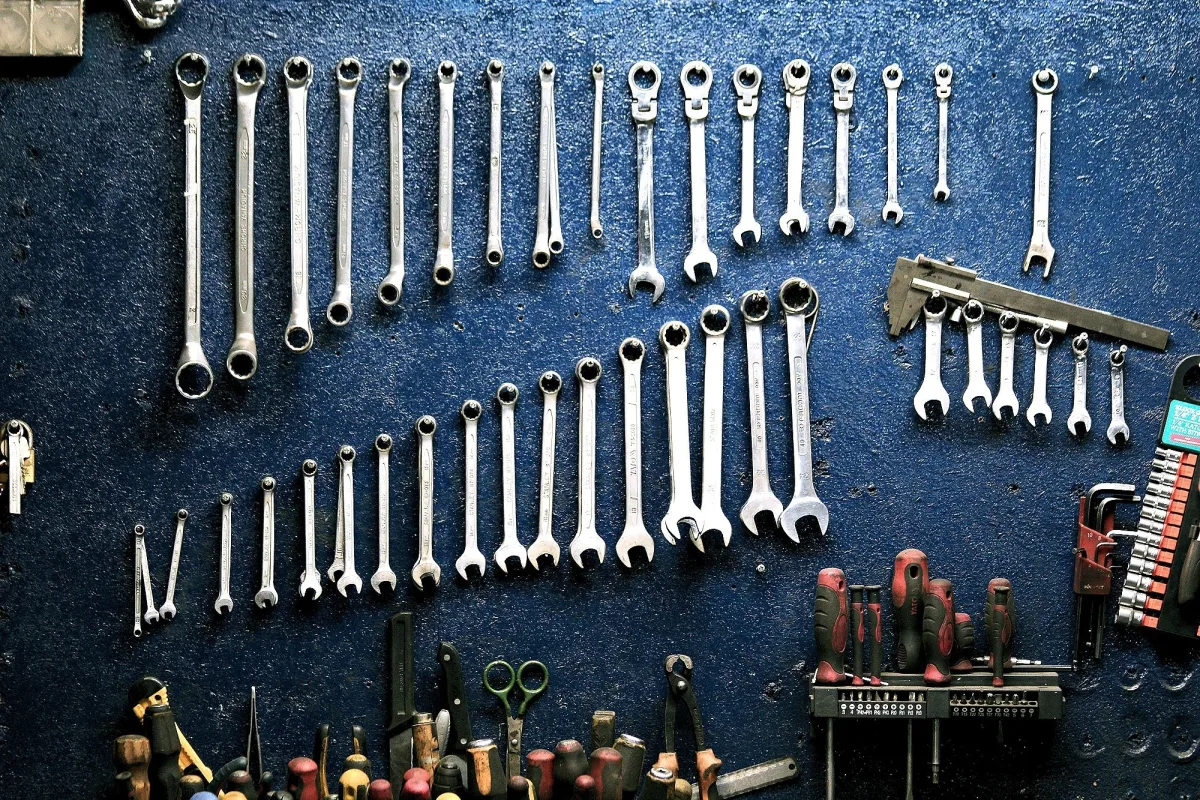
Bottom line: A torque wrench costs $65–$120. Not having one costs far more.
Here's the scenario in full: a home mechanic replaces their own brake pads, saves $240 in labor, but overtightens a caliper bolt without a torque wrench. The rotor warps from uneven clamping pressure. What started as an $80 parts job becomes a $350 repair — new rotor, new caliper hardware.
The math is not complicated.
According to VEVOR's guide to top automotive mechanics tools for 2026, torque wrenches are essential for brake, engine, and wheel fitting work — for DIYers as much as professionals. The tool ensures bolts hit manufacturer-specified torque values, which matters because both under- and over-tightening cause failures. A lug nut torqued to 60 ft-lb on a vehicle that specifies 100 ft-lb can loosen while driving. One torqued to 140 ft-lb on that same vehicle can crack the wheel hub.
Which type of torque wrench should you buy?
For most home mechanics, a click-type torque wrench in 1/2-inch drive with a 10–150 ft-lb range covers the majority of tasks: lug nuts (typically 80–120 ft-lb), brake caliper bolts, and oil drain plugs. The audible and tactile click signals when target torque is reached — no display to read, no guesswork.
- Beam-type wrenches are cheaper and need no calibration, but require you to watch a needle while applying force — awkward in tight spaces.
- Digital torque wrenches offer the highest precision but cost $180–$300, which is rarely justified for home use.
One maintenance tip most guides skip: Always release the tension setting back to the lowest value after use. Leaving a click-type wrench under spring tension compresses the internal mechanism and throws off calibration over time. Store it in its case.
OBD2 Scanners: Why 51% of DIY Mechanics Are Using the Wrong Tool
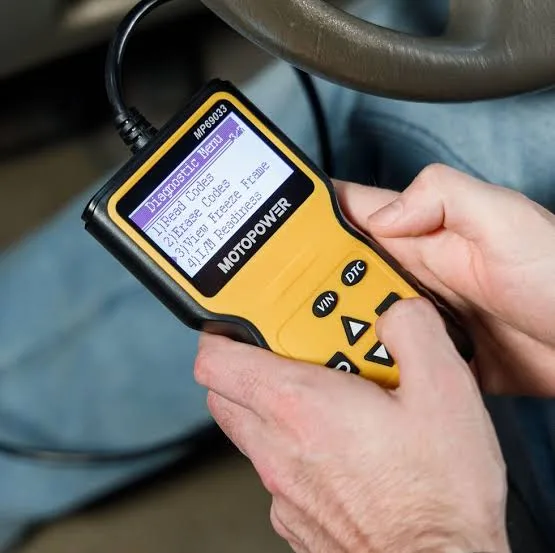
The gap: 85% of home mechanics use diagnostic tools to decide if a repair is within their skill set. But only 49% have a full-featured scan tool. The other 51% have a basic code reader — which is the functional equivalent of a smoke detector that tells you "fire" but can't tell you where.
The most common frustration, cited by 49% of DIYers in the TOPDON survey, is reading a fault code and not knowing what to do next. Here's why that happens: a sub-$30 OBD2 reader reads and clears codes. That's it. It can't show live oxygen sensor voltage, fuel trim percentages, coolant temperature curves, or misfire counts per cylinder.
Without that live data, a code like P0420 (catalyst efficiency below threshold) looks identical whether the root cause is:
- A failing catalytic converter
- A bad downstream O2 sensor
- An exhaust leak
- An engine running rich
You clear the code, drive two weeks, and the light comes back — because you treated the symptom, not the cause.
What a mid-range scanner actually unlocks
A mid-range scan tool in the $120–$300 range — products like the Autel AL619, Launch CRP129E, or Innova 3160g — adds:
- Live data streaming (sensor readings in real time)
- Freeze frame data (what the vehicle was doing when the code triggered)
- System-specific resets — oil life reset, TPMS relearn, throttle body relearn
These features directly address the "I cleared it but it came back" problem.
What to evaluate before buying a scanner
The TOPDON/Aftermarket Matters survey data shows 74% of DIYers rank features and functions as the top purchase factor — above brand reputation and price. That's a meaningful shift toward merit-based evaluation. Before buying, check:
- Vehicle coverage list — does it support your specific make, model, and year?
- Software update policy — does the manufacturer provide updates, and are they free or subscription-based?
- User community — 77% of DIY mechanics learn about new diagnostic tools through YouTube. A scanner with no active tutorial content is a red flag for usability.
Looking further out: 81% of survey respondents identified OEM-secured gateways and encrypted vehicle systems as a growing diagnostic challenge. As newer vehicles age into the DIY market over the next 3–5 years, scanner compatibility with secured systems will matter more. Buying a scanner with an active update subscription now is a better long-term investment than a cheaper unit with no update path.
Brake Service Tools: What You Need Beyond the Basic Socket Set
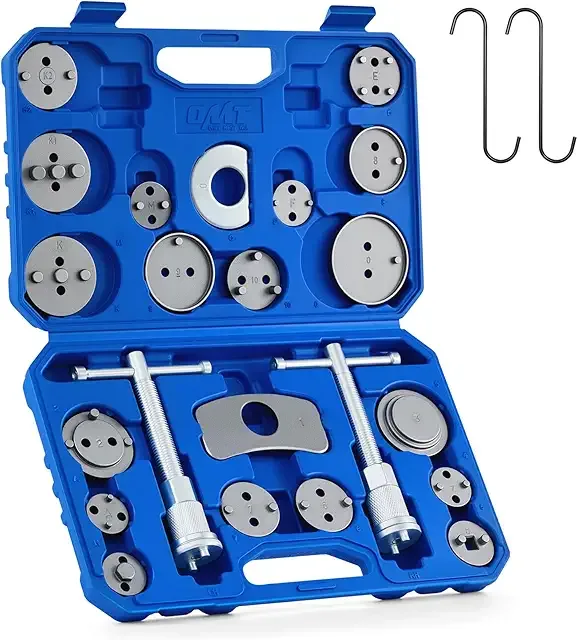
Brake jobs sit in an uncomfortable category for home mechanics: common enough to save real money, safety-critical enough that the wrong tool creates real danger.
Here's what you actually need beyond a torque wrench (which is non-negotiable for caliper bolts and lug nuts):
Brake piston wind-back tool ($35–$75) Rear disc brakes with integrated parking brakes use a threaded piston that must be rotated clockwise while being compressed — a standard C-clamp pushes straight in and will damage the piston threads. A wind-back tool set prevents a $250+ caliper replacement.
Brake bleeder kit ($40–$80) Listed among VEVOR's top 20 automotive mechanics tools for 2026, a bleeder kit removes air from brake lines after pad replacement or fluid changes. Vacuum-type bleeders work solo and cost $40–$80. Pressure bleeders are faster but require a reservoir cap adapter matched to your vehicle.
Flare nut (brake line) wrenches ($25–$45) Brake line fittings are soft metal. A standard open-end wrench rounds them on the first attempt. Flare nut wrenches grip on five sides. You won't need these for pad swaps alone, but any work involving brake lines or ABS sensors makes them essential.
Jack stands — minimum two, ideally four ($45–$85) A floor jack lifts the vehicle. Jack stands hold it safely. Never work under a vehicle supported only by a hydraulic jack. This is a one-time purchase.
One critical detail: Never reuse brake fluid that has been bled out of the system. Brake fluid is hygroscopic — it absorbs atmospheric moisture — and used fluid has a lower boiling point than fresh fluid. Dispose of it properly and use fresh DOT-rated fluid matching your vehicle's specification.
Power Tools for the DIY Garage: Cordless vs. Corded in 2026
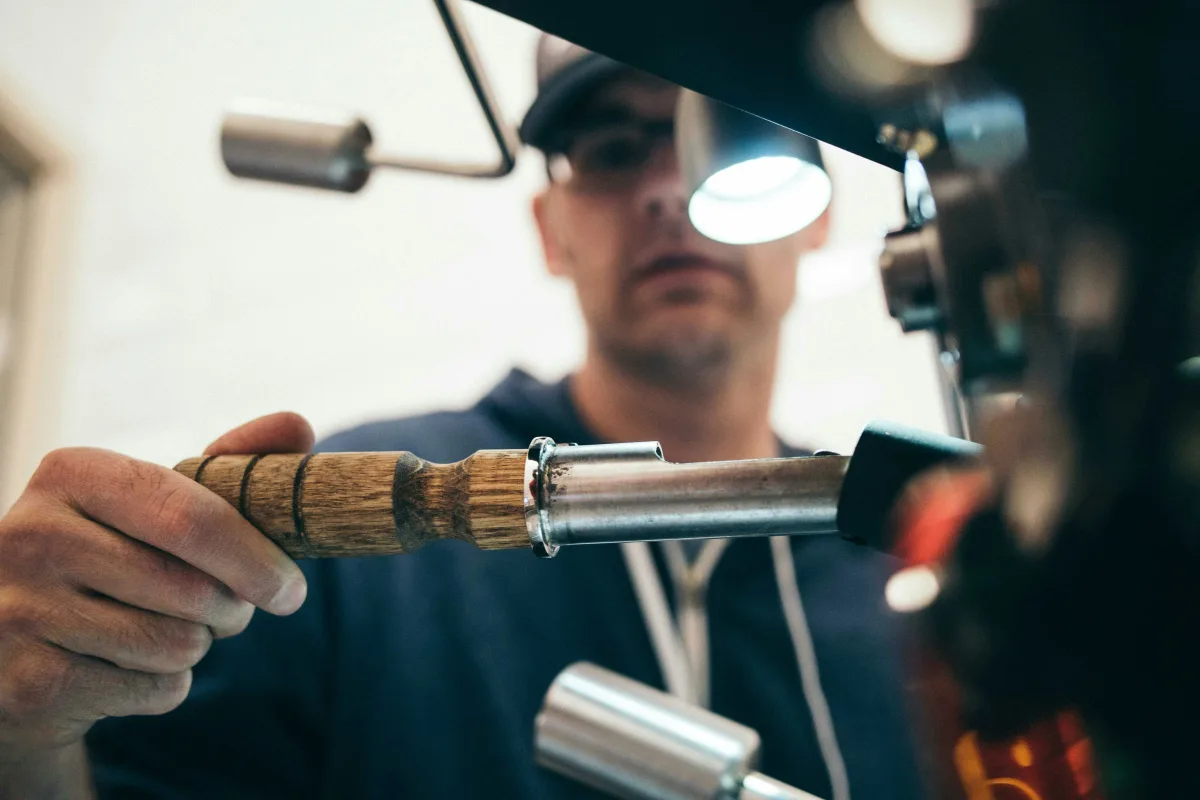
Cordless power tools now dominate the automotive DIY space — and the technology has earned that dominance. As noted by Business Research Insights, high-capacity lithium-ion battery tech has effectively closed the power gap between cordless and corded tools for most DIY applications, while eliminating extension cord dependency and enabling work in tight spaces under a vehicle.
The single most useful cordless tool for a home mechanic is a 3/8-inch or 1/2-inch drive cordless impact wrench. It removes lug nuts, suspension bolts, and exhaust hardware in seconds — tasks that would require significant effort with a breaker bar and risk rounded fasteners. A mid-range unit from Milwaukee or DeWalt in the $150–$250 range delivers 200–300 ft-lb of torque, sufficient for virtually every DIY application short of heavy truck work.
Which brand ecosystem makes sense?
Brand ecosystem choice matters more than most buyers realize, because batteries aren't cross-compatible between brands. According to Tekmetric's guide to best mechanic tool brands:
- Milwaukee Tool (M18 platform): Specializes in innovative cordless power tools and has been expanding aggressively into automotive. Available at Amazon, Ace Hardware, and Home Depot. Widely regarded as one of the most capable cordless ecosystems for auto work.
- DeWalt: Comprehensive product line covering wrenches, power tools, tool kits, storage, and hand tools. Strong choice for DIYers who want a single-brand ecosystem with broad retail availability at Amazon, Lowe's, and Ace Hardware.
- Makita: Powers over 200 tools on one battery platform — the logical choice if you already own Makita batteries from other home improvement projects.
For occasional DIYers, one cordless impact wrench and one drill/driver on the same battery platform covers roughly 80% of power tool needs. Corded tools still make sense for bench grinders, sustained-use angle grinders, and air compressors, where continuous battery drain is a genuine concern.
Hand Tools That Actually Earn Their Place
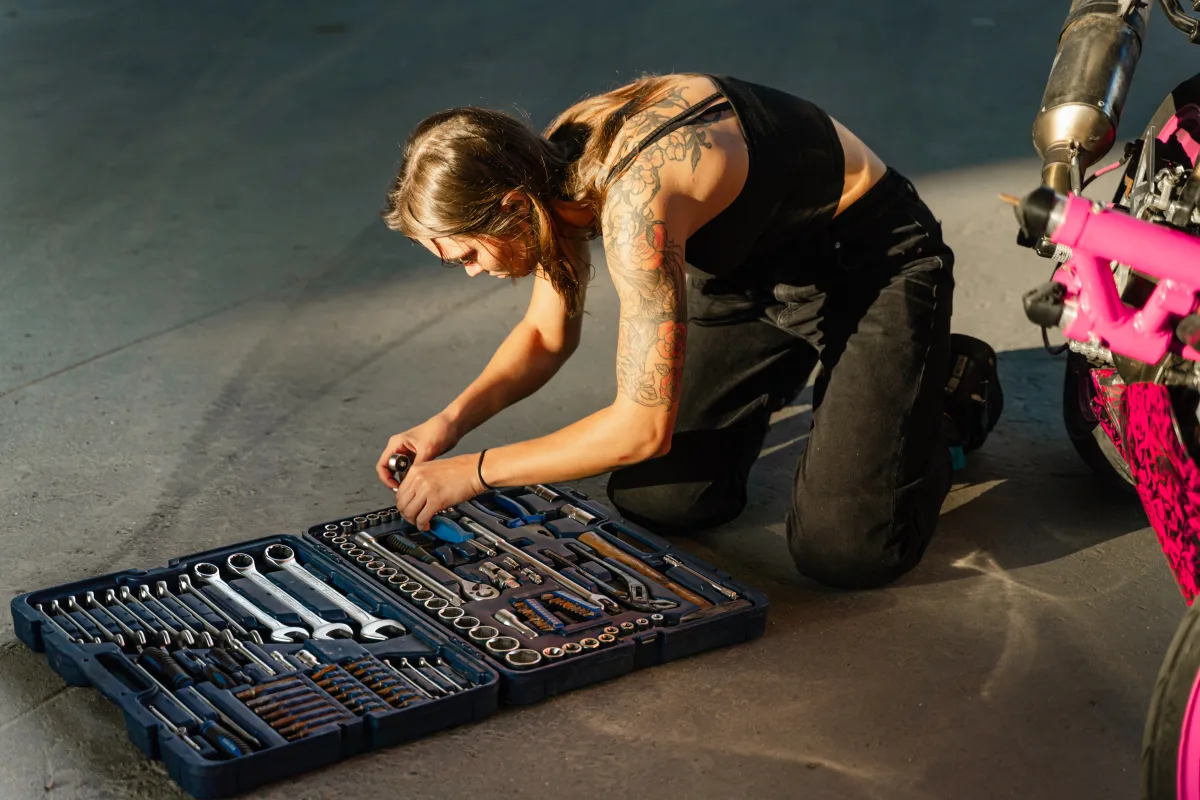
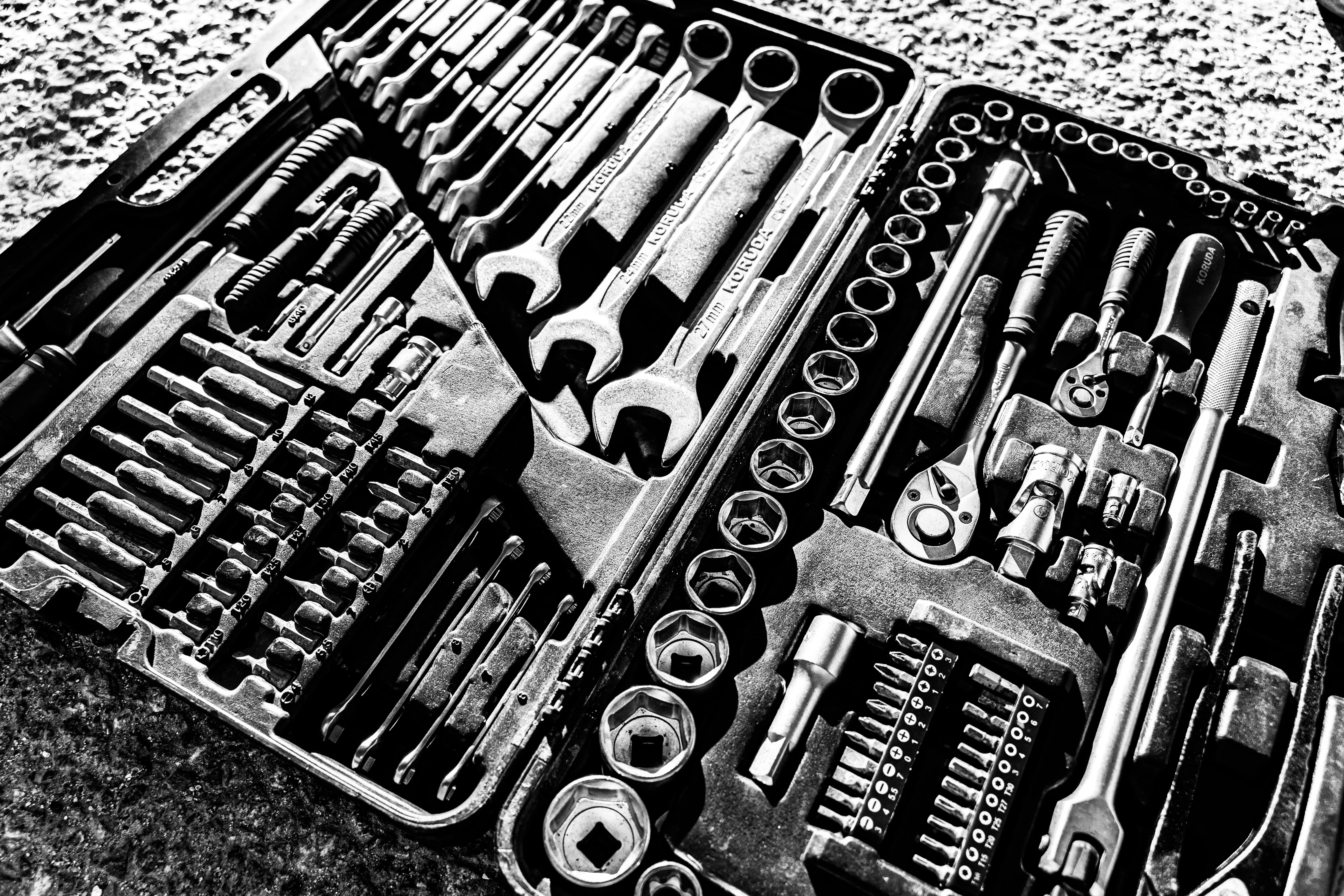
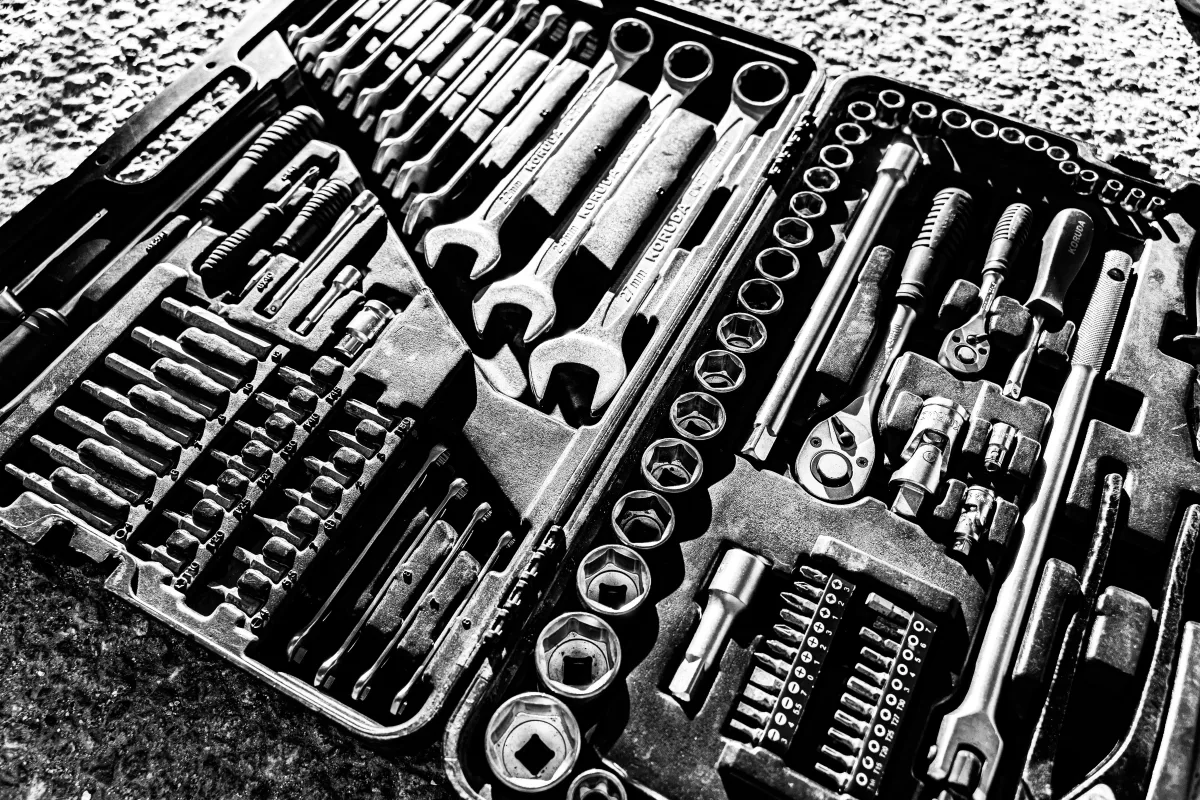
The most common hand tool mistake: buying a 300-piece socket set because the price-per-piece looks good — then discovering that 200 of those pieces are sizes you'll never use, while the set lacks a 10mm deep socket (the single most-used socket in automotive work).
Here's what consistently earns its place in a DIY garage:
Socket set (metric and SAE, 1/4" and 3/8" drive) Focus on 8mm–19mm metric coverage with both standard and deep sockets. Add a 1/2-inch drive set for larger fasteners. Chrome vanadium steel construction is the minimum acceptable quality for automotive use.
Combination wrench set (8mm–19mm metric) Box end for breaking fasteners loose, open end for spinning them off. Flex-head ratcheting combination wrenches cost more but dramatically reduce knuckle injuries in tight spaces.
Pry bar set A flat pry bar and a curved pry bar handle suspension bushing work, door panel removal, and separating stuck components without damaging adjacent parts.
Screwdriver set Phillips #1, #2, and #3; flathead in multiple widths; and — critically if you work on Japanese vehicles — at least one JIS (Japanese Industrial Standard) driver. JIS screws are frequently stripped by standard Phillips drivers because the angles differ slightly.
Pliers set Needle-nose, slip-joint, locking (Vise-Grips), and wire-cutting pliers cover the overwhelming majority of DIY tasks. Channel-lock pliers in two sizes handle hose clamps and larger fittings.
Ball-peen hammer + plastic/rubber mallet The ball-peen for metal work; the mallet for plastic trim, wheel hub separation, and components that need persuasion without damage.
Safety and Lighting: The Underinvested Category
Here's where DIY mechanics consistently underinvest — and it's the category where cutting corners creates the most risk.
Proper floor jack with safety jack stands Never substitute a low-profile scissor jack for a floor jack when doing any work under the vehicle. A 2-ton or 3-ton floor jack ($80–$150) combined with properly rated jack stands is the baseline.
Nitrile gloves (not latex) Automotive fluids — brake fluid, coolant, transmission fluid — are corrosive or toxic with prolonged skin contact. Nitrile gloves are oil-resistant and don't degrade the way latex does with solvent exposure.
LED work light with magnetic base A quality articulating LED work light ($30–$60) changes what's possible in a home garage. Look for 1,500+ lumens, a magnetic base for hands-free positioning, and a rechargeable battery if you want to work under the vehicle without a cord.
Safety glasses Not negotiable. Brake dust, rust, and metal shavings travel in unexpected directions.
The Tools Worth Buying Quality vs. Where Budget Options Work Fine
Not every tool category warrants a premium purchase. Here's where the quality tradeoff actually matters:
Spend more here:
- OBD2 scanner: A $30 reader will frustrate you. A $150–$250 unit will pay for itself on the first repair you diagnose correctly.
- Torque wrench: A poorly calibrated torque wrench is worse than none — it gives false confidence. Buy from a reputable brand (Tekton, CDI, Snap-on) and treat it properly.
- Impact wrench: Cheap cordless impact wrenches strip fasteners and fail mid-job. Milwaukee, DeWalt, and Makita are worth the premium on this one.
- Jack stands: This is a safety item. Buy stands rated well above your vehicle's weight. 3-ton stands are appropriate for most passenger vehicles.
Where budget options perform adequately:
- Basic socket sets for common sizes: A $40–$60 set with chrome vanadium construction works fine for occasional DIY. You can always upgrade individual sockets that see heavy use.
- Drain pans and funnels: Function over brand here.
- Screwdrivers: A mid-range set from Stanley or Craftsman is perfectly adequate for automotive work.
- Shop rags and spray cleaner: Consumables — buy in bulk from the warehouse club.
Building Your Toolkit by Budget
Starter toolkit (~$300–$450)
For the DIYer who primarily does oil changes, filter replacements, and wants basic diagnostic capability:
- Click-type torque wrench (Tekton or CDI) — $70–$100
- Mid-range OBD2 scanner (Innova 3100j or similar) — $80–$120
- Metric socket set, 1/4" and 3/8" drive — $50–$80
- Combination wrench set, 8mm–19mm — $40–$60
- Quality drain pan + filter wrench — $30–$40
- Pair of 3-ton jack stands — $45–$65
Intermediate toolkit (~$700–$1,000)
For the DIYer who does brake jobs, suspension work, and wants full diagnostic capability:
Everything in the starter tier, plus:
- Cordless impact wrench (Milwaukee M18 or DeWalt 20V MAX) — $150–$220
- Brake piston wind-back tool set — $40–$65
- Vacuum brake bleeder kit — $45–$75
- Full-featured OBD2 scanner (Autel AL619 or Launch CRP129E) — $120–$200
- Floor jack (3-ton hydraulic) — $80–$130
- LED work light — $35–$55
- Multimeter (Fluke 115 or similar) — $90–$120
Frequently Asked Questions
What's the single most important auto tool for a beginner DIY mechanic? A torque wrench. It's the tool that prevents the most expensive beginner mistakes — stripped drain plugs, warped rotors, and loose lug nuts. A click-type wrench in 1/2-inch drive covering 10–150 ft-lb handles oil changes, brake jobs, and wheel work.
Is a $30 OBD2 reader good enough for home use? For simply reading and clearing a check engine code before taking your car to a shop, yes. For diagnosing the root cause of a code yourself, no. A basic reader can't show live sensor data, which means you're guessing at the cause. Budget at least $120–$150 for a scanner with live data streaming.
Should I buy Milwaukee, DeWalt, or Makita cordless tools? It depends on what batteries you already own. All three brands produce excellent automotive-grade cordless tools. If you're starting from scratch, Milwaukee's M18 platform is widely considered best-in-class for automotive DIY. If you already have DeWalt or Makita batteries from home improvement work, stay in that ecosystem.
Do I need air tools for home DIY work? Not necessarily. Modern high-torque cordless impact wrenches have closed the gap significantly. An air compressor is useful for tire inflation, blow-off work, and paint guns — but it's not a prerequisite for brake jobs or general maintenance. Start cordless and add compressed air later if your work expands.
How do I know if my torque wrench is still accurate? Most click-type torque wrenches are factory-calibrated and maintain accuracy for years with proper storage. Signs of calibration drift include the click occurring earlier or later than expected, inconsistent click feel, or visible damage to the ratchet head. Some manufacturers offer re-calibration services; alternatively, a basic torque checker tool (~$35) lets you verify accuracy at home.
What's the difference between a brake piston tool and a C-clamp? A C-clamp compresses a piston straight in — which works on front calipers with simple sliding pistons. Rear calipers with integrated parking brake mechanisms use a threaded piston that must be rotated clockwise while compressed. Using a C-clamp on these damages the thread. A wind-back tool set ($35–$75) handles both types.
What to Read Next
Building a solid garage toolkit is just the start. Here are related guides on the Trusted Buyer Report site that complement this one:
- Best Jump Starters & Emergency Car Kits 2026 — The one item every home mechanic should also keep in their trunk
- Best Dash Cams 2026 — Front, dual-channel, and 360° options reviewed and ranked
- Best Car Wax & Paint Protection 2026 — Keep your paint in shape between mechanical jobs
- Best Tires 2026 — All-season, winter, and performance options tested and ranked
- Automotive Buyer's Guide 2026 — Parts sourcing, insurance, and the broader 2026 ownership landscape