This guide was researched using market data, independent editorial sources, and aggregated buyer feedback. Trusted Buyer Report has not personally tested all services covered. We cite our sources so you can verify. We may earn a commission when you use our links — see our affiliate disclosure. Researched with AI assistance, reviewed and fact-checked by our editorial team.
TL;DR — Quick Answers for Busy Readers
- Best overall meal kit: HelloFresh — widest menu variety, most flexible skip/pause policy
- Best budget meal kit: EveryPlate — starting around $6/serving, same parent company as HelloFresh
- Best plant-based: Purple Carrot — fully vegan, whole-food focus
- Best for minimal cooking: Gobble or CookUnity (heat-and-eat format, under 15 min)
- Best grocery delivery membership: Walmart+ for budget households; Instacart+ for store variety
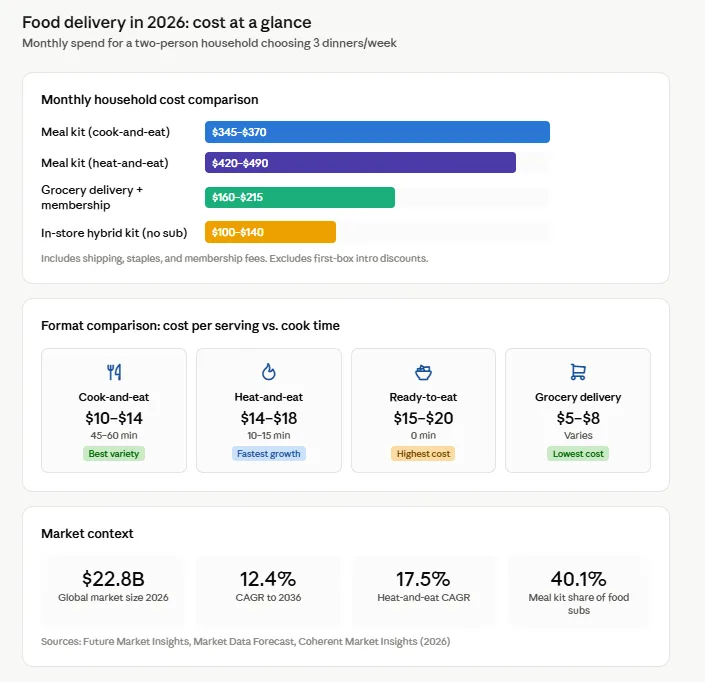
- Real cost for two people: Meal kits run $345–$370/month all-in (3 dinners/week + shipping + pantry staples) vs. $160–$215/month for grocery delivery
- Formats at a glance:
| Format | Cost/Serving | Cook Time | Best For |
|---|---|---|---|
| Meal Kit (cook-and-eat) | $10–$14 | 45–60 min | Structured weeknight cooking |
| Heat-and-Eat Kit | $14–$18 | 10–15 min | Maximum weeknight convenience |
| Ready-to-Eat | $15–$20 | 0 min | Zero-effort home meals |
| Grocery Delivery | $5–$8 (est.) | Varies | Flexible, budget-conscious households |
| Hybrid (in-store kit) | $7–$11 | 30–50 min | Occasional use, no subscription |
What This Guide Covers — and Who It's For
You've seen the ads. You've heard the coworker mention HelloFresh. You've wondered whether Instacart is secretly cheaper than everything else.
Here's what you actually need: a clear map of the formats, a realistic cost breakdown, and enough specifics to know which category — and which service — matches your household before you enter your credit card.
This guide is a pillar for the food and grocery cluster on Trusted Buyer Report. It answers the format question first. Once you know whether meal kits, grocery delivery, or a hybrid approach fits your life, jump to the comparison guides and brand reviews linked throughout.
This guide is for you if:
- You're evaluating meal kit subscriptions for the first time in 2026
- You've tried a service and want to understand whether you chose the right format
- You're a family, a couple, or a single-person household weighing convenience against cost
- You want data, not a "we loved it!" review written by someone with a referral code
Meal Kits vs. Grocery Delivery vs. Hybrid: Which Format Is Right for You?

Here's the decision most buyers skip — and then regret. Choosing the wrong format costs more than choosing the wrong brand. A great meal kit service is useless if your schedule doesn't support 45-minute weeknight cooking. A grocery delivery membership is a waste if you don't meal-plan.
Three formats dominate in 2026:
Meal kits ship pre-portioned, raw (or partially prepped) ingredients with step-by-step recipe cards. HelloFresh is the benchmark. You cook; the planning and shopping are done for you.
Grocery delivery services — Instacart, Amazon Fresh, Walmart+ — send unportioned whole ingredients from a store or warehouse. You plan, select virtually, and cook from scratch. Maximum flexibility, lowest per-serving cost, highest cognitive load.
Hybrid services sit in the middle: meal kits sold at Kroger or Walmart with no subscription required, or grocery platforms with meal kit add-ons. Best for occasional use without commitment.
Which format wins for your situation?
Choose meal kits if:
- You have consistent weeknight availability of 45–60 minutes
- You want to reduce meal-planning friction without eliminating cooking
- Your household has two to four people (economics work best at this size)
- Food waste from unused grocery store produce is a real problem for you
Choose grocery delivery if:
- You already meal plan or cook a wide variety of cuisines
- Your household buys in bulk or has unpredictable schedules
- Cost efficiency is your top priority ($5–$8 estimated cost per serving vs. $10–$14)
- You want full menu flexibility, not a limited weekly rotation
Choose hybrid / in-store kits if:
- You want a no-subscription, no-commitment option
- You're testing the format before subscribing
- You do a regular grocery run and want to grab a kit alongside
How Big Is the Meal Kit Market in 2026 — and Why Should Buyers Care?
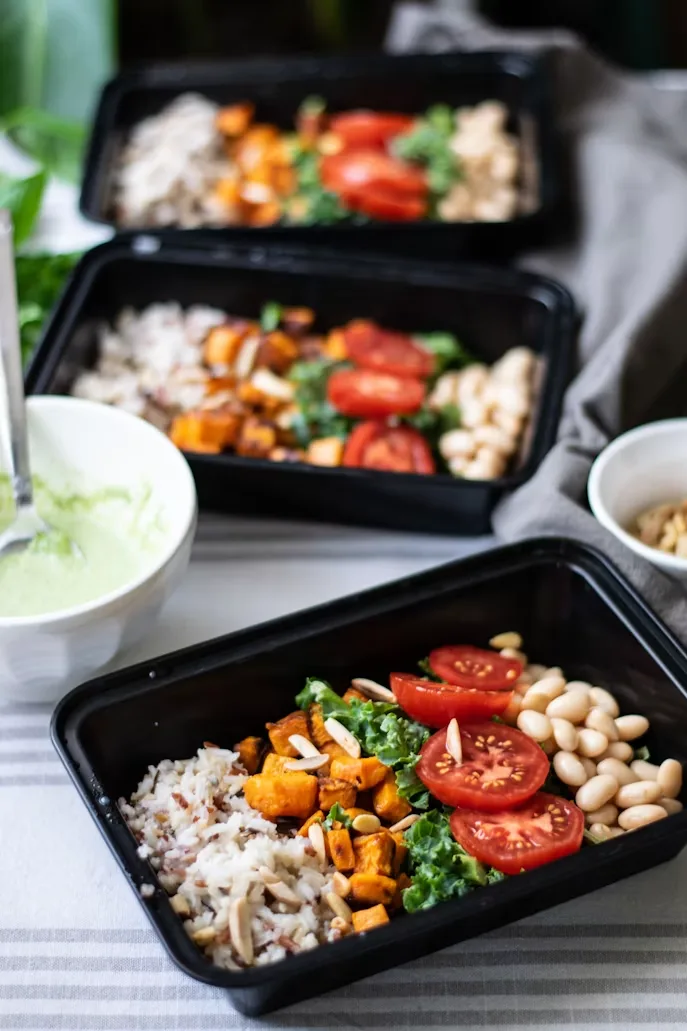
The scale of a market affects your experience as a buyer: more competition means better menus, more flexible cancellation terms, and faster product iteration.
The global meal kit market is valued at approximately $22.82 billion in 2026, according to Future Market Insights, with projections reaching $73.44 billion by 2036 at a compound annual growth rate (CAGR) of 12.4%. A more conservative estimate from Fortune Business Insights puts the CAGR at 8.55% through 2034. The divergence reflects genuine uncertainty about how quickly grocery retailers will absorb meal kit demand through private-label offerings.
That last point matters for buyers. When Kroger and Walmart stock meal kits under their own branding, they undercut subscription-model pricing. The competitive pressure already shows up in more flexible skip/pause policies and lower first-box pricing across the category.
The fastest-growing sub-segment tells you where the category is heading: heat-and-eat formats are projected to grow at a CAGR of 17.5% from 2026 to 2034, according to Market Data Forecast — nearly double the overall market average. If you're evaluating services now, expect heat-and-eat options to expand significantly across most platforms in the next two to three years.
The Real Cost of Meal Kits in 2026: A Household Breakdown
The advertised per-serving price is the least useful number for understanding actual household spend. Wirecutter's 2026 meal kit coverage is direct: meal kits probably will not save you money compared to grocery shopping. The premium exists for convenience, not economic efficiency.
Here's a realistic monthly cost model for a two-person household choosing three dinners per week at $12/serving:
| Line Item | Monthly Cost |
|---|---|
| Meal kit (3 meals × 2 servings × $12 × 4 weeks) | $288 |
| Shipping ($8–$10/box × 4 weeks) | $32–$40 |
| Supplemental pantry staples (oil, salt, etc.) | $25–$40 |
| Total realistic monthly spend | $345–$368 |
For comparison, a two-person household using grocery delivery for equivalent dinners might spend $150–$200/month on groceries plus a $10–$15/month delivery membership fee — roughly $160–$215 total. The gap is real and consistent.
The skip-week trap is where most subscribers lose money without realizing it. Most services require you to pause or skip by a cutoff deadline — typically four to seven days before the scheduled delivery. Miss it, and the box ships, the charge posts, and you're managing a week of perishables you didn't plan for. This isn't a design flaw; it's a structural feature. Set a calendar reminder for your cutoff date.
Budget pick: EveryPlate starts at around $6/serving — the lowest in the mainstream segment — though the menu is narrower and portions run smaller than HelloFresh (same parent company, Hellofresh SE).
Meal Kit Formats Explained: Cook-and-Eat, Heat-and-Eat, Ready-to-Eat
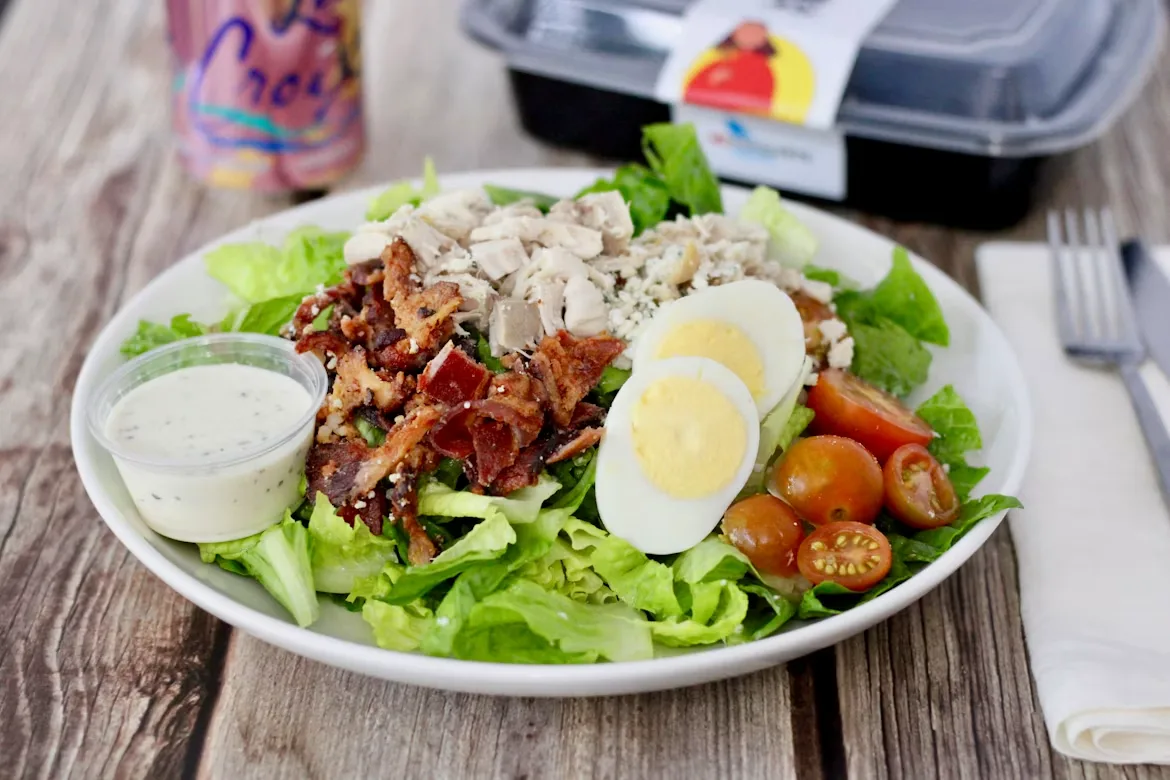
Choosing the right format within the meal kit category matters as much as choosing the right brand. Future Market Insights identifies three primary categories. Here's how they differ in practice:
Cook-and-Eat: The Original Format
Raw, pre-portioned ingredients arrive with detailed recipe cards. You do the cooking — but planning and shopping are handled.
Best for: Households that want a genuine cooking experience and have 45–60 minutes available on weeknights. Also the format with the most skill-building value over time.
Benchmark service: HelloFresh. Wirecutter's top all-around pick for 2026, noted for menu variety that goes beyond the protein-over-starch formula common in the category. The actual cook time across tested services averages 45 to 60 minutes — not the 20-minute promise that appears in most marketing.
Key limitation: Requires consistent schedule availability. If your Tuesday actually runs until 8 pm, a cook-from-scratch kit becomes a Thursday problem.
Heat-and-Eat: The Fast-Growing Middle
Partially or fully cooked meals arrive ready to reheat — typically 10 to 15 minutes.
Best for: Households with 15–20 minutes of realistic weeknight availability, or anyone who wants meal-kit-quality ingredients without the cooking time.
Benchmark service: Gobble pre-cooks many components so final assembly is minimal. CookUnity is another strong option, with chef-prepared meals across diverse cuisines.
Market signal: This is the fastest-growing format at a projected 17.5% CAGR through 2034, per Market Data Forecast. The category is responding to the real availability constraints of working households.
Ready-to-Eat: No Cooking Required
Fully prepared meals need zero cooking — open the container, heat if desired, eat.
Best for: Buyers who want home-meal positioning (nutritional transparency, quality sourcing) with zero cooking involvement.
Benchmark service: Fresh N Lean targets health-conscious buyers who want detailed macros and higher-quality sourcing than a typical delivery app order.
Cost note: Per-serving prices run $15–$20 — closer to restaurant delivery than home cooking. The distinction from restaurant delivery is primarily nutritional transparency and consistency of ingredients.
Allergen note: Scoop Market US data on meal kits reports that FDA oversight of meal kit ingredients varies across services in the U.S. If you have food allergies, verify each service's allergen disclosure practices independently.
Who Actually Uses Meal Kits in 2026? The Real Buyer Profile
The marketing image — a confident home cook excited to expand their culinary horizons — doesn't match the research.
Numerator's psychographics data on meal kit buyers finds they are:
- 1.7x more likely to say they need help with cooking
- 1.4x more likely to engage in structured meal planning
- 1.2x more likely to seek quick-and-easy meal solutions
The typical buyer is a structured, time-pressed person who wants guardrails around weeknight cooking. That profile matters when you're assessing whether a service will stick in your household.
If you already meal plan and cook regularly — a kit adds structure and eliminates shopping friction. High fit.
If you cook impulsively or have variable schedules — the weekly commitment tends to produce skipped weeks, wasted boxes, and cancellation within 90 days. Low fit.
Household size reshapes the economics significantly:
A family of four benefits from pre-portioned ingredients that eliminate scaling guesswork and reduce perishable food waste — a genuine financial and practical advantage.
A single-person household faces a harder calculation. Per-serving costs of $10–$14 are high relative to cooking from scratch. Minimum order sizes (typically two servings per meal) mean paying for a serving you may not eat immediately. The food waste reduction is real, but it rarely offsets the per-serving premium entirely.
Time is the variable that tips the decision most reliably. The Bureau of Labor Statistics reports that the average American spends approximately 40 minutes per day on food preparation and cleanup, as cited by Market Data Forecast. Cook-and-eat kits don't reduce that number — they redirect the time from shopping and planning to cooking. Heat-and-eat formats genuinely compress it.
Dietary Needs: Which Services Cover Vegetarian, Vegan, Keto, and More?
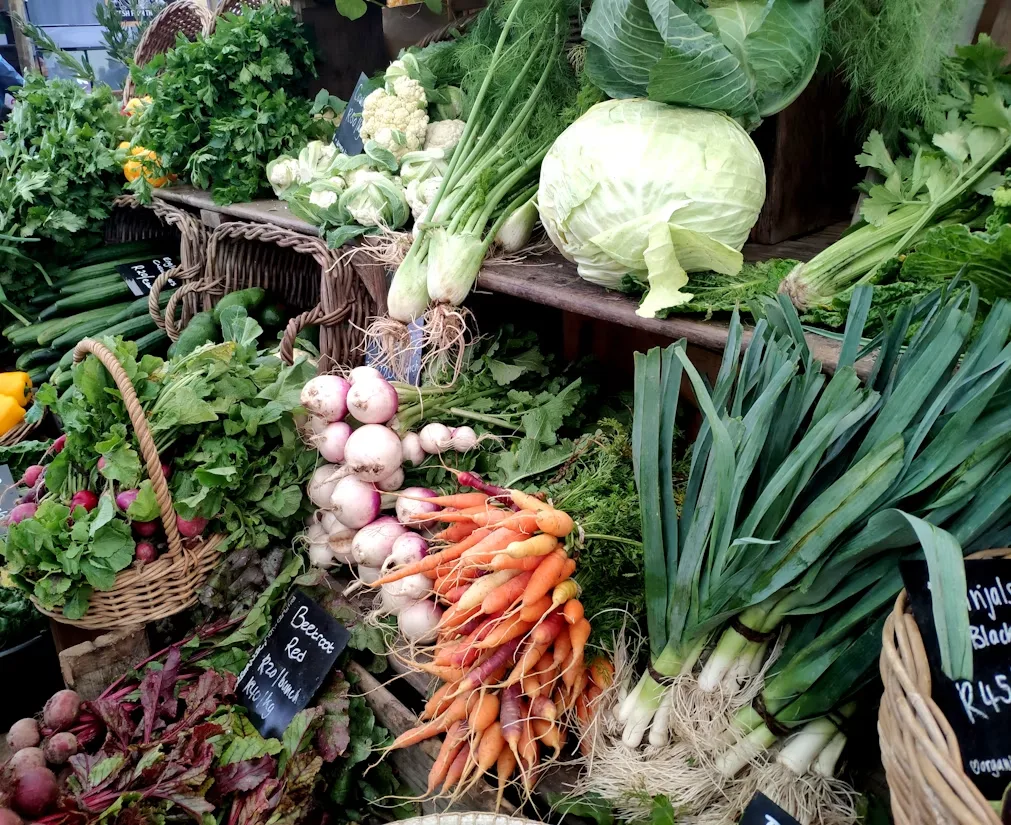
The meal kit market segments across six dietary categories: non-vegetarian, vegetarian, vegan, paleo, keto, and Mediterranean, according to Future Market Insights. Coverage varies significantly by service.
Purple Carrot — the most established dedicated plant-based service in the U.S. Exclusively vegan, whole-food focus. If plant-based eating is non-negotiable, Purple Carrot will outperform a mainstream service's vegetarian filter in both variety and ingredient quality.
Sunbasket — broadest specialty diet coverage among mainstream services, including paleo, keto, Mediterranean, and diabetes-friendly options. Uses organic produce and clean ingredient sourcing. Per-serving cost runs higher than HelloFresh, but the dietary depth justifies the premium for health-focused buyers.
HelloFresh — offers dietary filters (vegetarian, family-friendly, low-calorie), but keto and paleo options are limited to two to four meals per week. Suitable for occasional accommodation, not strict adherence.
Home Chef — strong customization for protein swaps within existing recipes. Good for households with mixed dietary preferences.
Subscription model structure affects dietary flexibility directly. Coherent Market Insights reports that the fixed menu segment holds approximately 63.3% of the food subscription market — meaning the majority of services still limit weekly selections rather than offering full per-meal customization. If your dietary needs are specific, prioritize services that allow per-meal selection within each box.
Subscription Terms and Flexibility: What to Know Before You Sign Up
Subscription mechanics are where most buyer regret originates — not the food quality. The terms you agree to on signup determine whether the service works for your actual life.
Automatic weekly renewal is the default for HelloFresh, Blue Apron, and Home Chef. You select meals, a box ships, you're charged — unless you actively pause or skip before the cutoff deadline.
Key flexibility differentiators to check:
- Skip deadline: How many days before delivery can you pause? (Range: 4–7 days. Fewer is better.)
- Minimum weekly meals: Can you order 2 meals/week or only 3? (Matters for singles and couples.)
- Cancellation: Is cancellation online self-service or does it require a call/chat? (Should be self-service in 2026.)
- One-time ordering: Does the service allow no-subscription purchasing? (Fortune Business Insights identifies this as a meaningful differentiator — Hungryroot has moved toward a more flexible subscription model.)
Introductory pricing is not the ongoing price. First-box discounts of 50–60% are standard across the category. The price you'll pay in month two is the number that matters for your budget math. Check the standard weekly rate before subscribing, not the headline offer.
Grocery Delivery Memberships in 2026: Instacart+ vs. Walmart+ vs. Amazon Fresh
If the format analysis above pointed you toward grocery delivery, here's the membership comparison that matters in 2026.
| Service | Annual Fee | Per-Delivery Fee (Members) | Store Coverage | Best For |
|---|---|---|---|---|
| Instacart+ | $99/year or $9.99/month | $0 on $35+ orders | 1,400+ retailers | Maximum store variety |
| Walmart+ | $98/year or $12.95/month | $0 on $35+ orders | Walmart stores | Budget households, Walmart shoppers |
| Amazon Fresh | Included with Prime ($139/year) | $0 for Prime members | Amazon Fresh + Whole Foods | Amazon ecosystem users |
Instacart+ wins on retailer variety — access to 1,400+ stores means you can consolidate grocery shopping, pharmacy runs, pet food, and specialty items in one order. The trade-off is that prices reflect what the local store charges, plus a service markup, so it's not the cheapest option per item.
Walmart+ is the clear budget pick for households already shopping Walmart. The membership also includes gas discounts, Paramount+ streaming, and free Walmart delivery — making it competitive against Prime for non-Amazon-centric households.
Amazon Fresh is valuable if you already have Prime. Whole Foods delivery and Amazon Fresh warehouse access are included, but Fresh isn't available everywhere yet — check your ZIP code before factoring it into your decision.
None of these eliminate tipping. Instacart suggests tips at checkout; opting out is your right but may affect service consistency from independent shoppers. Factor this into your real cost estimate.
Top Meal Kit Services in 2026: Quick Comparison
For in-depth reviews of individual services, see our Best Meal Kit Delivery Services 2026 comparison. Here's the at-a-glance summary:
| Service | Starting Price/Serving | Format | Best For | Weak Spot |
|---|---|---|---|---|
| HelloFresh | ~$10 | Cook-and-eat | Most households, all-around pick | Not the cheapest |
| EveryPlate | ~$6 | Cook-and-eat | Budget-conscious cooks | Smaller portions, narrower menu |
| Blue Apron | ~$10 | Cook-and-eat | Cooking skill-builders | Fewer dietary filters |
| Home Chef | ~$10 | Cook-and-eat + Heat-and-eat | Mixed-format households | Limited vegan options |
| Gobble | ~$12 | Heat-and-eat | Busy professionals, minimal cook time | Higher cost |
| CookUnity | ~$13 | Heat-and-eat | Chef-quality variety | Most expensive mainstream option |
| Purple Carrot | ~$11 | Cook-and-eat (vegan) | Plant-based households | No omnivore options |
| Sunbasket | ~$12 | Cook-and-eat | Health-focused, special diets | Premium pricing |
| Fresh N Lean | ~$15 | Ready-to-eat | Zero-cooking households | Very high cost/serving |
Prices reflect standard rates as of mid-2026; first-box discounts are excluded. Verify current pricing directly on each service's website before subscribing.
How to Evaluate a Meal Kit Service Before You Commit
Use this checklist before entering your payment details:
1. Check the real ongoing price. Find the standard weekly rate, not the intro discount. Calculate your realistic monthly spend (meals × servings × price + shipping + pantry staples).
2. Verify the skip deadline. Log in or check the FAQ. You need to know this before your first regular delivery, not after you're charged for a box you didn't want.
3. Confirm dietary coverage. If you have dietary restrictions, count how many meals per week actually meet your requirements. Two vegan options per week means 10 dinners a month cooked without the service.
4. Read the cancellation terms. In 2026, any legitimate service should allow self-service online cancellation without a phone call. If you can't find a clear cancel button in the account settings, treat that as a warning signal.
5. Check allergen disclosure practices. FDA oversight of meal kit ingredient labeling varies across services. If you have food allergies, verify each service's specific practices — don't assume industry-wide consistency.
6. Look for first-party reviews on multiple platforms. Trustpilot, Reddit (r/MealKitReview), and Google Reviews give you feedback outside the brand's own testimonials. Look specifically for patterns around billing issues and cancellation experiences, not just food quality.
Packaging, Food Waste, and Sustainability in 2026
Sustainability is a real consideration in this category, not just a marketing checkbox.
Where meal kits genuinely win on waste: Pre-portioning means you're not buying a full bunch of cilantro when a recipe needs two tablespoons. Studies cited by Market Data Forecast suggest meal kits can reduce food waste compared to grocery store purchasing for equivalent meals. For households that regularly throw out unused produce, this is a genuine financial and environmental benefit.
Where meal kits create waste: The insulated packaging required to keep proteins cold during transit — gel packs, liners, outer boxes — generates more packaging material per meal than a grocery store trip. Most services now offer take-back programs or curbside-recyclable packaging, but coverage and execution vary. Check each service's specific packaging policy if this is a priority.
Grocery delivery's waste profile: You're still buying in store-quantity units, which means the cilantro problem remains. The environmental offset from reduced driving (consolidating multiple store trips into one delivery) partially compensates, but the math depends on your baseline shopping behavior.
Frequently Asked Questions
Are meal kits worth it in 2026? For the right household, yes — specifically those with consistent schedules, two to four people, and a genuine interest in cooking but limited time for meal planning. For single-person households, budget-constrained families, or impulsive cooks, the economics and format rarely fit. The per-serving premium over grocery shopping is real and persistent; you're paying for convenience and reduced planning burden.
Is HelloFresh still the best meal kit in 2026? HelloFresh remains the top all-around recommendation from multiple independent sources including Wirecutter, primarily for menu variety and skip/pause flexibility. EveryPlate is the better pick for budget-focused households. For specialty diets, Sunbasket or Purple Carrot outperform HelloFresh meaningfully.
What's the cheapest meal kit delivery service? EveryPlate starts around $6/serving, making it the lowest-cost mainstream option. Note that portion sizes run smaller than HelloFresh (both are owned by Hellofresh SE), and the menu is narrower. Factor in shipping to get the real per-box cost.
Can I pause a meal kit subscription without canceling? Yes — all major services offer pause functionality. The key variable is the skip deadline, which ranges from four to seven days before your scheduled delivery date. Missing that window results in a charge. Check your service's specific cutoff and set a recurring reminder.
Is grocery delivery cheaper than meal kits? Generally yes, by a significant margin. A two-person household spending $345–$368/month on meal kits (3 dinners/week) would spend an estimated $160–$215/month for equivalent dinners via grocery delivery. The trade-off is that grocery delivery requires you to plan, select, and scale recipes yourself.
Which meal kit is best for one person? No meal kit is optimized for one person — minimum orders are typically two servings per meal. EveryPlate or HelloFresh are the most flexible at lower portion counts. Alternatively, heat-and-eat services like CookUnity work better for singles because meals are individually portioned and don't require immediate consumption as a pair.
What is the heat-and-eat meal kit format? Heat-and-eat meal kits ship partially or fully cooked meals that require 10–15 minutes to reheat. Gobble and CookUnity are the primary services in this format. This segment is growing at 17.5% CAGR through 2034 — the fastest in the meal kit category — driven by households that want convenience over cooking experience.
Bottom Line: How to Choose in 2026
Here's the decision framework in plain terms:
You're a strong meal kit fit if:
- Consistent weeknight schedule with 45+ minutes available
- Two to four people in the household
- You want to reduce meal-planning friction without giving up cooking
Stick with grocery delivery if:
- You already meal plan or cook diverse cuisines
- Budget efficiency is a priority (you'll spend roughly half as much)
- Your schedule is unpredictable
Try a hybrid kit first if:
- You're format-testing before committing to a subscription
- You shop at Kroger or Walmart regularly and want zero commitment
If you choose meal kits: Start with HelloFresh for the broadest fit. Use the intro offer (typically 50–60% off first box), then immediately set a calendar reminder for your skip deadline. Evaluate whether you're actually using the service consistently before the promotional period ends.
If you need a budget option: EveryPlate at ~$6/serving is the lowest-cost mainstream entry point in 2026.
If you want maximum convenience over cooking: CookUnity or Gobble for heat-and-eat; Fresh N Lean for zero cooking.
Use our Shopping Assistant AI to get a personalized recommendation based on your household size, budget, and dietary needs.
How this guide was researched: This guide synthesizes market data from Future Market Insights, Fortune Business Insights, Market Data Forecast, and Coherent Market Insights; independent editorial coverage from Wirecutter; consumer psychographics from Numerator; and Bureau of Labor Statistics data on food preparation time. It does not reflect hands-on testing of meal kit services by Trusted Buyer Report. All figures are cited to their original sources. Prices are current as of mid-2026 and subject to change.
Trusted Buyer Report may earn a commission when you click links and make purchases through our site, at no extra cost to you. Our editorial assessment is completed before any affiliate link is applied. Full disclosure →