
Reviewed by the Trusted Buyer Report editorial team. This guide was researched with AI assistance and fact-checked by a human before publishing. We synthesize manufacturer specs, independent lab tests, and verified buyer reviews — and cite our sources. We may earn a commission when you use our links. Full disclosure →
Quick verdict: For competitive swimmers, Speedo, Arena, and TYR are the clear top three. For everyday fitness and laps, Sporti leads on value and Summersalt on fit diversity. For resort wear, Eres sets the quality benchmark. For plus-size and shape-focused needs, Miraclesuit and Stylest are the most consistently recommended by independent editorial sources. Read on for the full breakdown by use case.
Most swimwear buying mistakes happen before you ever see a brand name. You buy the suit that wins on Olympic podiums — then realize it's engineered for 50-meter sprint drag, not three weekly lap sessions in chlorinated water. Or you buy a fashion resort piece for regular pool use and watch it fade after six swims. The brand isn't the problem. The mismatch is.
This guide cuts through that by matching specific brands to specific use cases — competitive racing, fitness laps, resort wear, plus-size fit, and sustainable options — drawing on testing data from NYT Wirecutter (28 bikini sets, 22 one-pieces, four rash guards tested in 2026), editorial research from Forbes Vetted, sales rankings from SwimOutlet.com, and market sizing from Mordor Intelligence.
Why Matching Brand to Activity Matters More Than Brand Prestige
The stakes here are practical. According to Mordor Intelligence, the women's swimwear market was valued at $7.83 billion in 2025 and is projected to reach $12.05 billion by end of 2026. More market growth means more brands, more SKUs, and more opportunity to buy the wrong thing.
Consider two common scenarios:
Scenario A: A recreational swimmer buys a racing suit — because "Speedo makes the best" — and finds it uncomfortably compressive for casual use. Racing suits are engineered for drag reduction, not poolside comfort, and their wear life is measured in competition hours, not weeks of training.
Scenario B: A regular lap swimmer buys a fashion-forward resort suit and watches it fade and stretch within six pool sessions. Fashion swimwear is typically designed for saltwater and sunlight — not repeated chlorine immersion.
Neither brand failed. The buyer ignored use-case fit.
Fit issues compound the problem for women. The Mom Edit tested 10 swimsuit brands specifically for women over 40 and found most failed on comfort, support, and coverage proportions. That's not a brand quality story — it's a construction mismatch story. Most brands size up and down without adjusting panel architecture for different body proportions.
If you're building out a broader fashion wardrobe this year, the fashion and apparel buying guides for 2026 use the same use-case framework across adjacent categories — worth bookmarking.
How to Choose the Right Swimwear Brand: 5 Variables That Actually Matter
Before looking at any specific brand, clarify these five:
- Primary activity — competitive racing, fitness laps, recreational paddling, or resort lounging? Each has materially different construction requirements.
- Use frequency — daily, weekly, or occasional? A daily swimmer needs chlorine-resistant polyamide; an occasional resort-goer doesn't need to pay for it.
- Water environment — chlorinated pool, saltwater, or freshwater? Chlorine degrades elastane faster than saltwater; fabrics that hold up in pools cost more than resort blends.
- Fit priorities — coverage, bust support, compression, long-torso length, or style-first? These determine which brand's construction philosophy works for your body.
- Budget — value (under ~$30), mid-range ($30–$80), premium ($80–$150), or luxury ($150+)?
Fabric construction is more predictive of satisfaction than brand name. Polyamide-spandex blends resist chlorine better than polyester-spandex for frequent swimmers. Regenerated nylon (sold as ECONYL) signals both durability and sustainability focus. According to Mordor Intelligence, PFAS-free water-repellent finishes and regenerated nylon are now mainstream at premium price points — sustainability and performance are converging rather than trading off.
Two construction details reveal quality independent of branding: flatlock seams (lie flat, resist fraying under repeated stretch) and a proper sewn-in gusset at the crotch. Many brands skip the gusset. Wirecutter's 2026 panel flagged its presence or absence across every suit they tested — it's a genuine marker of construction care.
Best Swimwear Brands for Competitive and Performance Swimming
For swimmers who train regularly or compete, three brands dominate by a measurable margin. According to SwimOutlet.com's 2026 rankings, Speedo, Arena, and TYR together account for the overwhelming majority of competitive swimwear purchases on the platform — a figure that reflects genuine preference among performance swimmers, not just brand recognition.
Speedo — Best Overall for Competitive Range and Size Breadth
Speedo holds more Olympic podium appearances than any other swim brand and offers the widest competitive range: sizes XS through 3XL plus youth, training suits, and racing suits spanning every price point from accessible to elite.
The critical mistake most buyers make: purchasing a Speedo racing suit for daily training. Racing suits are engineered for competition — maximum compression, hydrodynamic efficiency, limited wear life measured in competition hours. For regular lap swimming, Speedo's training lines built from chlorine-resistant polyamide are the correct choice. They're designed to last, not to be fast.
Best for: Competitive swimmers of all levels; anyone who needs a brand that covers both training and racing in one ecosystem. Key limitation: Racing suits degrade quickly if used for training — the use-case distinction is non-negotiable.
Arena — Best for Elite Racing
Arena's Powerskin Carbon series is worth knowing by name: it uses carbon-fiber-infused fabric panels specifically to reduce drag at World Championship and Olympic level. This isn't marketing language — the technical specification reflects the price tier.
For competitive swimmers racing at a high level, Arena's racing suits are a credible first choice over Speedo. For training, Arena's mid-range lines offer solid chlorine resistance at more accessible prices — though the training lineup is narrower than Speedo's.
Best for: Elite competitive swimmers who prioritize racing performance above all else. Key limitation: Higher price tier; less practical for casual or recreational use.
TYR — Best Alternative Fit for U.S. Competitive Swimmers
TYR has particular strength in U.S. competitive swimming and offers both training and racing technology comparable to Speedo and Arena. For swimmers who find Speedo's cut doesn't fit their body — TYR is a genuine alternative, not a compromise.
Men's competitive options across all three brands span jammers (knee-length, training and competition), briefs (maximum range of motion, preferred by many elite male swimmers), and technical racing suits — each serving a different performance and comfort profile.
Best for: Competitive swimmers who need a Speedo-level alternative; U.S.-based team swimmers. Key limitation: Less global brand recognition outside the U.S. compared to Speedo and Arena.
Best Swimwear Brands for Everyday Fitness and Recreational Swimming
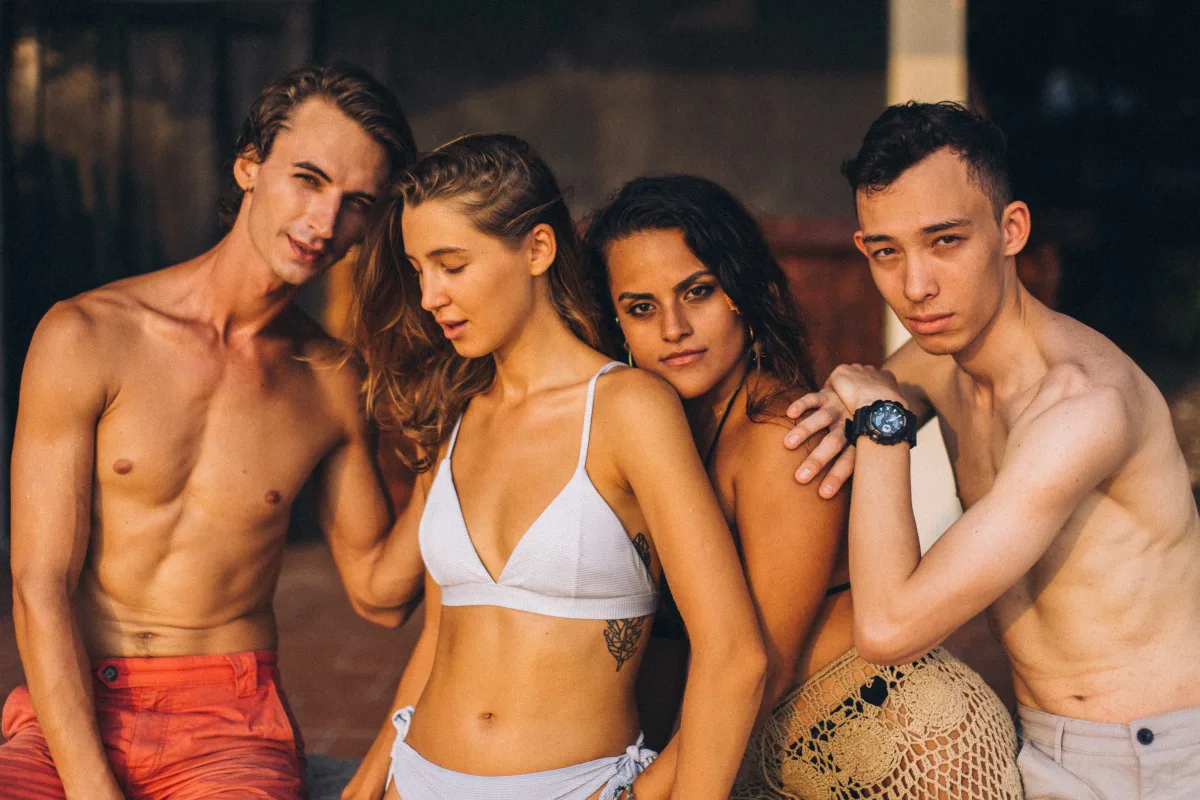
The largest group of swimmers — those who swim regularly for fitness or recreation without competing — has different priorities: durability through repeated chlorine exposure, comfort over extended sessions, and reasonable pricing for a suit seeing heavy weekly use.
Sporti — Best Value for Regular Lap Swimmers
SwimOutlet.com identifies Sporti as the leading value brand for fitness swimming, offering quality chlorine-resistant construction at 30 to 50 percent less than premium performance brands. For swimmers who need a suit that holds up through regular pool use without paying competitive-brand pricing, Sporti delivers the strongest cost-per-wear ratio in its tier.
It won't have the fashion-forward styling of resort brands or the hydrodynamic engineering of racing suits. That's not a failure — it's the point. For fitness swimming, Sporti is purpose-fit.
Best for: Recreational lap swimmers on a budget; swimmers who need multiple suits for weekly training. Key limitation: Basic styling; not a choice if aesthetics matter.
Summersalt — Best Fit Diversity for Recreational + Resort Crossover
Forbes Vetted names Summersalt its top overall swimsuit brand recommendation, citing variety of flattering silhouettes, long-torso fit options, and material quality that holds up in chlorine better than pure resort brands.
The long-torso construction is a meaningful differentiator. Women who consistently find standard suits too short in the body — causing straps that pull and a suit that rides up — will find Summersalt's fit engineering solves this rather than ignoring it.
Summersalt sits at the intersection of fitness durability and fashion design: chlorine-resistant enough for regular pool use, stylish enough to wear at a resort.
Best for: Women who need long-torso fits; recreational swimmers who want a suit that looks considered without sacrificing durability. Key limitation: Not engineered for competitive performance; not the value choice for pure lap swimming.
This same cross-category thinking applies to athleisure brands — the crossover between performance function and everyday wearability is a consistent theme in 2026's active fashion market.
Jolyn — Best for Active Swimmers Who Want Bold Style
Jolyn is popular among active swimmers who need secure fit during lap swimming without sacrificing visual interest. The brand is known for bold prints and reliable coverage — suits that stay in place through flip turns without requiring readjustment between laps.
SwimOutlet.com groups Jolyn alongside La Blanca in the fashion-meets-function category: a strong choice for swimmers who find purely athletic suits too plain but need more structural reliability than resort brands provide.
Best for: Active recreational swimmers who want personality in their suit; aqua fitness participants. Key limitation: Less widely available than the major performance brands.
Best Swimwear Brands for Resort, Beach, and Fashion-Forward Wear
Resort and beach swimwear operates under a different construction logic: visual design, UV protection, comfort over a full beach day, and the ability to transition from water to lunch without looking purely athletic. Chlorine resistance matters less here — fabric hand-feel and silhouette versatility matter more.
Eres — Best Luxury One-Piece
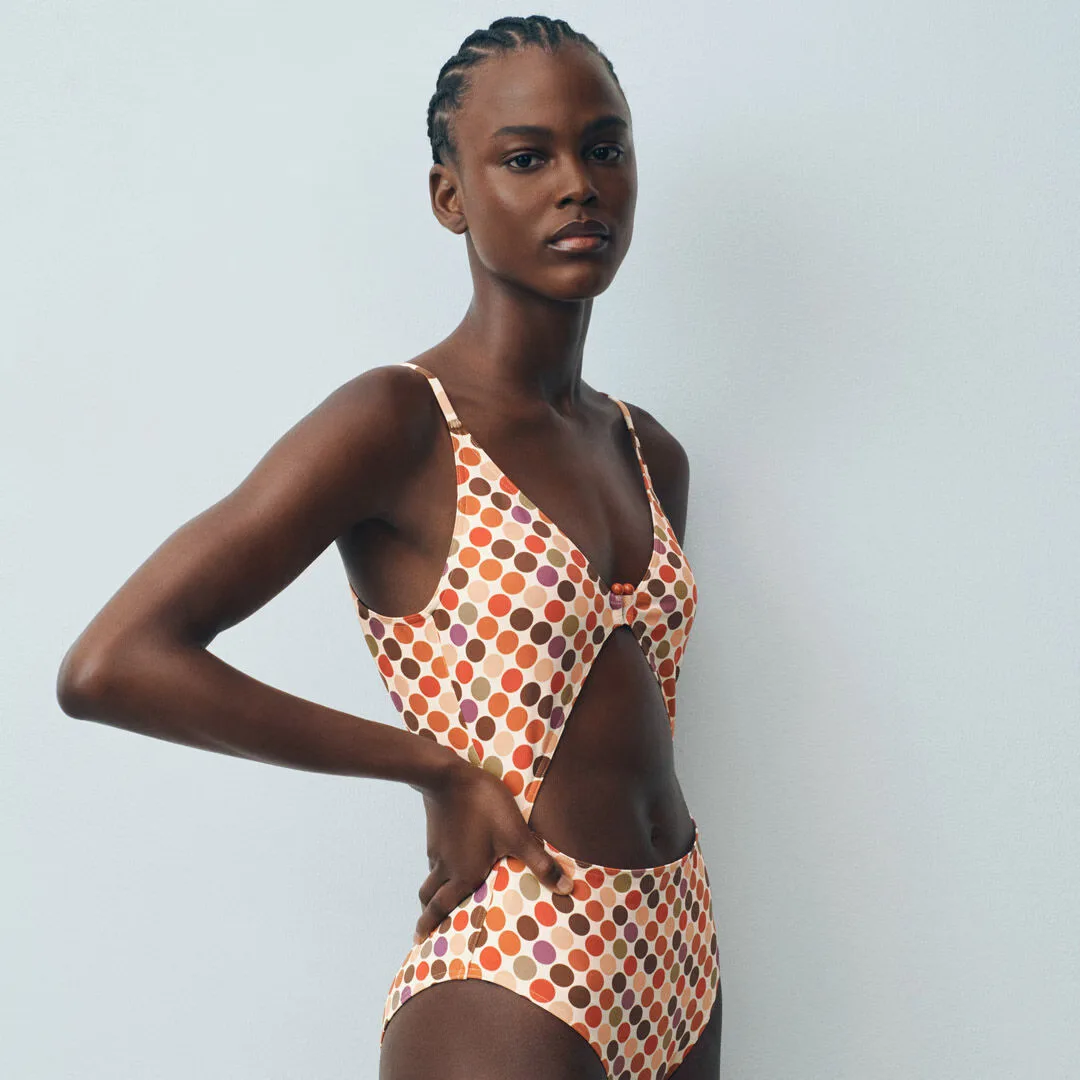
Wirecutter's 2026 testing panel identified the Eres Aquarelle as the standout premium one-piece — described as the swimwear equivalent of a benchmark product. The Aquarelle features a clean straight-necked silhouette, properly constructed flatlock seams, a sewn-in gusset (notably rare among tested suits), and matte polyamide-spandex that feels immediately high-quality. It comes in more than 20 colors.
For buyers who want a one-piece that performs as well as it looks and will last years with proper care, Eres sets the benchmark. It's a considered purchase — priced firmly in the luxury tier — not a casual one.
Best for: Buyers who want a single high-quality one-piece that lasts several seasons and performs well aesthetically. Key limitation: Luxury price point; not practical for frequent swimmers.
Hunza G, Matteau, and Tropic of C — Best for Minimalist Resort Style
Vogue's 2026 28-brand editorial guide highlights Hunza G, Matteau, and Tropic of C for chic, minimalist silhouettes with size-inclusive positioning. Hunza G in particular is known for its crinkle fabric that fits a wide range of body types without precise sizing — a practical advantage for buyers who find standard sizing inconsistent between brands.
These brands are cleanly designed and photograph well — suited to resort travelers who want an unfussy look that holds up across a full beach day.
Lido, Oséree, and Peony — Best for Bold Resort Fashion
For fashion-forward resort wear with vivid prints and strong seasonal design, Vogue calls out Lido, Oséree, and Peony. These brands are trend-driven and season-specific — worth watching for buyers who update their resort wardrobe annually.
They're not engineered for lap swimming. Buyers should expect that repeated chlorine exposure will shorten their lifespan. For saltwater and occasional pool use, they deliver strong aesthetic value.
As Glamour UK points out, swimwear is a year-round necessity for anyone who travels regularly — not just a summer purchase. That changes the cost-per-wear calculation significantly. A resort suit worn on four trips a year has a different value profile than one bought for a single vacation.
Best Swimwear Brands for Plus-Size and Size-Inclusive Fit
The most important and least discussed distinction in swimwear: the difference between extended sizing and genuine size-inclusive design. Extended sizing means a brand produces larger sizes. Size-inclusive design means the brand adjusts strap width, panel architecture, boning placement, and coverage proportions to actually fit and support larger bodies.
Most brands do the former. A smaller number do the latter.
Miraclesuit and Magicsuit — Best for Genuine Plus-Size Construction
SwimOutlet.com identifies Miraclesuit as its top recommendation for plus-size swimwear, with Magicsuit cited as a sister brand sharing the same construction philosophy. Both specialize in shaping technology built into the fabric and structure — not added as a marketing claim — with genuine bust support, tummy panel construction, and proportional coverage in larger sizes.
These are the most consistently recommended brands across multiple independent editorial sources for buyers who need more than scaled-up sizing.
Best for: Plus-size buyers who need bust support, tummy panel construction, and proportional coverage that's actually designed for larger bodies.
Stylest — Best for Tummy Control with Performance Fabric
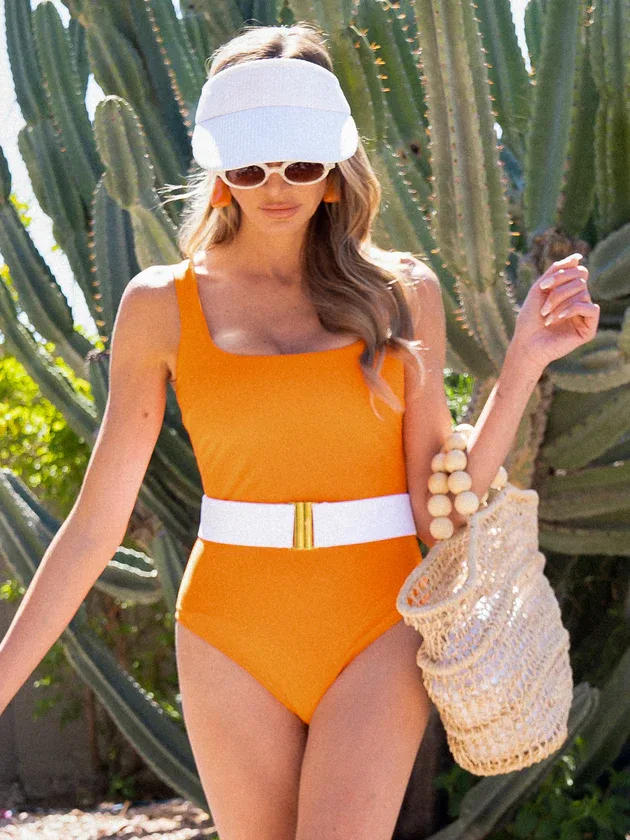
Forbes Vetted's top pick for tummy-control swimwear is Stylest, specifically the Dreamsculpt Square Neck Swimsuit. It uses UPF 50 polyamide fabric that smooths and sculpts without feeling constricting — and is designed to hold up in both salt and chlorine, which extends its practical range beyond pure resort wear.
Forbes Vetted notes the suit earned its top-ranking through editorial evaluation rather than brand marketing claims — the compression performance is backed by independent testing.
What to look for in any supportive swimsuit regardless of brand: underwire options with adjustable (not fixed) straps, tummy panel construction sewn into the lining rather than printed on it, and a proper gusset lining. These construction markers translate across brands.
For buyers interested in size-inclusive fashion beyond swimwear, the guide to plus-size fashion brands in 2026 covers the broader market with the same construction-first lens.
Best Sustainable Swimwear Brands in 2026
Sustainability claims in swimwear range from genuinely meaningful to largely cosmetic. The markers worth paying attention to are specific and verifiable:
- ECONYL regenerated nylon — made from ocean waste, fishing nets, and industrial plastic
- Recycled polyester from post-consumer plastic bottles
- PFAS-free water-repellent finishes — the "forever chemical" issue is increasingly regulated
- Third-party manufacturing certifications — OEKO-TEX or bluesign are the credible standards
General language like "eco-conscious" or "ocean-inspired" is marketing copy, not a verifiable standard. Ask for specific material names and certification numbers.
According to Mordor Intelligence, regenerated nylon and PFAS-free finishes are now enabling brands to charge premium prices while meeting stricter environmental regulations — meaning sustainability and performance are increasingly converging. ECONYL fabric has been adopted across price tiers, from mid-range to luxury, making it a realistic option rather than a niche premium.
SwimOutlet.com's 2026 guide includes a dedicated sustainable swimwear category within its 15-brand breakdown — this is now a mainstream buying consideration, not a specialty segment.
For buyers already thinking along these lines, the best sustainable and eco-friendly fashion brands guide for 2026 covers the wider sustainable fashion landscape, including footwear and apparel.
Men's Swimwear: What Actually Matters by Use Case
Men's swimwear involves fewer variables than women's, but each matters significantly.
Board short length (7-inch, 9-inch, or longer inseam) affects both aesthetics and mobility — shorter lengths read more athletic and allow greater leg freedom; longer lengths are more casual. Liner presence determines whether a separate undergarment is needed. Quick-dry fabric (typically polyester or nylon with a tight weave) affects comfort after exiting the water. Waistband construction (drawstring quality, internal mesh, elastic width) determines whether a suit stays in place under movement.
For competitive male swimmers, the same three performance brands apply: Speedo, Arena, and TYR dominate training and racing. For recreational fitness, jammers from any of these brands or from Sporti offer chlorine-resistant options at accessible prices.
For resort and beach use, brands like Vilebrequin (luxury), Orlebar Brown (premium), and Quiksilver (mid-range) address the fashion and travel market — though none are engineered for lap swimming.
Forbes Vetted identifies Quince as its top affordable recommendation across both men's and women's swimwear — useful for buyers who want quality construction without premium pricing.
Men's swimwear shares construction logic with the broader athletic apparel space. If you're evaluating footwear alongside your swim kit, the best sneaker and shoe deals guide for 2026 covers the same value-versus-quality tradeoffs in the performance footwear market.
Brand Comparison at a Glance
| Brand | Best For | Price Tier | Standout Feature | Key Limitation |
|---|---|---|---|---|
| Speedo | Competitive & training | $–$$ | Most Olympic podiums; XS–3XL sizing | Racing suits not suited for daily training |
| Arena | Elite racing | $$–$$$ | Powerskin Carbon series for competition | Higher price; less practical for casual swimmers |
| TYR | U.S. competitive swimming | $–$$ | Strong alternative fit to Speedo | Less global recognition outside the U.S. |
| Sporti | Value fitness swimming | $ | 30–50% less than premium brands | Basic styling |
| Summersalt | Recreational + resort crossover | $–$$ | Long-torso fits; silhouette variety | Not engineered for competitive performance |
| Miraclesuit | Plus-size & shaping | $$ | True size-inclusive construction | Narrower style range than fashion brands |
| Stylest | Tummy control | $–$$ | UPF 50; chlorine and salt resistant | Limited silhouette range |
| Eres | Luxury resort one-piece | $$$ | Aquarelle: gusset, flatlock seams, 20+ colors | Luxury price; not for frequent swimmers |
| Jolyn | Active fitness + style | $–$$ | Bold prints; stays secure during laps | Less widely available |
| Hunza G | Minimalist resort fit-inclusive | $$ | Crinkle fabric fits many body types without precise sizing | Trend-driven; limited performance use |
How Long Should a Good Swimsuit Last?

A quality chlorine-resistant training suit worn three to four times per week should last six months to one year with proper rinsing after each use. Rinsing in fresh water immediately after pool use removes chlorine before it degrades elastane — this extends life more than any other care step.
Fashion and resort suits worn occasionally in saltwater can last several seasons with proper care and air-drying out of direct sunlight.
Racing suits worn in competition have a much shorter functional lifespan — often measured in hours of competition use rather than weeks. The compression performance degrades with each use; most competitive swimmers retire a racing suit after a season of competitions.
Frequently Asked Questions
What swimwear brands do Olympic swimmers wear?
Speedo, Arena, and TYR dominate Olympic and World Championship podiums. According to SwimOutlet.com's 2026 data, these three brands together account for the overwhelming majority of competitive swimwear sales on the platform — reflecting genuine performance preference among elite swimmers, not just marketing visibility.
Is Summersalt worth the price for recreational swimmers?
Forbes Vetted rates Summersalt as its top overall swimsuit brand recommendation for 2026, specifically citing its variety of silhouettes, long-torso fit options, and material quality. For recreational swimmers who want a suit that holds up in chlorine while looking more considered than a purely athletic option, Summersalt offers strong value in the mid-range tier. For pure lap swimming on a budget, Sporti is the better cost-per-wear choice.
What's the difference between a training suit and a racing suit?
Training suits are designed for daily use in chlorinated water — they prioritize fabric durability and comfort over drag reduction. Racing suits are engineered for competition: maximum compression and hydrodynamic efficiency, but a limited wear life. Using a racing suit for daily training degrades it quickly and wastes the investment. The two product categories are genuinely distinct, even within the same brand.
Which brands actually design for plus-size bodies rather than just extending sizes?
Miraclesuit and Magicsuit are the most consistently recommended brands for genuine plus-size construction — adjusting strap width, panel architecture, and shaping technology proportionally for larger bodies. Stylest's Dreamsculpt line earns specific editorial praise from Forbes Vetted for compression that sculpts without constricting, with UPF 50 fabric that resists both salt and chlorine.
Is there a sustainable swimwear option that doesn't compromise on durability?
Yes. ECONYL regenerated nylon — now used by brands across mid-range and luxury tiers — matches or exceeds conventional nylon on durability while using recycled ocean waste as raw material. Look for the ECONYL name specifically, along with OEKO-TEX or bluesign certification, rather than generic "eco" claims.
Are luxury swimwear brands worth it for occasional swimmers?
For occasional resort swimmers, the value case for luxury brands like Eres is based on longevity per wear, not frequency. Eres Aquarelle, for example, is constructed to last several seasons with proper care — at four to six resort trips per year, the cost-per-wear narrows versus a mid-range suit replaced annually. For daily or weekly pool swimmers, the durability advantage of luxury resort suits doesn't apply; construction priorities diverge.
How This Guide Was Researched
This guide is based on manufacturer specifications, independent editorial testing data (including NYT Wirecutter's 2026 swimwear panel — 28 bikini sets, 22 one-pieces, four rash guards), market analysis from Mordor Intelligence, sales data from SwimOutlet.com, and editorial recommendations from Forbes Vetted and Vogue. It does not reflect hands-on testing by Trusted Buyer Report. All claims are sourced and cited. Read our full methodology →
We may earn a commission when you use our links to make a purchase, at no extra cost to you. Our editorial recommendations are finalized before any affiliate link is applied. Full disclosure →