
This guide was researched using manufacturer specifications, independent expert evaluations from sources including Car and Driver, Popular Mechanics, and StealthVeil, along with verified owner-reported data. Trusted Buyer Report has not conducted in-person hands-on testing of these devices. We may earn a commission when you use our links to make a purchase — commissions are applied after rankings are finalized and never influence them. This article was drafted with AI assistance and fact-checked by our editorial team before publishing.
TL;DR: What You Need to Know in 60 Seconds
- Virginia and Washington D.C. are the only U.S. jurisdictions that ban radar detectors in all vehicles — possession alone can result in a fine and confiscation.
- California and Minnesota allow radar detectors but prohibit windshield mounting.
- All other U.S. states permit radar detectors in personal passenger vehicles, with some vehicle-class exceptions (e.g., commercial trucks in Florida).
- Top overall pick: Uniden R8w — maximum Ka-band range for highway driving.
- Best plug-and-play: Escort Redline 360c — strong performance with minimal setup.
- Best value: Uniden R4w — capable highway detection at a lower price.
- Never buy a laser jammer without researching your state first — it's a different (and much riskier) legal category than a radar detector.
Here's something that catches most drivers off guard: in Virginia and Washington D.C., a radar detector sitting on your dashboard is illegal even if it's switched off and you're only passing through. Law enforcement in those jurisdictions uses radar-detector detectors (RDDs) — devices that identify the low-level oscillator emissions that passive radar detectors emit, even in standby. The device you bought to avoid attention can actively attract it.
That single oversight costs drivers their equipment, a fine, and potentially higher insurance premiums. Before any product recommendation makes sense, legality has to come first. This guide covers both — starting with the law, then walking through the detectors worth buying in 2026.
Are Radar Detectors Legal? The State-by-State Answer
Radar detectors are legal for use in personal passenger vehicles across the majority of U.S. states. But the exceptions carry real consequences, and the rules are more specific than most buyers realize.
Fully Prohibited: Virginia and Washington D.C.
Virginia and Washington D.C. are the only U.S. jurisdictions that ban radar detectors in all vehicles — personal cars included. According to Car and Driver's tested radar detector guide and Popular Mechanics, violators face fines and on-the-spot device confiscation.
Why enforcement is particularly effective there: As Insurance.com's radar and laser detector law guide reports, law enforcement uses devices like the VG-2 and the Spectre I, II, and III to scan for radio frequency emissions from active radar detectors. Some older detectors emit detectable signals even in standby mode. Turning it off at the state line doesn't guarantee safety.
The practical result: using a detector where it's illegal increases your chances of being pulled over, not reducing them. If your regular commute or a planned road trip takes you through Virginia or D.C., leave the device at home.
Legal With Mounting Restrictions: California and Minnesota
Both states permit radar detectors but prohibit windshield mounting. Per Popular Mechanics, placement must not obstruct the driver's view — a rule that applies equally to GPS units and dashcams. Many drivers in these states discover this only after mounting their detector on the glass.
Dashboard mounting is the reliable default in California and Minnesota. Verify your state's specific windshield obstruction statute independently — it's a separate question from the radar detector law itself.
Vehicle-Type Restrictions: Florida and Commercial Vehicles
Florida bans radar detector installation in commercial vehicles weighing over 10,000 pounds, while personal passenger vehicles remain unaffected. If you drive a heavy commercial truck, that distinction matters.
Commercial vehicle restrictions exist in multiple states — if you drive professionally, check the rules for your specific vehicle class before purchasing.
Broadly Legal States
The remaining states permit radar detector use in personal passenger vehicles without special restrictions. Puerto Rico also permits use in passenger vehicles. That said, no single federal index covers all state and local traffic device laws, and regulations do change. Verify current rules through your state's DMV or transportation department before driving.
For a jurisdiction-by-jurisdiction reference, Uniden's state law guide is a useful starting point — but treat it as a starting point, not a legal authority.
Quick Reference: Radar Detector Legal Status by Jurisdiction
| Jurisdiction | Personal Vehicles | Commercial Vehicles | Notes |
|---|---|---|---|
| Virginia | ❌ Banned | ❌ Banned | RDDs actively used; device confiscated if found |
| Washington D.C. | ❌ Banned | ❌ Banned | Applies even when passing through |
| California | ✅ Legal | ✅ Legal | No windshield mounting; dashboard only |
| Minnesota | ✅ Legal | ✅ Legal | No windshield mounting; dashboard only |
| Florida | ✅ Legal | ❌ Banned (over 10,000 lbs) | Commercial weight threshold applies |
| All other U.S. states | ✅ Legal | Varies | Verify local rules before driving |
| Canada (most provinces) | ❌ Banned | ❌ Banned | See section below |
What About Canada and Cross-Border Travel?
Cross-border travel is where many U.S. drivers get caught by surprise. Radar detectors are illegal in a significant number of Canadian provinces, and the list is long enough that assuming legality is a genuine risk.
Per Popular Mechanics, prohibited Canadian provinces include Manitoba, Ontario, Quebec, New Brunswick, Nova Scotia, Prince Edward Island, Yukon, and Newfoundland. Canadian law enforcement in these provinces also uses RDDs.
The practical advice: Power down your detector and store it out of plain sight — not just the glove compartment if it's visible, but the trunk — before crossing into a restricted province. An unpowered detector sitting visibly on the dash can still prompt questions.
For international travel beyond Canada, the legal landscape varies widely by country. Research destination-specific laws independently before any international drive.
How Radar Detectors Actually Work (and Why It Matters for Buying)
Understanding the technology helps you buy the right device — and avoid purchasing something that won't help in your actual driving environment.
The Three Radar Bands
A radar detector is a passive radio frequency receiver. It listens for microwave signals that police radar guns broadcast on three primary frequency bands:
- X-band: Older, rarely used by law enforcement today but common in automatic door openers — a major source of false alerts.
- K-band: Widely used. Also the frequency used by many vehicle collision-avoidance systems in modern cars, making it the biggest source of urban false alerts.
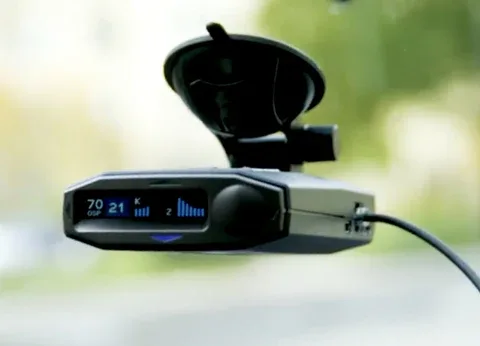
- Ka-band: The most important band. Modern law enforcement overwhelmingly uses Ka-band because it's harder to detect at long range and covers a wide frequency spread. A detector's Ka-band sensitivity is the single most consequential performance variable.
Laser (LIDAR) Detection: Reactive, Not Preventive
Laser detection works differently from radar detection — and this distinction matters for your buying decision.
When a detector alerts you to a laser hit, the speed reading has almost certainly already been captured. Laser guns fire a precise, narrow beam at a specific vehicle; detection is reactive, not advance warning. Some drivers pair their detector with a separate laser jammer for this reason — but that introduces a very different legal question (covered below).
The False Alert Problem
False alerts are the usability problem that separates good detectors from great ones. As Car and Driver explains, traffic monitors, roadside electronic warning signs, and the collision-avoidance systems in modern cars all operate on frequencies that overlap with police radar bands.
A detector that cannot filter these sources will alert constantly in urban environments, training you to ignore alerts — which defeats the purpose entirely. High-end detectors address this through:
- Advanced signal processing to distinguish police radar from background sources
- GPS-based lockouts that remember and suppress known false-alert locations on your regular routes
- Machine learning K-band filtering to distinguish vehicle safety system signals from police radar
If you drive primarily in cities or suburbs, false alert management matters more than raw detection range. Keep that in mind as you review the models below.
The 2026 Radar Detector Shortlist: Five Models Worth Buying
Based on evaluations from StealthVeil's expert buyer's guide and RadarBusters' 2026 expert picks, alongside verified owner feedback aggregated from automotive forums and retail reviews, five detectors consistently appear at the top of performance rankings in 2026.
There is no single best detector for every driver — only the best match for your specific situation.
1. Uniden R8w — Best Overall for Highway Driving
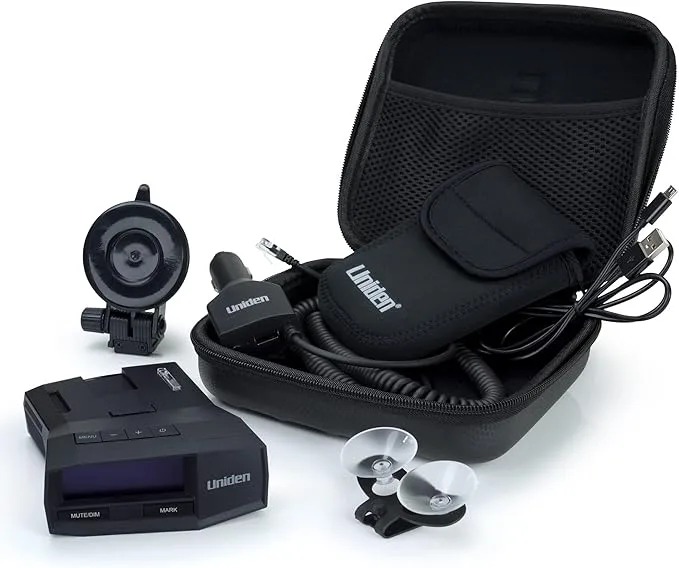
Best for: Highway drivers who prioritize maximum detection range and don't mind a premium price.
The Uniden R8w is the top overall performer in 2026. It delivers maximum Ka-band detection range in real-world highway conditions — the primary use case where a radar detector provides genuine advance warning. RadarBusters positions it alongside the Escort Redline 360c as the natural choice for buyers where detection range is the priority.
Key specs and features:
- Maximum Ka-band range (leading performer in 2026 comparisons)
- GPS functionality with directional arrows
- Wi-Fi connectivity for database updates
- GPS lockout for false alert suppression on known routes
One real limitation: The R8w is a high-maintenance detector in the best way — it rewards the driver who configures and learns it. If you want something that works well out of the box without configuration, the Escort Redline 360c is the better fit.
2. Escort Redline 360c — Best Plug-and-Play Option
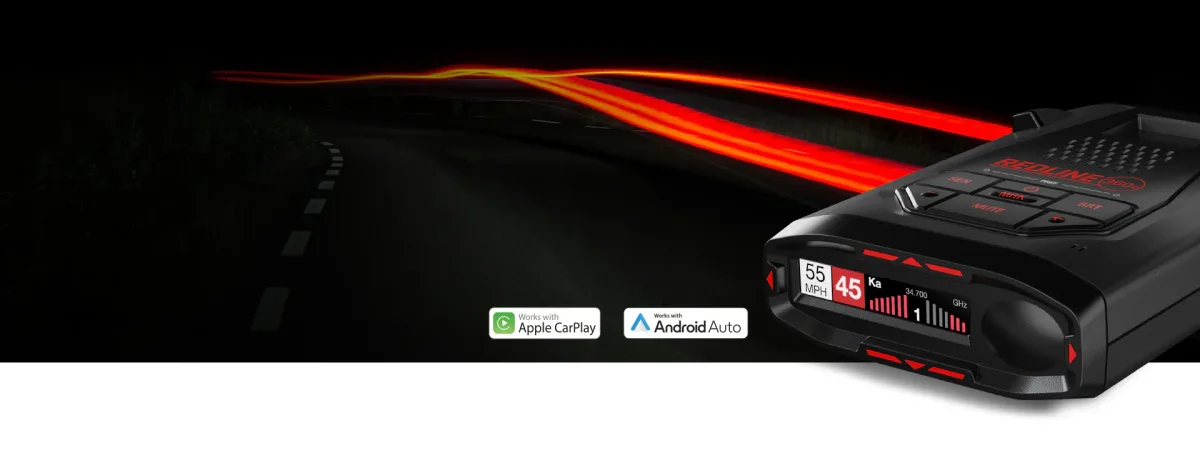
Best for: Drivers who want strong performance without spending hours on settings.
The Escort Redline 360c earns its position as the flagship for drivers who want capable protection that works well immediately after purchase. StealthVeil's guide highlights it as a top pick for users who don't want a configuration project. It integrates with Escort's app ecosystem for crowd-sourced real-time alerts and includes a GPS photo enforcement database — meaningful for drivers who cross multiple states regularly.
Why the GPS photo database matters: Fixed speed cameras and red light cameras aren't detectable by radar — they're fixed enforcement locations. The Escort's GPS database covers these, adding a layer of protection that pure radar detection cannot provide.
3. Valentine 1 Gen2 — Best for Directional Awareness
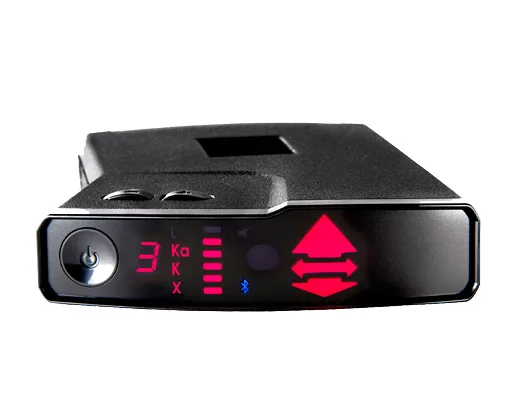
Best for: Experienced users who want maximum situational awareness and don't mind the learning curve.
The Valentine 1 Gen2's defining feature is its directional arrow display, which shows whether a signal is coming from ahead, behind, or to the side. In a multi-threat environment — where signals are coming from a patrol car ahead and a speed sign behind simultaneously — knowing the direction of each signal allows you to prioritize your response.
That's a genuine operational advantage that raw range specs cannot replicate. But it comes with a steeper setup investment than the Escort or Uniden options. Experienced users consistently rate it highly; first-time buyers often find it overwhelming.
4. Uniden R4w — Best Value Pick
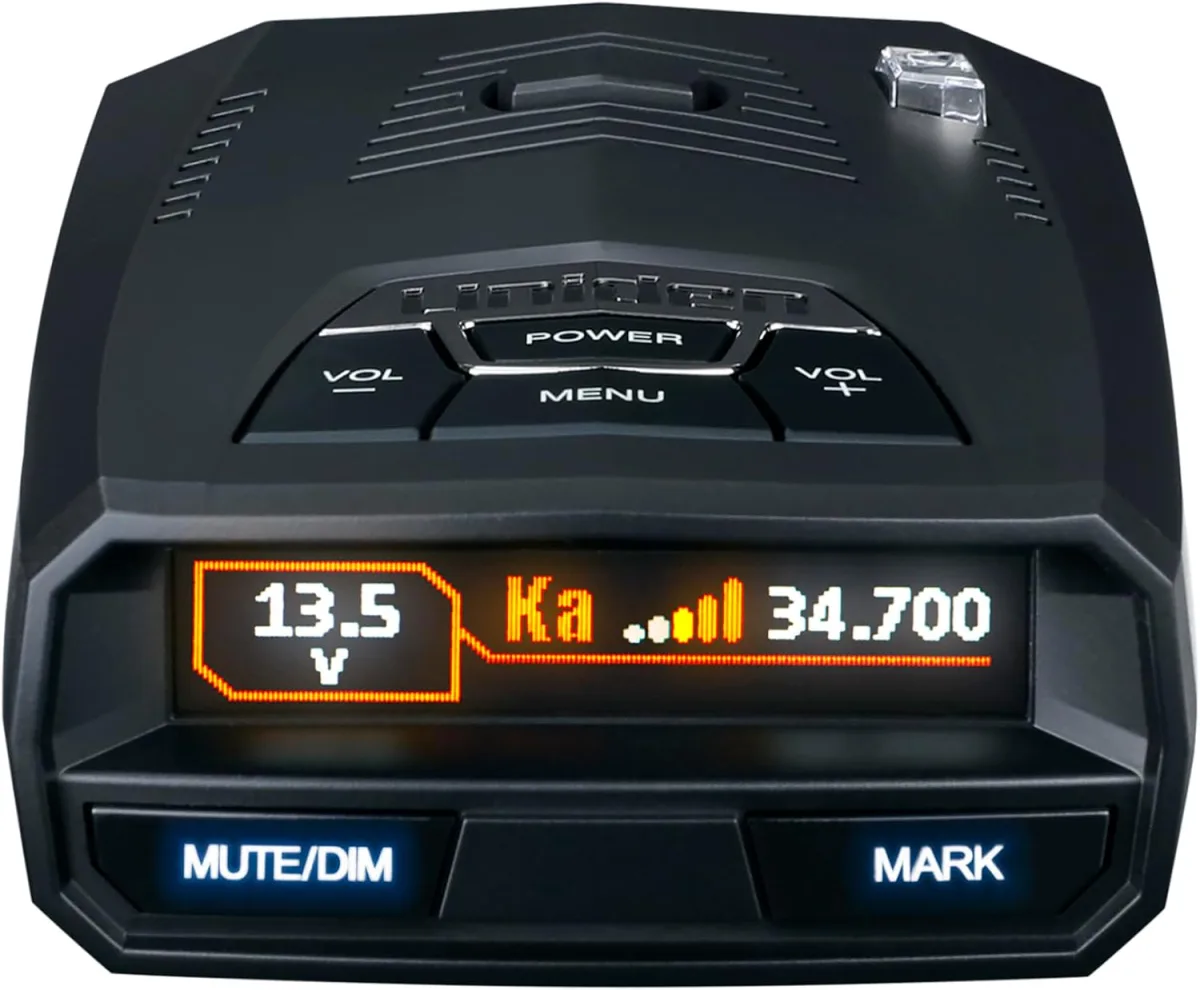
Best for: Cost-conscious buyers who still need reliable Ka-band detection on open highways.
The Uniden R4w delivers capable highway protection at a more accessible price point. StealthVeil's guide positions it as a serious detector, not a compromised budget option — it's the strongest performance-per-dollar choice in the current market for drivers who don't need the full feature set of the R8w.
For cross-country travelers, the R4w also includes a GPS photo enforcement database for fixed camera alerts — making it more capable than its price suggests.
5. Cobra RAD 700i — Best Entry-Level Option
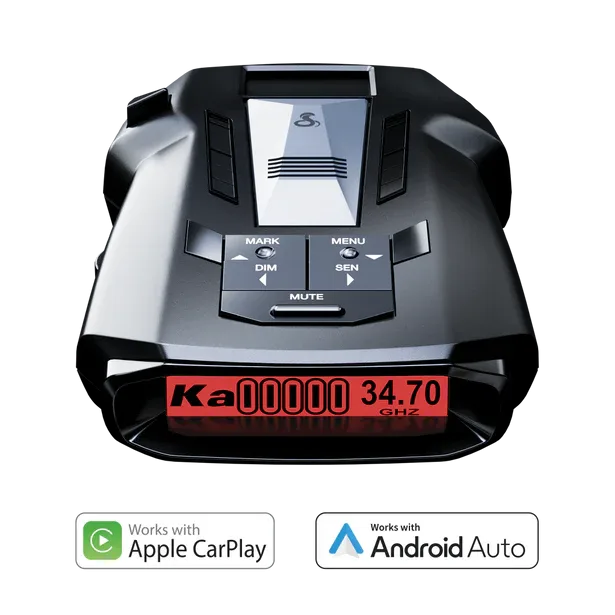
Best for: First-time buyers or anyone with a tight budget who wants a functional starting point.
The Cobra RAD 700i is the recommended starting point for new radar detector users. RadarBusters explicitly recommends it for first-time owners. It lacks the range and filtering sophistication of the Uniden or Escort flagships, but it provides a functional introduction to radar detection without the learning curve or price tag of the higher-tier models.
One honest limitation: The Cobra's false alert management is noticeably weaker than the premium options. In dense urban environments, it will alert frequently. Using it first on highway driving — where false alerts are less common — is a reasonable way to learn what real alerts sound and look like before upgrading.
Head-to-Head Comparison: All Five Models
| Model | Best For | Detection Range | False Alert Mgmt | GPS Database | Connectivity | Price Tier |
|---|---|---|---|---|---|---|
| Uniden R8w | Highway max range | ⭐⭐⭐⭐⭐ | ⭐⭐⭐⭐ | ✅ | Wi-Fi | Premium |
| Escort Redline 360c | Plug-and-play users | ⭐⭐⭐⭐⭐ | ⭐⭐⭐⭐⭐ | ✅ | App + Wi-Fi | Premium |
| Valentine 1 Gen2 | Directional awareness | ⭐⭐⭐⭐ | ⭐⭐⭐⭐ | ❌ (add-on) | Bluetooth | Mid-Premium |
| Uniden R4w | Value highway detection | ⭐⭐⭐⭐ | ⭐⭐⭐ | ✅ | Limited | Mid-Range |
| Cobra RAD 700i | First-time buyers | ⭐⭐⭐ | ⭐⭐ | ❌ | App | Budget |
One performance insight not found in most reviews: Community reliability data from the RDForum reliability comparison thread suggests meaningful brand-level differences in long-term durability that manufacturer specs don't reflect. Long-term owner data shows variation between brands that is worth factoring into a purchase decision alongside performance benchmarks — especially for buyers who plan to use a detector daily for several years.
Choosing the Right Detector for Your Driving Environment
Your driving context matters as much as your budget. A detector optimized for open highway use may be the wrong tool for a city commuter.
Highway drivers benefit most from long-range Ka-band detection. The Uniden R8w and Escort Redline 360c are the strongest fits — both are built to provide maximum advance warning on open roads where speed enforcement is most common.
City and suburban drivers face a different challenge: the density of false-alert sources. Advanced GPS lockout and K-band filtering matter more than raw range in this context. A detector that has learned your regular routes and suppressed known false-alert locations is far more useful than one that simply detects farther. The Escort Redline 360c handles urban environments best in this lineup.
Cross-country travelers should prioritize models with built-in GPS databases covering red light cameras and speed cameras across multiple states. Both the Escort Redline 360c and Uniden R4w include GPS photo enforcement databases, adding protection that pure radar detection cannot provide for fixed enforcement locations. If you're planning a major road trip, our 2026 used car buying guide also covers several driver-safety accessories worth considering before hitting the road.
Motorcyclists have distinct needs — weather resistance, vibration tolerance, and mounting options that differ entirely from in-car use. Purpose-built motorcycle detectors outperform adapted car units for two-wheel riding. RadarBusters lists motorcycle-specific detectors as a separate category. For motorcyclists looking at broader gear considerations, our best motorcycle gear and accessories guide for 2026 covers what else to prioritize.
New users are consistently better served by simpler devices. The Cobra RAD 700i requires minimal configuration and delivers a functional experience without the complexity of flagship models. Learning what a real alert sounds like versus a false one takes time; doing that on a simpler device first is a reasonable approach before investing in a premium unit.
Context note on market adoption: According to Strategic Market Research, North America accounts for approximately 40.3% of the global radar detector market, driven by high consumer demand and rigorous speed law enforcement. California and Texas are identified as the highest-adoption states — which explains why both advanced filtering and long-range detection are valued in those markets simultaneously.
Mounting: Placement Rules and Performance Impact
Device legality and mounting legality are two separate questions. Even in states where radar detectors are fully legal, windshield obstruction laws can produce a citation if your detector blocks any portion of the driver's sightline.
California and Minnesota are the clearest examples: the detector is legal, but windshield mounting is not. Dashboard mounting is the safest and most legally defensible placement in states with windshield visibility rules.
Beyond compliance, placement affects performance. A detector mounted low on the dashboard may have its forward detection angle partially blocked by the hood, reducing effective range. Uniden's placement guidance recommends positioning the detector as high and as centrally as possible while remaining within legal mounting constraints — a balance between legal compliance and detection geometry.
Treat mounting as its own research task. Check your state's specific windshield obstruction statute, not just its radar detector law, before deciding where to place your device.
Pair your detector with the right vehicle setup: if you're investing in a comprehensive safety and monitoring system, our best dash cam guide for 2026 covers front, dual-channel, and 360° configurations that complement radar detection. Similarly, if you're building out your car's tech ecosystem, our best GPS navigation systems guide addresses mounting and placement considerations that overlap with detector placement decisions.
Radar Detectors vs. Laser Jammers vs. GPS Camera Alerts
These three technologies are frequently discussed together but occupy very different legal and functional categories. Confusing them — or inadvertently purchasing the wrong one — can have serious consequences.
Radar Detector (Passive Receiver) — Broadly Legal
A radar detector is a passive receiver. It detects signals but does not interfere with police equipment in any way. That passive nature is the legal foundation for its broad legality across most U.S. states.
Laser Jammer (Active Device) — Frequently Illegal
A laser jammer actively emits signals designed to interfere with police LIDAR guns, preventing an accurate speed reading. As Insurance.com notes, jammers are illegal in many states and carry significantly more severe penalties than illegal radar detectors. The legal exposure from a laser jammer is categorically different from that of a passive detector.
Radar jammers — devices that attempt to interfere with police radar guns — are also illegal in many jurisdictions and widely reported to be ineffective against modern police radar systems. The risk-to-benefit ratio is unfavorable on both the legal and practical dimensions.
GPS Camera Alert System (Passive, Database-Based) — Legal Where Detectors Are Legal
GPS-based speed camera and red light camera alert systems warn drivers of known fixed enforcement locations using a database rather than live signal detection. Many modern detectors, including the Escort Redline 360c and Uniden R4w, integrate GPS camera databases alongside radar detection.
The GPS alert tells you a fixed camera exists at a known location; the radar detector responds to live signals. Both are legal where radar detectors are legal, but they protect against different enforcement methods.
Before purchasing any device marketed as a "jammer" or "countermeasure," verify its specific legal status in your state. The consequences for active jamming devices are meaningfully more severe than those for an illegal passive detector.
Frequently Asked Questions
Are radar detectors legal in all 50 states?
No. Radar detectors are prohibited in Virginia and Washington D.C. for all vehicles. California and Minnesota permit them but restrict windshield mounting. All other U.S. states allow radar detector use in personal passenger vehicles, though rules can change and should be verified with official state sources before driving.
Can I use a radar detector while driving through Virginia if I just keep it off?
The safest approach in Virginia and Washington D.C. is to leave the device at home or store it completely out of sight — ideally in the trunk. Law enforcement uses radar-detector detectors that can identify emissions from some units even when they appear to be off. Visible possession alone can prompt a stop and inspection.
What is the difference between a radar detector and a laser jammer?
A radar detector passively receives signals and does not interfere with police equipment — which is why it's legal in most states. A laser jammer actively emits signals to disrupt police LIDAR readings and is illegal in many U.S. states, with significantly higher penalties than an illegal radar detector. They are not interchangeable products and carry very different legal risk profiles.
Which radar detector is best for highway driving?
The Uniden R8w and Escort Redline 360c are the top choices for highway use. Both deliver long-range Ka-band detection and include GPS lockout features to manage false alerts on routes you drive regularly. The R8w edges out on raw range; the Escort wins on ease of setup.
Do radar detectors work against laser (LIDAR) guns?
Radar detectors can alert to laser signals, but the detection is typically reactive — by the time your detector registers a laser hit, the speed reading has almost certainly already been captured. Laser detection in a radar detector is more useful as confirmation than as advance warning. If LIDAR is common in your area, research standalone laser jammers (and their legal status in your state) separately.
Is it worth buying a radar detector for city driving?
It depends on your tolerance for false alerts. Urban environments generate frequent false alerts from traffic sensors, automatic doors, and vehicle collision-avoidance systems. A detector with strong GPS lockout and K-band filtering — like the Escort Redline 360c — manages this well. A budget detector without those features may alert so often that it becomes more distraction than protection.
Final Recommendation: Match the Device to Your Situation
Start with legality, not product specs. Confirm that radar detectors are legal in every jurisdiction you regularly drive through — including states you cross on road trips. If your routes include Virginia or Washington D.C., no radar detector is a viable tool for you regardless of its performance rating.
Once legality is confirmed, match the detector to your driving context:
| Your situation | Best pick |
|---|---|
| Maximum highway performance, flexible budget | Uniden R8w |
| Strong performance with minimal setup | Escort Redline 360c |
| Directional awareness and deep customization | Valentine 1 Gen2 |
| Capable highway protection at lower cost | Uniden R4w |
| First detector or tight budget | Cobra RAD 700i |
Check your mounting options before you buy. If you drive in California or Minnesota, confirm that your intended placement complies with windshield obstruction rules — dashboard mounting is the reliable default in those states.
Treat your detector as a passive aid, not a guarantee. No detector eliminates enforcement risk entirely, and laser-based enforcement — increasingly common — can capture a speed reading before any alert is possible. A detector is one layer of awareness, most effective when combined with attentive driving habits.
For drivers building out a complete in-car electronics setup, our automotive buyers guide for 2026 covers radar detectors alongside other accessories — including tires, dash cams, and car audio — in one consolidated resource.
How This Guide Was Researched
This guide is based on manufacturer specifications, independent expert evaluations from Car and Driver, Popular Mechanics, StealthVeil, and RadarBusters, along with aggregated owner feedback from verified automotive communities and retail platforms. It does not reflect hands-on testing by Trusted Buyer Report. Rankings and recommendations were finalized before any affiliate relationship was considered.
Read our full methodology → · Affiliate disclosure → · AI ethics policy →