
Verdict up front: The best pet subscription box isn't the most popular one — it's the one matched to your pet's species, size, and chew intensity. BarkBox is the right default for dogs with moderate chew intensity. Super Chewer is the better call for power chewers. KitNipBox is the most established cat-specific option. If you have multiple dogs, Pooch Perks delivers more volume for the price. Read on for the full breakdown.
This guide is based on manufacturer specifications, independent testing by sources including Forbes Vetted, Business Insider, and Cats.com, and verified customer feedback aggregated from multiple review platforms. It does not reflect hands-on testing by Trusted Buyer Report. We may earn a commission when you purchase through links on this page.
Most pet owners choose a subscription box the same way they pick a streaming service: they go with the biggest name and assume quality follows popularity. That logic fails badly in this category. A box engineered for a 20-pound Beagle that nibbles toys gently will be destroyed in eight minutes by a 70-pound Labrador. And a dog-focused box does absolutely nothing for the cat watching the whole disaster unfold from across the room.
The pet subscription box market is also far more fragmented than most buyers realize. According to Dataintelo's Pet Subscription Box Market Research Report, the top five brands — BarkBox, Chewy Goody Box, The Farmer's Dog, PetPlate, and KitNipBox — collectively hold only an estimated 38–42% of global market revenue. That means the majority of the market is served by mid-tier specialists targeting senior dogs, raw-fed cats, multi-pet homes, and other specific demographics that mainstream brands don't prioritize. The right box for your pet may not be one you've heard of.
This guide is structured around the variables that actually predict fit — species, size, chew intensity, and household composition — not by brand recognition.
The 4 Variables That Should Drive Your Decision
Before you look at a single brand, map your household against these four variables. They'll narrow the field from dozens of options to a workable shortlist in minutes.
Species is the first filter. Dog boxes and cat boxes are fundamentally different product categories. Toys are engineered differently, treat formulations differ, and the enrichment philosophy diverges sharply. Dogs respond to fetch-and-chew play patterns; cats respond to prey-simulation and texture variety. Cross-species boxes exist but consistently compromise quality for both animals. If you have both a dog and a cat, two separate single-species subscriptions will almost always deliver better per-pet value than one multi-species box.
Size and chew intensity is where most buyers make their first mistake. A toy rated for a small dog can become a choking hazard for a large breed, and a standard box toy can be reduced to stuffing in under ten minutes by a power chewer. Forbes Vetted notes that BarkBox collects dog size, food allergies, and soft-versus-hard toy preferences at sign-up — a model of how this variable should be handled. If a box doesn't ask about chew intensity before shipping, treat that as a red flag.
Household composition matters more than most buyers expect. Boxes like Pooch Perks Pampered Pooch Box, which delivers up to 11 items per month, are designed explicitly for multi-dog homes. KitNipBox's multi-cat tier addresses the same gap for cat owners. Subscribing to a single-pet box for a three-dog household is a fast path to arguments over who gets the one rope toy — and to resource-guarding behavior that can create real tension between animals.
Dietary restrictions and ingredient preferences should function as a filter before anything else. Allergies, grain-free requirements, and preferences for all-natural treats are now standard inputs for leading boxes. A box that cannot accommodate a known allergy isn't just a bad fit — it's a potential health risk. If your pet has documented dietary restrictions, evaluate boxes by their ingredient customization first, not by their themed packaging.
BarkBox 2026: What It Does Well and Where It Falls Short

BarkBox delivers a consistent structure every month: two toys, two treat bags, and one surprise item, according to Forbes Vetted. That predictability makes value calculation straightforward — you know exactly what categories you're paying for, which makes it easy to compare against retail equivalents.
The monthly themed approach prevents product repetition and creates a novelty effect that drives subscriber engagement. Past themes have included "Barkbuster Movie Night," "Snowbound Hounds," and "Sweetie Pies Barkery," per BuzzFeed's box roundup. Customization depth is above average for the category — BarkBox collects size tier, allergy information, and toy hardness preference at sign-up. An average customer rating of 4.2 out of 5 stars, cited by Pixoneye, reflects broad satisfaction across a large subscriber base.
The limitation is specific and consequential: the standard BarkBox is not engineered for heavy chewers. Toys may be destroyed within a single play session by large, aggressive chewers, meaning the per-use value collapses for that segment. BarkBox itself acknowledges this by offering Super Chewer as a separate product line — which tells you everything you need to know about the standard box's ceiling for power-chewing dogs.
Best fit: Dogs with moderate chew intensity, owners who value monthly novelty and a consistent box structure, households without complex dietary restrictions.
Poor fit: Power chewers, very small dogs who may find standard toys oversized, owners seeking deep ingredient transparency.
Super Chewer: For Dogs That Destroy Standard Toys
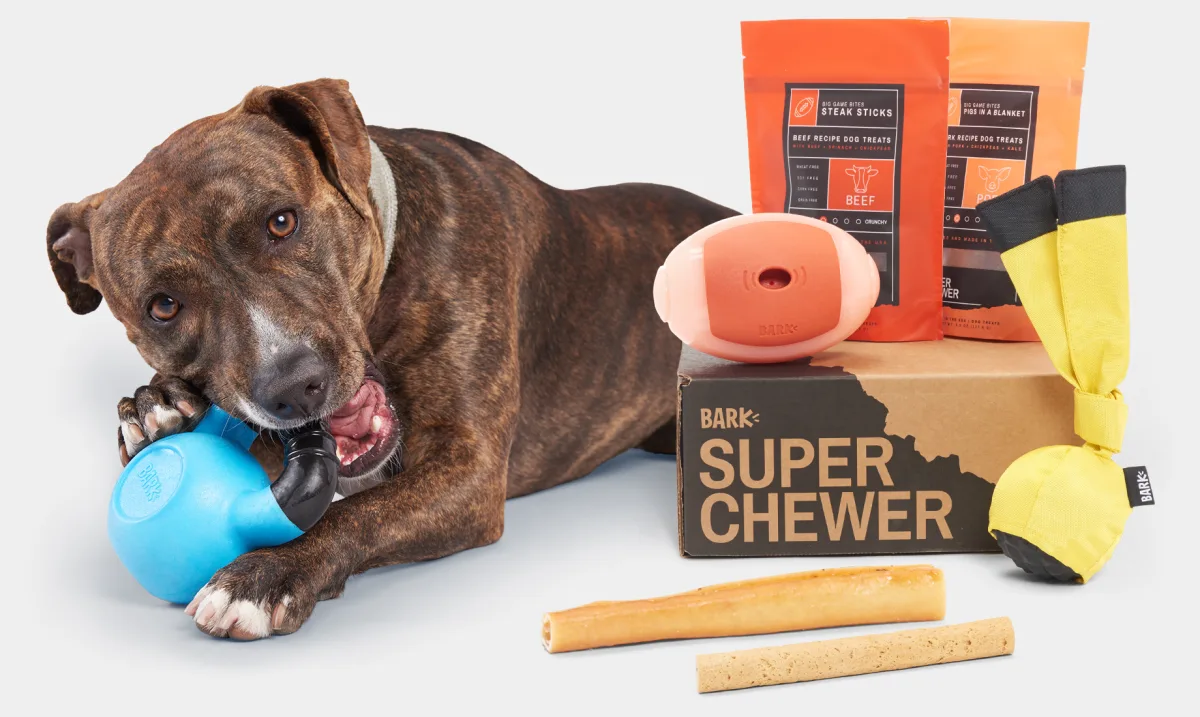
Super Chewer is a separate BarkBox product line — not an upgrade tier within the same subscription. It requires a distinct sign-up and is designed from the ground up for dogs that destroy standard toys quickly. Contents emphasize reinforced materials and longer-lasting chews over the novelty-driven toy design that defines the standard box.
Business Insider explicitly evaluated chewer-specific boxes as a separate category in their 2026 testing, which reflects how meaningfully different the product experience is. A standard BarkBox toy and a Super Chewer toy are not variations on the same product — they are engineered for different jaw forces and play intensities.
The right way to evaluate Super Chewer is cost-per-use rather than sticker price. If a standard box toy lasts one 20-minute session before disintegrating, and a Super Chewer toy survives two weeks of daily play, the Super Chewer toy delivers dramatically better value even at a higher monthly cost. Owners of Labrador Retrievers, German Shepherds, American Pit Bull Terriers, and similar high-drive breeds should start with Super Chewer rather than defaulting to the standard box and canceling in frustration after month one.
The broader lesson: even the most recognized brand in the category cannot serve all use cases with a single product. If the market leader needs two separate product lines to serve dog owners adequately, the right box for your specific dog almost certainly requires some research beyond typing "best dog subscription box" into a search engine.
KitNipBox 2026: The Case for a Dedicated Cat Subscription
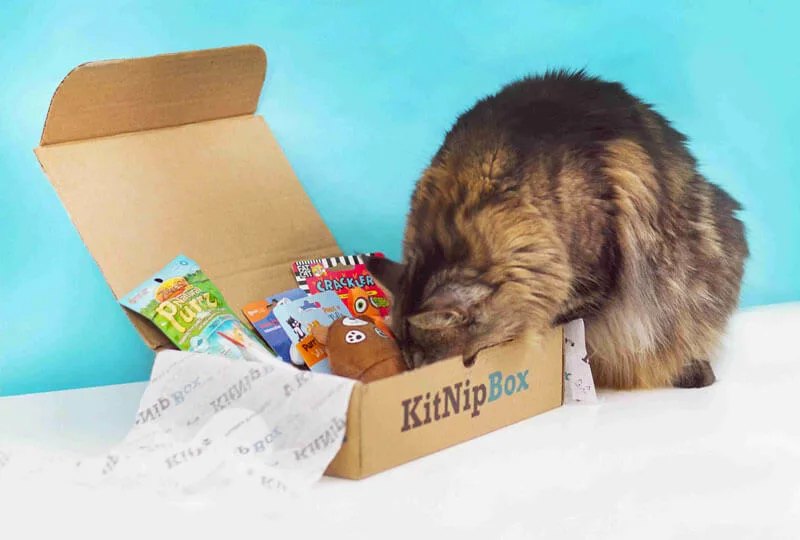
Cat owners who apply dog-box logic to their subscriptions consistently end up disappointed. Cats don't respond to the same novelty-and-chew framework that drives dog box design. Their play preferences are more variable, their treat tolerances are more specific, and enrichment quality — toys that genuinely simulate prey behavior — matters far more than themed packaging.
KitNipBox is one of the top five globally recognized pet subscription brands according to Dataintelo, and it's the leading cat-specific option in the mainstream market. The multi-cat box delivers up to seven items monthly, spanning toys, treats, accessories, health and hygiene products, gadgets, and surprise items, as noted by BuzzFeed. Free US shipping is included — a concrete value factor that compounds significantly over a 12-month subscription when compared against competitors that charge shipping monthly.
The multi-cat tier directly addresses the household composition problem. A single-cat box sent to a three-cat home creates scarcity and competition; KitNipBox's multi-cat configuration provides enough variety and quantity that each cat has a reasonable chance of finding something engaging.
Cats.com's testing methodology for cat subscription boxes weighted cats' actual reactions and enrichment toy quality heavily — a more rigorous standard than most dog box reviews apply. Their shipping benchmark (ordered on the 16th, arrived on the 21st — five days) is a useful reference point for evaluating any cat box's logistics.
One meaningful limitation: dietary customization depth is shallower than leading dog boxes. Owners with cats on strict veterinary diets should verify treat ingredient lists directly before subscribing rather than assuming the box will accommodate restrictions automatically. If you're also comparing the best available options for your cat's nutrition separately from enrichment, the best cat food guide for 2026 covers wet vs. dry formulations with vet analysis.
Beyond the Big Two: Alternatives for Specific Needs
The 38–42% market share held by the top five brands means the majority of the market is served by alternatives — and several are purpose-built for situations where BarkBox and KitNipBox are a poor fit.
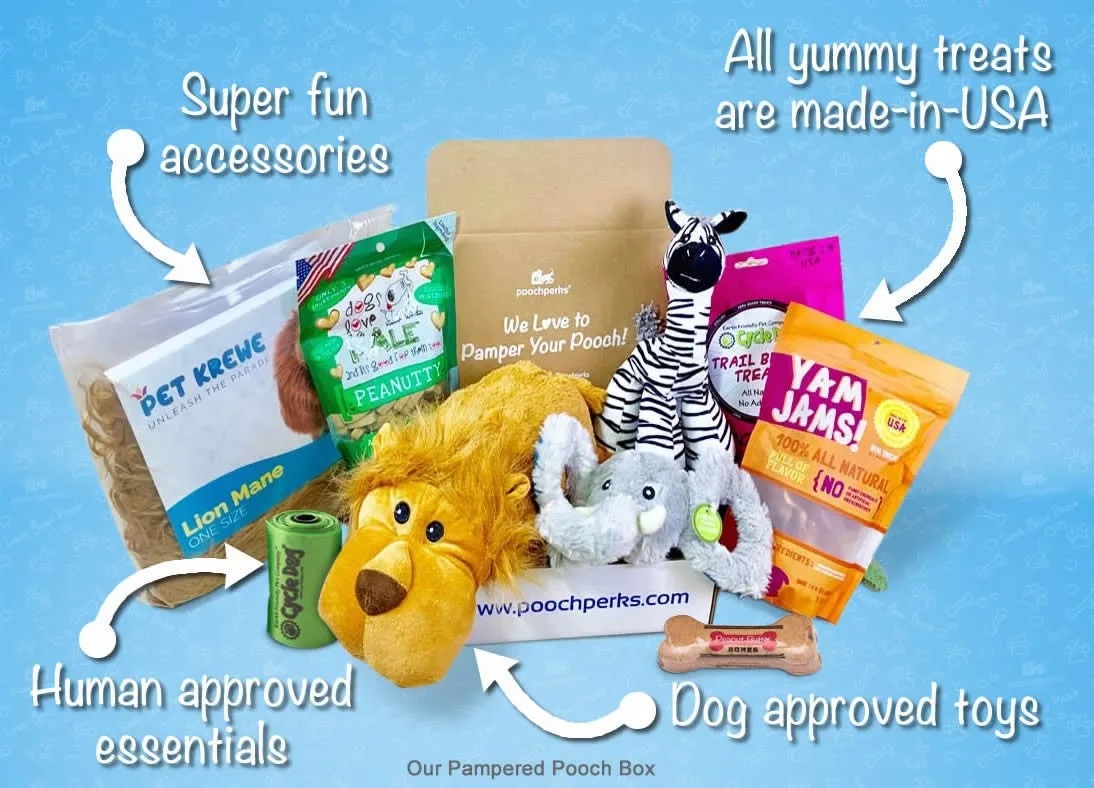
Multi-dog households: Pooch Perks Pampered Pooch Box. According to Forbes Vetted, Pooch Perks delivers up to 11 items per box with monthly themes and no product repetition across deliveries. That item count is roughly twice the standard BarkBox contents, making it a practical solution for two- or three-dog households where a five-item box creates more conflict than joy.
Rescue-supporting owners: Rescue Box. Rescue Box donates a portion of proceeds to Rescue Bank, a Greater Good organization that distributes food to shelters and funds animal vaccinations across the United States. Customization is limited to dog size rather than the deeper preference inputs offered by BarkBox, but for shelter-adopter households or owners who want their subscription spending to have a direct charitable impact, it's the most straightforward option in this category, as highlighted in this Top 10 Dog Subscription Boxes roundup on YouTube.
New puppy owners: Smart Pup Box. K9 Magazine highlights Smart Pup Box as a training-focused subscription designed to support new puppy owners through the first year. Each monthly box includes a 24-page training and socialization book, a training planner, stickers, and month-appropriate treats, toys, and training aids — priced from £49.95 per month. This is a fundamentally different product philosophy from novelty-driven boxes: it's structured around developmental milestones, which makes it genuinely useful for first-time dog owners who need guidance alongside products. If you're in that phase and want to go deeper on structured training tools beyond the subscription box, the best pet training tools and online courses for 2026 covers a broader range of options.
Allergy and dietary restriction households: Frank's Monthly. Also covered by K9 Magazine, Frank's Monthly leads with grain-free, low-fat, no-artificial-ingredient formulations and explicitly markets to dogs with allergies, diabetes, or obesity. For households where dietary restrictions are the primary constraint, a box that treats those restrictions as a core feature — not an optional flag — is meaningfully different from a mainstream box that offers allergy customization as a secondary input.
How to Accurately Calculate the Value of Any Box
Claimed retail value is the least reliable number in any pet subscription box marketing. Brands frequently use MSRP rather than actual market prices to construct value comparisons, which inflates the apparent savings.
The correct methodology — used by Business Insider in their 2026 testing — compares box contents against equivalent products available at major pet retailers at current selling prices, not manufacturer suggested retail.
A practical three-step approach: first, list every item in the box. Second, find the closest equivalent product at Chewy, Petco, or Amazon at the current price. Third, sum those retail equivalents and compare to the subscription cost including shipping. If the contents retail for less than the box price including shipping, you're paying a convenience premium — which is a legitimate choice to make consciously, not by assumption.
For chewer households, add a fourth step: estimate toy lifespan. A toy destroyed in one session carries one of the highest cost-per-use ratios of any pet product you can buy. A reinforced toy lasting two weeks costs a fraction of that per session. This calculation is the primary reason Super Chewer subscribers with large breeds often report better perceived value than standard BarkBox subscribers, even when Super Chewer costs more per month.
Shipping costs are a hidden variable that compounds over a 12-month commitment. KitNipBox's free US shipping is a concrete, calculable advantage. Subscription length discounts are common across the category, but committing to an annual plan before confirming the box suits your pet carries real cancellation risk. A month-to-month plan for the first two deliveries, then a longer commitment if the fit is confirmed, is lower risk even if the per-box cost is slightly higher.
If you use Chewy for your regular pet supplies, it's worth checking their Goody Box lineup as well — the value calculation is especially straightforward since you're comparing against the same retailer you already use for food and accessories.
Decision Framework: Who Should Buy What
Rather than a ranked list, here is a direct decision tree based on the variables above:
- Dog, moderate chew intensity, no complex dietary restrictions: BarkBox is a well-justified default. Customization inputs are solid, the themed novelty prevents repetition, and a 4.2/5 average rating reflects genuine broad satisfaction.
- Dog that destroys toys within one session: Start with Super Chewer, not BarkBox. It requires a separate subscription and is a fundamentally different product.
- Two or more dogs: Evaluate Pooch Perks (up to 11 items) before defaulting to BarkBox. A five-item box split across multiple dogs delivers poor per-dog value.
- One or more cats: KitNipBox is the most established cat-specific option. The multi-cat tier is worth the price difference for households with two or more cats. Verify treat ingredients if any cat has dietary restrictions.
- New puppy, need training support alongside products: Smart Pup Box's developmental structure is more useful than a novelty-driven box for the first 12 months of ownership.
- Shelter adopter, want subscription spending to fund animal welfare: Rescue Box's charitable model is the most direct option in this category.
- Dog with allergies, diabetes, or obesity: Frank's Monthly's ingredient-first approach is a stronger starting point than flagging restrictions in a mainstream box's sign-up form.
For broader context on how pet subscription boxes fit into the full landscape of pet products — including cameras, GPS trackers, and food — the complete pet products review for 2026 covers dogs, cats, and small pets across all major categories.
Frequently Asked Questions
Is BarkBox worth it in 2026? For dogs with moderate chew intensity and no complex dietary restrictions, yes. BarkBox delivers consistent value through its two-toy, two-treat, one-surprise structure, meaningful customization at sign-up, and monthly themed novelty that prevents product repetition. It is not worth it for power chewers, who will find the standard toys inadequate within a single play session. Those owners should evaluate Super Chewer instead.
What is the difference between BarkBox and Super Chewer? Super Chewer is a separate subscription product from BARK Inc. (NYSE: BARK), not an upgrade tier within BarkBox. It is engineered specifically for dogs that destroy standard toys quickly, using reinforced materials and longer-lasting chews. The two products require separate sign-ups and are designed for fundamentally different chew profiles.
Is KitNipBox good for a single cat? Yes. KitNipBox offers both single-cat and multi-cat tiers. The single-cat box delivers a curated monthly selection of toys, treats, and accessories. The multi-cat box (up to seven items, free US shipping) is designed for households with more than one cat and provides better per-cat value at that scale.
How do I know if a pet subscription box is actually good value? Compare box contents against equivalent products at major pet retailers at current selling prices — not MSRP. Sum those retail equivalents and compare to your total monthly cost including shipping. For chewer households, also factor in toy lifespan when calculating cost-per-use.
Are there pet subscription boxes for dogs with allergies? Yes. BarkBox collects allergy information at sign-up and adjusts curation accordingly. Frank's Monthly is grain-free, low-fat, and free of artificial ingredients by default, making it a stronger fit for dogs where dietary restrictions are the primary concern rather than a secondary flag.
Which pet subscription box is best for multiple dogs? Pooch Perks Pampered Pooch Box, which delivers up to 11 items per month with monthly themes and no product repetition, is explicitly designed for multi-dog households. A standard five-item box shared across two or more dogs typically delivers poor per-dog value and can create resource-guarding behavior around scarce toys.
Do pet subscription boxes work for small pets like birds or rabbits? Most mainstream boxes — including BarkBox and KitNipBox — are designed exclusively for dogs and cats. Small pet and bird owners typically find better value through specialty retailers. If you're setting up an enriching environment for a bird, our best bird cages and supplies guide for 2026 is a more useful starting point than any general subscription box.
Researched and drafted with AI assistance. Reviewed and fact-checked by the Trusted Buyer Report editorial team before publishing. Trusted Buyer Report may earn a commission from purchases made through links on this page — commissions are applied only after editorial assessment is complete. Read our methodology · Affiliate disclosure