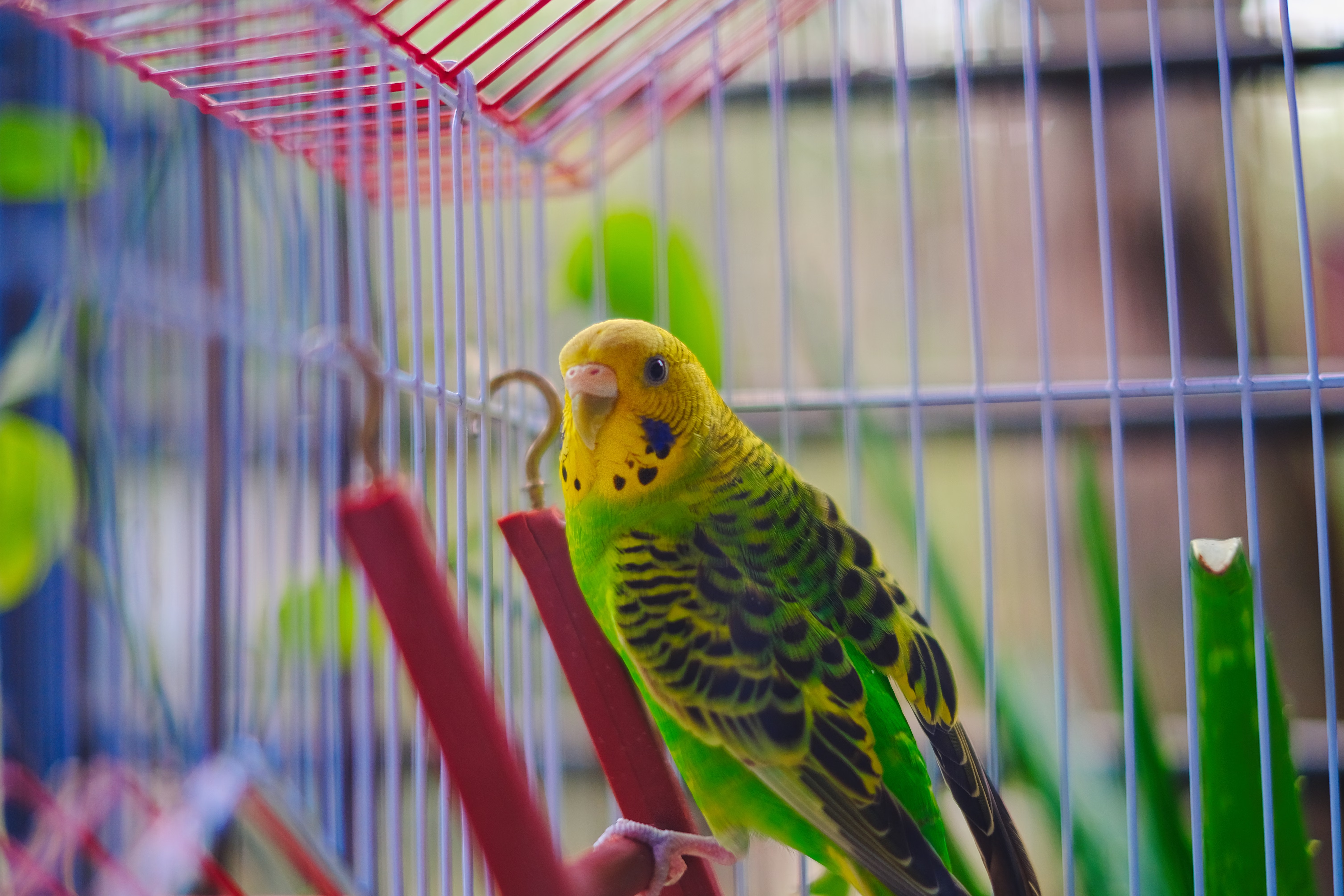
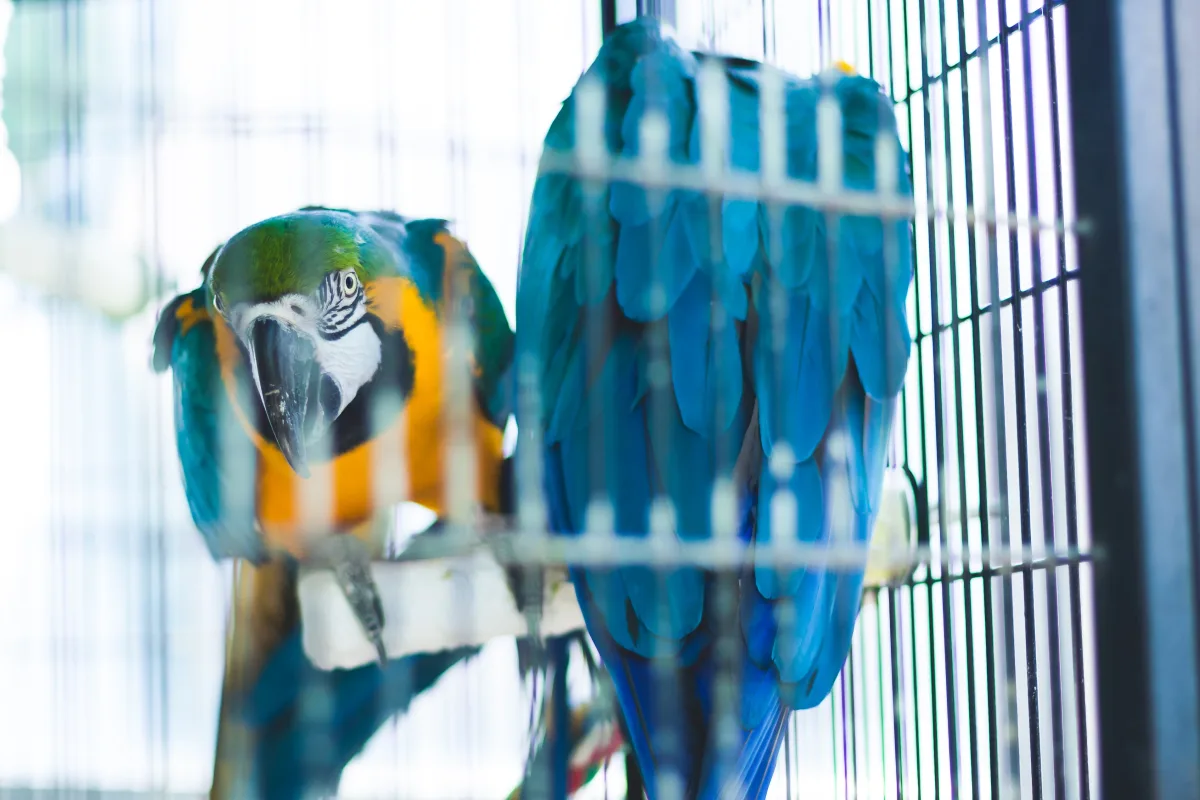
Most bird owners pick a cage based on size. That's the wrong starting point — and it leads to real harm.
Bar spacing, coating materials, bar orientation, latch design, and perch quality all affect your bird's health as much as — and sometimes more than — overall cage dimensions. A bird can spend its life in a technically large cage and still develop zinc toxicity, foot injuries, or chronic stress because the details were wrong.
This guide covers every specification that matters before recommending a single product. We've synthesized manufacturer specs, avian veterinary guidance, and verified buyer feedback to help you avoid the most common (and preventable) mistakes.
How this guide was researched: This guide is based on manufacturer specifications, expert avian veterinary sources, market research data, and aggregated buyer feedback. It does not reflect hands-on testing by Trusted Buyer Report. We cite our sources throughout.
Reviewed by the Trusted Buyer Report editorial team. We may earn a commission from purchases made through links on this page — added only after our assessment is complete. Full disclosure →
The Misconception That Puts Birds at Risk
Here's the problem: product listings emphasize overall height and "large capacity." But avian veterinarians consistently identify bar spacing, coating chemistry, and perch variety as the specifications that cause the most preventable injuries.
A cockatiel owner who buys a budget cage with smooth wooden dowel perches — the kind included as standard with most entry-level products — may not notice anything wrong for weeks. By the time foot pressure sores appear, the bird has been suffering for some time. A budgie owner who purchases a decorative cage with 0.75-inch bar spacing instead of the safe maximum of 0.5 inches may discover the problem only when the bird gets its head trapped.
These are not edge cases. They're routine outcomes of prioritizing price or aesthetics over species-appropriate specifications.
The market makes this harder, not easier. According to Zion Market Research, the global bird cages and accessories market was valued at approximately $3.86 billion in 2024 and is projected to reach $6.48 billion by 2034. More products on shelves means more imported options with inconsistent quality control and vague material disclosures.
Understanding the specs that actually matter is your first line of defense.
Bar Spacing: The Single Most Important Number on Any Cage Listing
Before you look at brand names or price ranges, look up the correct bar spacing for your specific species. This one specification determines whether your bird can get its head trapped, escape, or climb safely.
Bar spacing guidelines by species:
| Species | Maximum Bar Spacing |
|---|---|
| Finches, canaries | 0.4–0.5 inches |
| Budgerigars (parakeets) | 0.4–0.5 inches |
| Cockatiels | 0.5–0.75 inches |
| Small-to-medium conures | 0.75 inches |
| African Greys, Amazons | 0.75–1 inch |
| Large macaws, cockatoos | 1–1.5 inches |
Use these numbers — not the broad "small/medium/large bird" size categories that appear on most product listings. A lovebird and a zebra finch are both "small birds," but they have meaningfully different housing requirements.
Bar orientation matters, too. Parrots are climbers. Horizontal bars give them grip surfaces to move around the cage, which supports exercise and reduces boredom. Finches and canaries are fliers rather than climbers, so bar orientation matters less for them — but cage shape matters more (more on that below).
Cage shape and stress: Round cages are widely discouraged by avian veterinarians and behaviorists. Birds naturally use corners as security reference points. A bird that cannot find a corner may display elevated stress behaviors. Stick to rectangular cages with at least one solid back wall.
Door and latch design: A cockatiel can live comfortably with a standard swing-door latch. A cockatoo or macaw can and will defeat simple spring latches — these birds are strong and persistent. For larger parrots, look specifically for two-step latches or supplemental security locks.
Cage Materials: What the Labels Actually Mean
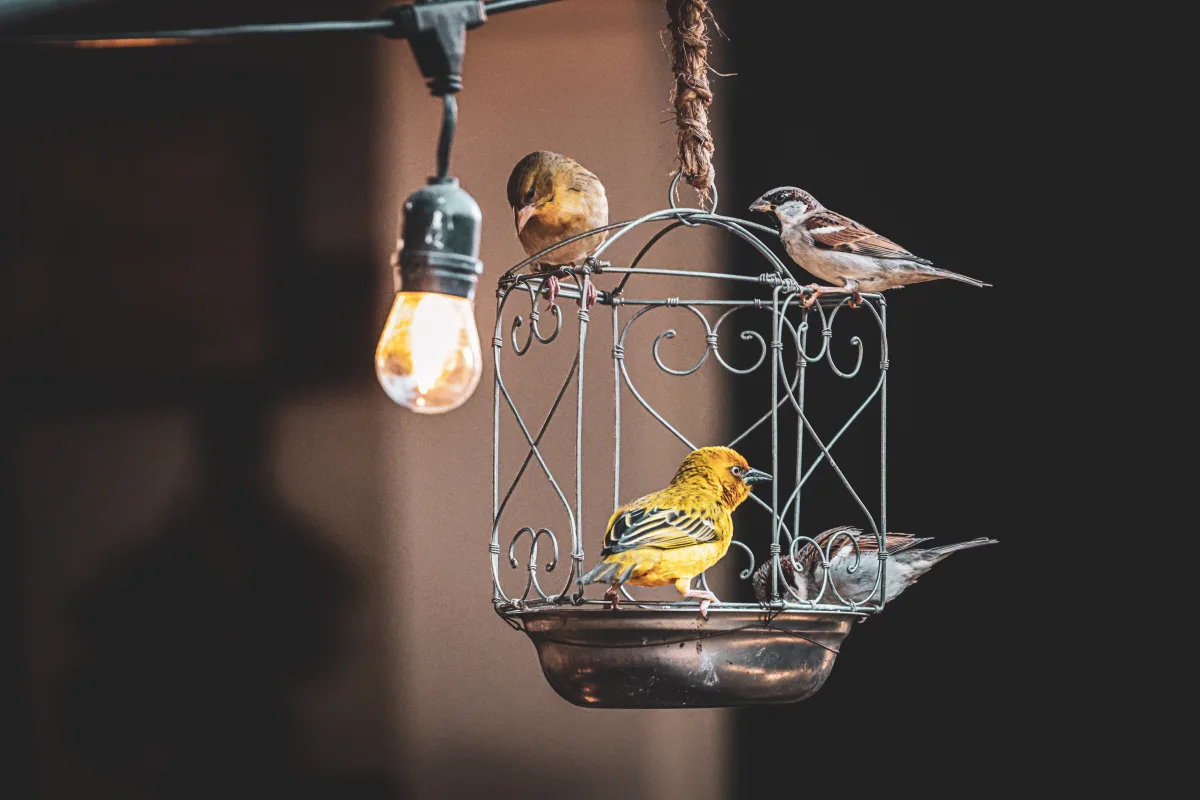
The materials section of most cage listings is where marketing language does the most damage. "Non-toxic" appears on many products but is rarely substantiated. Here's what the common terms actually mean.
Powder-coated steel is the most common mid-range cage material. Quality varies substantially. A thick, properly cured powder coat applied over clean steel is durable and safe. A thin coat applied over galvanized wire — which contains zinc — is a different matter. Birds that chew on flaking coating can ingest zinc particles, leading to zinc toxicosis: a serious, sometimes fatal condition that is frequently misdiagnosed. When evaluating powder-coated cages, look specifically for "lead-free" and "zinc-free" claims, and verify whether the underlying wire is galvanized or bare steel.
Stainless steel is the gold standard. No toxic coatings, no rust, highly resistant to mechanical chewing damage. The trade-off is cost — stainless steel cages are significantly more expensive. For heavy chewers like macaws, cockatoos, and large conures, the long-term math often favors stainless steel because coated cages degrade and need replacement. Zion Market Research notes that the stainless steel cage segment is registering the highest growth rate in the market — a reflection of wider buyer awareness of this risk.
Wrought iron dominates the mid-range. Bare wrought iron rusts and can harbor bacteria, so a proper powder coating is essential. The Prevue Hendryx and Yaheetech products that appear consistently in best-of rankings are wrought iron with powder coating. The quality of that coating is what separates a safe purchase from a risky one.
Plastic and acrylic are appropriate for very small birds and travel, but poor choices for permanent housing. Ventilation is limited, and larger birds will crack or chew through plastic components. Wood cages are decorative and nearly impossible to sanitize — they harbor mites, bacteria, and fungal growth in ways metal cages do not.
Quick safety check: Before introducing any bird to a new cage, wipe the bars firmly with a white cloth. If coating residue transfers, the coat is not properly cured. Clean thoroughly and allow full off-gassing, or replace the cage.
How the Bird Cage Market Has Changed in 2026
Understanding the current market helps explain why so many poor-quality products are readily available — and how to spot them.
E-commerce has flattened the distribution landscape. It's now as easy to buy an unbranded cage from an overseas manufacturer as it is to buy from an established pet brand. Future Market Insights projects the broader bird cages and accessories market to grow from $2.9 billion in 2025 to $4.8 billion by 2035 at a 5.1% CAGR — channel expansion is a primary growth driver. More products entering more channels means more variance in quality.
A few data points worth knowing:
- Metal holds approximately 40% of the material type segment, with stainless steel as the fastest-growing sub-category (Zion Market Research).
- Decorative cages account for 35% of premium segment sales (Intel Market Research) — an expensive cage can still be functionally wrong for your bird.
- DataIntelo projects 5.9% CAGR for the bird cages market from 2026–2034, citing growing social media content about bird species and improved avian veterinary guidance as the primary drivers of buyer awareness.
The practical implication: buyers are arriving at purchase decisions better informed than they were three to four years ago. That's a genuine improvement. But the volume of available products has grown faster than buyer awareness, which is why the specifications in this guide matter more than brand names or price tiers.
If you're thinking through the full picture of companion animal care at the same time, the overview of pet products for dogs, cats, and small pets in 2026 applies the same research-based approach across other categories.
Top Bird Cages Worth Considering in 2026
The following cages appear consistently in expert reviews and consumer bestseller data. Each is assessed against the bar spacing and material criteria above — not against Amazon rank alone.
Prevue Hendryx Iron Bird Cage — Best Mid-Range Pick for Small-to-Medium Birds
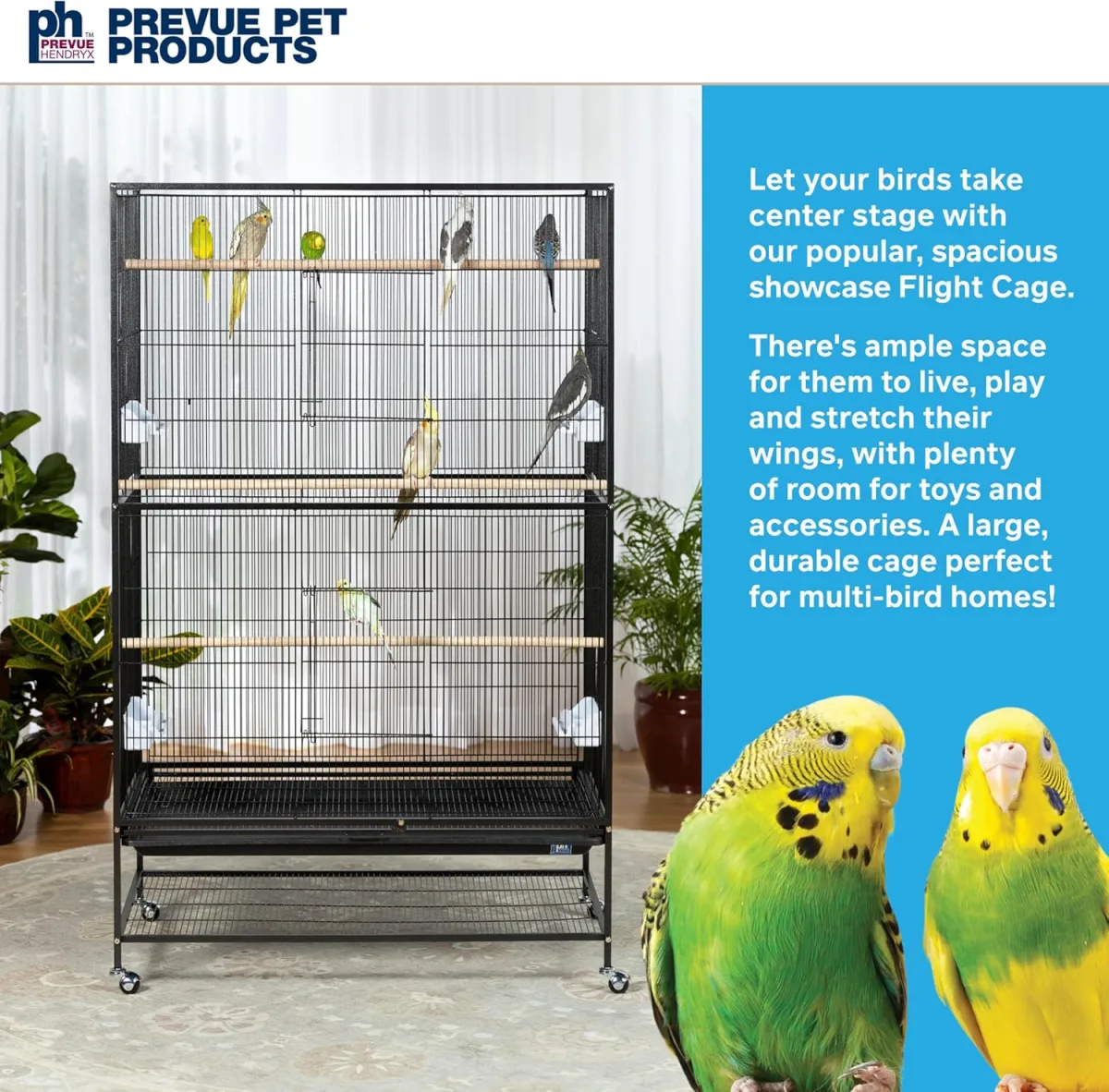
Prevue Hendryx has maintained a consistent reputation for build quality in the mid-range segment for years. The wrought iron construction with powder coating is well-regarded, and the brand is more transparent about material specifications than most unbranded imports — a meaningful differentiator. Models in this line are generally appropriate for cockatiels, small conures, and similar-sized birds, with bar spacing configurations that match the species chart above.
What to know before you buy: Assembly complexity is a common complaint in buyer reviews. The included perches are standard smooth dowels and should be replaced immediately with natural wood alternatives. This is true of almost every cage in this price range — factor in perch replacement as an immediate additional cost.
Yaheetech Wrought Iron Large Cage — Strong Value for Medium-to-Large Parrots
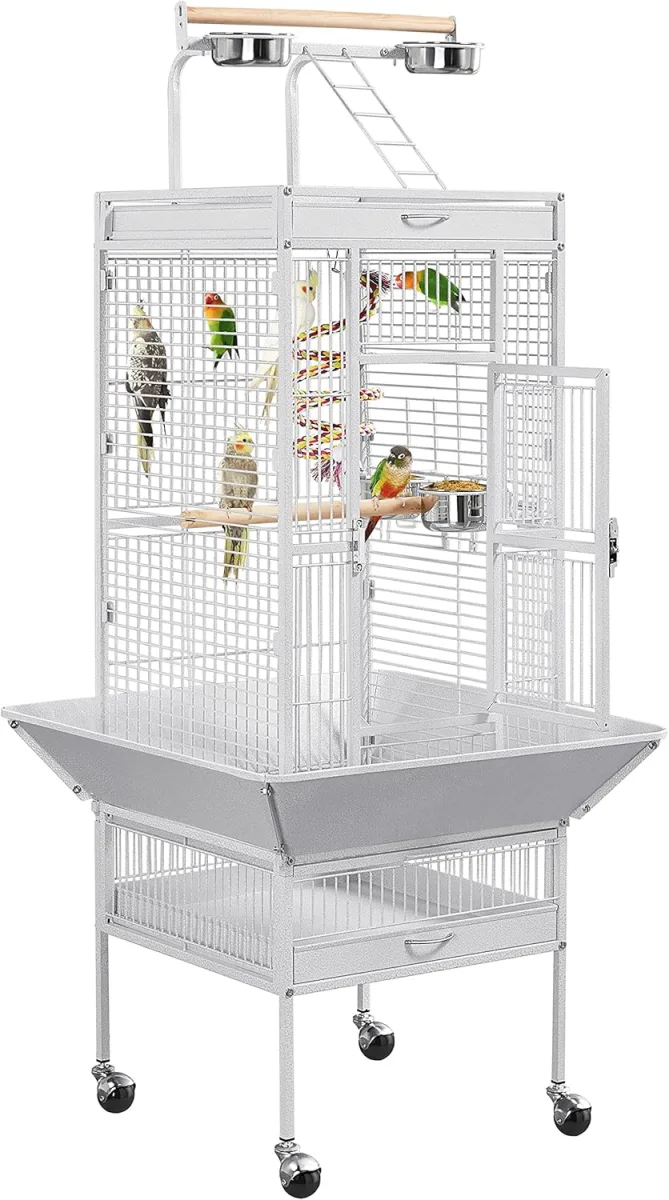
The Yaheetech extra-large cage (69 inches) is a strong option for medium-to-large parrots when the specific model's bar spacing is verified against the species table above. It competes favorably on price with comparable products and offers generous interior dimensions. Assembly requires two people. The rolling stand is convenient but should be checked for stability on uneven flooring before trusting it unsupervised. Powder coat quality is generally well-reviewed, but perform the wipe test before introduction.
VIVOHOME Wrought Iron Flight Cages — Best for Finches, Canaries, and Budgies
VIVOHOME's 54-inch model is a genuine flight cage design — horizontal footprint prioritized over vertical height, which is the correct configuration for flying birds. Canaries, zebra finches, and budgies benefit substantially from the 54-inch horizontal run compared to standard cage footprints. The rolling stand adds practical value when the cage needs to be repositioned. Important: Bar spacing on VIVOHOME models varies across the product line. Confirm the specific model's spacing against the species chart before purchasing.
VEVOR 64-Inch Open-Top Parrot Cage — Best for Larger Parrots with Daily Out-of-Cage Time
The open-top design supports enrichment-focused bird keeping by providing a perch platform on the cage roof for supervised out-of-cage time. The detachable rolling stand adds flexibility. This design is not appropriate for birds that cannot be supervised — the open top provides no containment when the bird is on the roof platform. Best suited for larger parrots that already spend substantial daily time outside the cage.
A note on bestseller rankings: Amazon's list reflects purchase volume, not suitability. A cage can be the most purchased product in a category and still be wrong for your bird. Cross-reference any shortlisted product against the bar spacing table and material criteria before buying.
Flight Cages vs. Standard Cages: When the Distinction Actually Matters
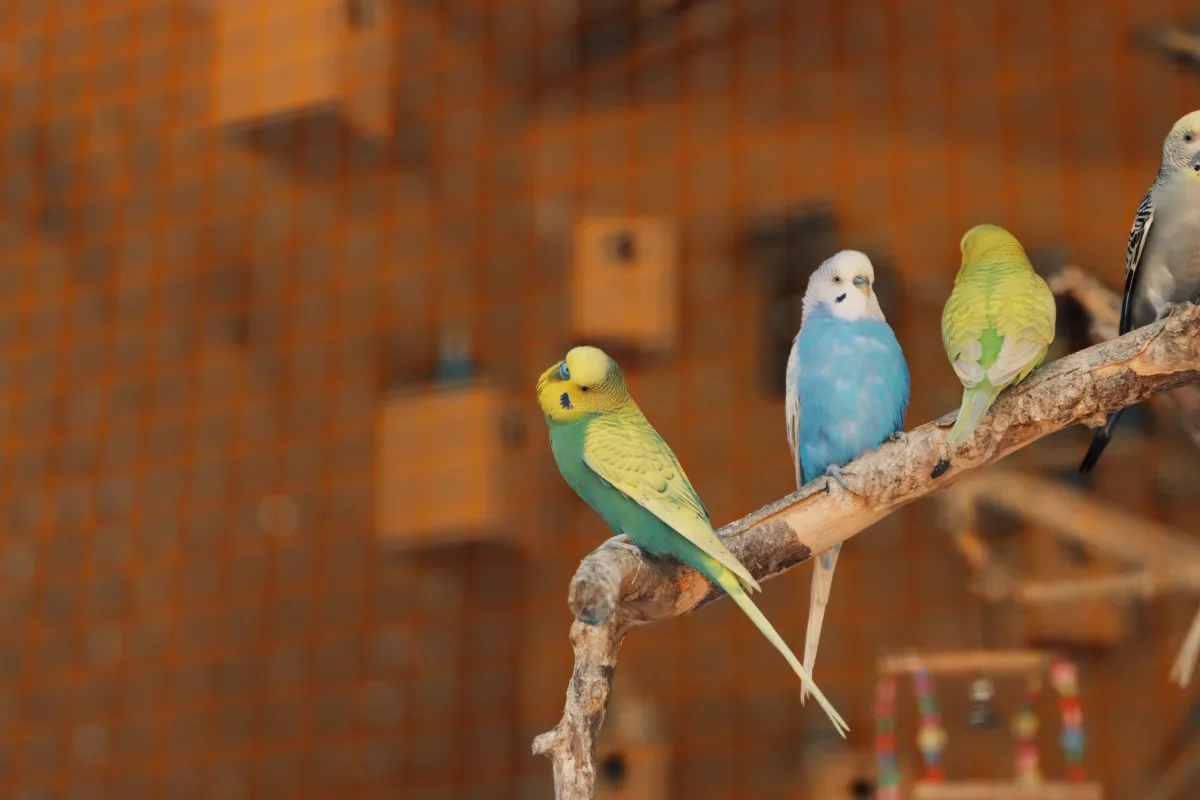
A flight cage is not simply a large cage. It's a cage designed with a horizontal footprint that allows birds to fly short distances inside the enclosure. Birds fly horizontally — a tall, narrow cage may have impressive listed dimensions but provide almost no useful flight space.
Who needs a flight cage:
Finches, canaries, and budgies are active fliers that often aren't handled daily. They rely on in-cage movement for their primary exercise. A pair of zebra finches in a standard cage — even a generously sized one — will be measurably less active than the same pair in a flight cage with a 48-inch or longer horizontal run.
Who doesn't need a flight cage:
Larger parrots that receive substantial out-of-cage time — multiple hours daily — can be appropriately housed in a well-sized standard cage because their primary activity space is outside the cage. A macaw spending four hours a day on a play stand does not need a 60-inch flight cage.
For apartment settings where floor space is limited: look for flight cage designs that maximize the length-to-depth ratio rather than overall footprint. A cage that is 48 inches wide and 18 inches deep provides better flight space than a 30-inch square cage with the same floor area.
Bird Cage Accessories: What Your Bird Actually Needs vs. What Gets Marketed
Most cages include accessories. Most of those included accessories should be replaced immediately.
Perches: Replace the Included Dowels First
The smooth wooden dowels included with budget and mid-range cages are the single most commonly replaced accessory — and for good reason. Uniform-diameter, smooth perches force a bird's foot into the same grip position repeatedly, creating pressure sores and, in chronic cases, bumblefoot. Natural wood perches from manzanita, java wood, or dragonwood vary in diameter and texture along their length, exercising different foot muscles with each grip.
Perch setup for cockatiels and similar-sized birds: At least three perches of varying diameter — one narrow (~0.5 inches), one medium (~0.75 inches), and one wider platform or natural branch. Rope perches add texture variety but should be monitored for fraying — loose fibers can entangle toes.
Foraging Toys: A Behavioral Necessity for Parrots
For parrots, foraging toys are not optional enrichment — they're a behavioral necessity. Wild parrots spend a significant portion of their day searching for and processing food. A captive parrot with food available in an open dish and nothing else to do will redirect that drive into feather-destructive behavior, screaming, or repetitive movements.
Foraging toys that require the bird to manipulate, shred, or unwrap food items before eating directly address this need. Budget for regular replacement — a parrot that has solved a puzzle toy will lose interest in it quickly.
Food and Water Dish Placement
Dishes positioned directly below perches will be contaminated with droppings within hours. Position food dishes to the side of perching areas. Stainless steel dishes are preferable to plastic — easier to sanitize and don't harbor bacteria in surface scratches.
Cage Liners and Tray Systems
A cage that's difficult to clean will be cleaned less often. When evaluating any cage, check whether the waste tray slides out fully without disturbing the bird, whether it's deep enough to contain substrate, and whether the grate above it is removable for cleaning. Paper-based liners — plain newsprint or purpose-made cage liners — are the easiest to replace and the safest substrate. Avoid cedar and pine shavings, which release aromatic oils toxic to birds.
What to Avoid
- Mirrors for single parrots. A parrot that bonds with its mirror reflection may redirect social behavior toward the mirror instead of its owner — a behavioral problem that's difficult to reverse.
- Bells with detachable clappers. Small metal components are an ingestion risk. If you use bells, choose designs with all fixed components.
- Toys with zinc-containing metal parts. The same zinc toxicity risk that applies to cage coatings applies to toy hardware. Look for stainless steel or nickel-plated clips, chains, and bells — not galvanized.
Where to Buy Bird Cages and Supplies in 2026
For bird cage and supply purchases, Chewy is the primary dedicated pet retailer worth considering — the Chewy review for 2026 covers its service reliability, return policy, and AutoShip pricing in detail. Amazon carries the broadest product selection and is where most bestseller data originates, but the quality variance is high — the specifications in this guide matter more than "Amazon's Choice" labels.
For ongoing supply needs — food, perches, foraging toys — pet subscription boxes have expanded into the bird and small pet category and can simplify regular restocking.
If you're setting up monitoring for a free-roaming bird or one in a room-sized aviary, pet cameras have become a practical tool for keeping an eye on birds during out-of-cage time without constant physical presence.
Frequently Asked Questions
What is the most important specification when buying a bird cage?
Bar spacing is the single most critical safety specification. It determines whether your bird can get its head trapped, whether it can escape, and whether ventilation is appropriate. Use the species-specific spacing chart in this guide — not the broad size categories in product listings.
Are wrought iron cages safe for birds?
Yes, when properly coated. Bare wrought iron rusts and can harbor bacteria, but a well-applied, lead-free, zinc-free powder coat makes wrought iron a durable and safe material. Perform a wipe test on any new cage before introducing your bird, and replace the cage if the coating shows significant flaking over time.
Is stainless steel worth the higher price?
For heavy-chewing species — macaws, cockatoos, large conures — yes. Stainless steel contains no toxic coatings, doesn't degrade under chewing pressure, and will outlast multiple powder-coated cages. For smaller birds that don't chew heavily, a quality powder-coated cage with verified lead-free and zinc-free certification is a reasonable and safe alternative.
What's the difference between a flight cage and a standard cage?
A flight cage prioritizes horizontal width to allow short flights inside the enclosure. A standard cage prioritizes security and convenience but may not provide adequate movement space for birds not regularly let out. Finches, canaries, and budgies benefit most from flight cage dimensions. Larger parrots with substantial daily out-of-cage time can be appropriately housed in a standard cage.
How often should cage accessories be replaced?
Natural wood perches should be replaced when they show significant wear or deep grooves. Foraging toys should be rotated regularly and replaced when the bird shows no interest. Cage liners should be changed daily or every other day depending on the species and number of birds. Dishes should be washed daily.
How do I know if my bird's cage is the right size?
A basic guideline: your bird should be able to fully extend both wings inside the cage without touching the bars. For flying species like finches and budgies, the cage should ideally be wide enough for short horizontal flights. That said, out-of-cage time is essential for most bird species regardless of cage size — a larger cage is not a substitute for daily supervised free-flight or interaction.
Bottom Line: Who Should Buy What
Finches and canaries: Prioritize a flight cage with 0.4–0.5 inch bar spacing over overall cage height. The VIVOHOME 54-inch model is worth shortlisting. Replace included perches immediately.
Budgies: Same bar spacing requirement (0.4–0.5 inch). A flight cage is ideal; if space is limited, choose the widest footprint you can accommodate.
Cockatiels and small conures: Prevue Hendryx mid-range models offer consistent quality with transparent material specs. Confirm bar spacing (0.5–0.75 inch) on the specific model. Replace dowel perches immediately and add foraging toys from day one.
Medium-to-large parrots: Stainless steel is worth the investment if your bird is a heavy chewer. For powder-coated options, verify lead-free and zinc-free certification. Two-step or supplemental latches are non-negotiable. The Yaheetech 69-inch model is a competitive option at its price point.
All species: The accessories that come in the box are a starting point, not a final setup. Budget for natural perches, species-appropriate foraging enrichment, and stainless steel dishes as immediate additions.
This article was researched and drafted with AI assistance, then reviewed and fact-checked by the Trusted Buyer Report editorial team before publishing. Our recommendations are research-based — we synthesize manufacturer specs, expert veterinary sources, and verified buyer reviews, and cite our sources. We don't accept payment for rankings. How we review →