TL;DR — What to Know Before You Shop
- HDPE poly lumber: best for zero-maintenance, all-climate durability. Never needs sealing or painting.
- Cast aluminum: best for permanent patio installations; naturally rust-proof, won't blow over in wind.
- Grade A teak: best for buyers who want natural wood and are willing to apply sealant each season.
- All-weather resin wicker: best for covered patios and warm climates. Quality varies — verify resin density before buying.
- The #1 mistake: choosing a material that doesn't match your local climate. This guide fixes that.
Here's something most furniture ads won't tell you: the average American household replaces its outdoor furniture every 3–5 years, yet most weather-resistant materials available today are engineered to last 20 years or more. The gap between what furniture can do and what most people actually get out of it usually comes down to one avoidable mistake — buying a material that was never matched to their local climate.
This guide skips brand hype and focuses on the material science and climate compatibility that actually determine whether your next outdoor set lasts a season or a decade. If you're also planning a broader home refresh, the Furniture & Appliances Buyer's Guide 2026 covers complementary categories worth pairing with this one.
Why Does Most Outdoor Furniture Fail in Just a Few Years?
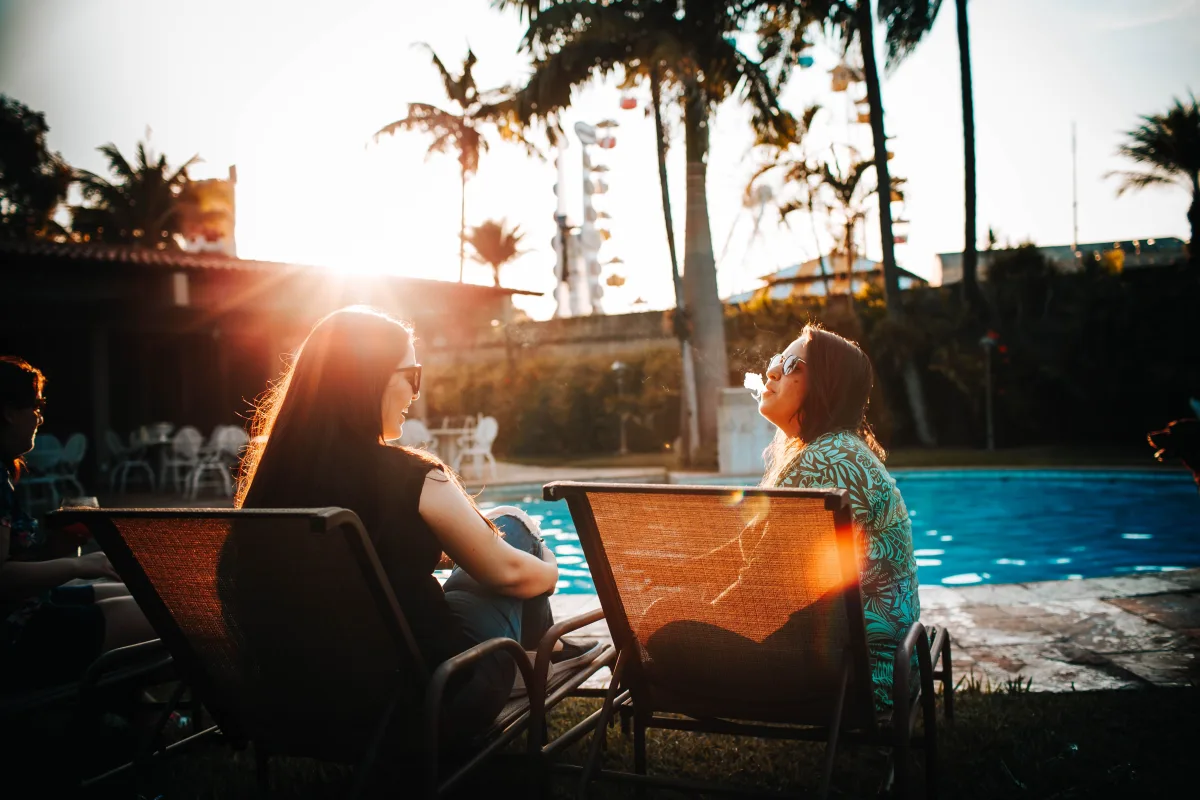
Premature failure in outdoor furniture almost always traces back to one of four causes: UV fading, rust at the joints, cracking from freeze-thaw cycles, or mold growth on cushions. Understanding each failure mode makes it far easier to spot which materials are genuinely solving the problem — and which are just marketed to sound like they do.
Hollow-tube metal frames are one of the most common culprits. Water infiltrates the hollow interior through small gaps at welds and joints, then freezes and expands in cold climates. Over one or two winters, this internal pressure cracks welds and causes visible structural failure. According to Tropicraftpatio.com's 2026 tested evaluation, solid cast aluminum eliminates this failure point entirely because there are no internal voids for moisture to collect.
Cushion fabric is the second most common early failure. Standard polyester fades visibly within a single summer of UV exposure and retains moisture after rain, creating the warm, damp conditions that mold and mildew thrive in. Kingmake Outdoor notes that solution-dyed acrylic fabric resists fading, mold, and mildew far better than standard polyester — the difference is structural, because solution-dyed color runs through the entire fiber rather than sitting on the surface.
Wood is a special case. Most hardwoods sold as outdoor furniture require consistent sealing to resist rot and splintering, and most owners stop applying sealant after year one. Wirecutter points out that among the three commercial teak grades — A, B, and C — only Grade A is considered truly weather-resistant without regular re-sealing. Buying Grade B or C and skipping maintenance is a reliable path to a ruined set.
The financial case for buying right the first time is clear. According to Market Research Future, 68% of outdoor furniture buyers now prioritize quality and functionality over aesthetics — a shift that reflects real experience with cheap sets that didn't last.
How This Guide Was Researched
This guide is based on manufacturer specifications, independent expert sources (including Wirecutter, Forbes Vetted, and PolyCasual.com), and verified customer feedback from multiple platforms. It does not reflect hands-on testing by Trusted Buyer Report. We synthesize findings across sources so you don't have to read all of them — and we cite every major claim.
The 4 Materials That Define Weather-Resistant Outdoor Furniture in 2026
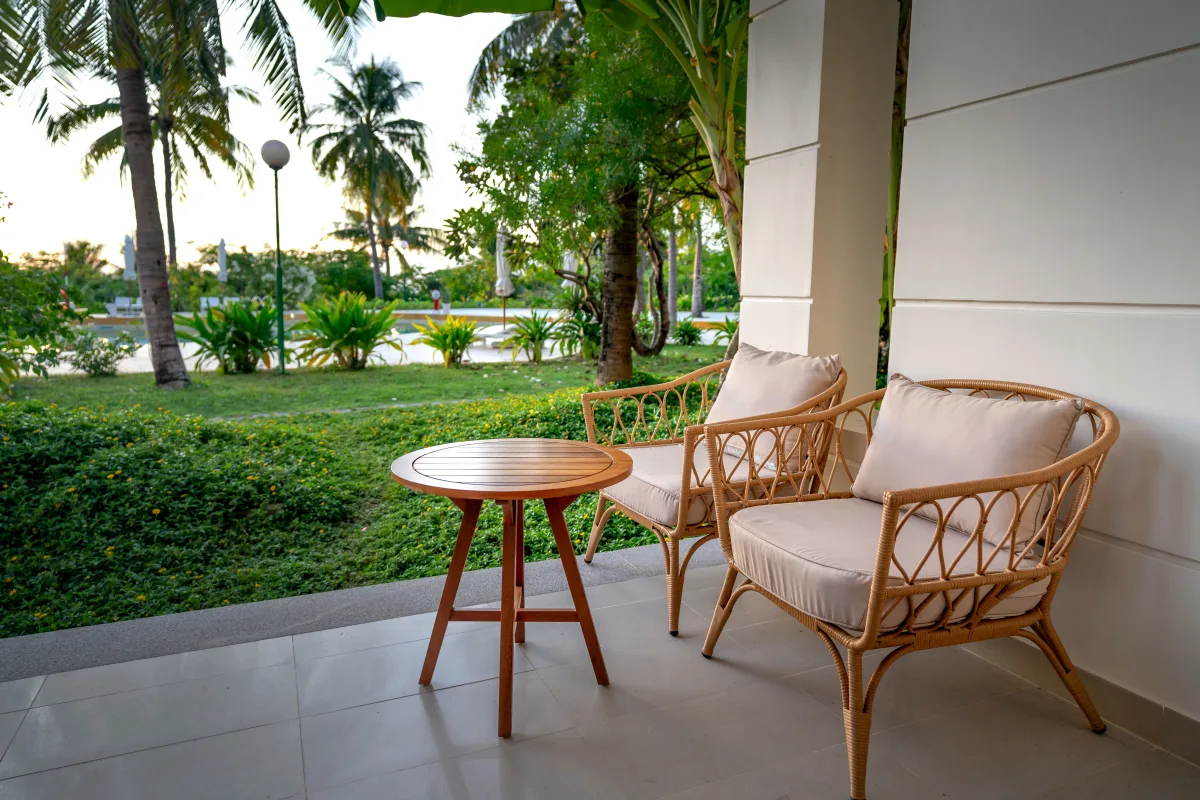
Four materials dominate the weather-resistant market in 2026: HDPE poly lumber, cast aluminum, Grade A teak, and all-weather resin wicker. Each has a distinct durability profile, maintenance requirement, and climate fit. Here's what each one does well — and where each one falls short.
| Material | Best Climate Fit | Maintenance Level | Price Range | Lifespan (Est.) |
|---|---|---|---|---|
| HDPE Poly Lumber | All climates, especially freeze-thaw zones | None | $$–$$$ | 20–30+ years |
| Cast Aluminum | All climates, especially coastal & windy | Very low | $$–$$$$ | 15–25+ years |
| Grade A Teak | Coastal, humid, moderate freeze zones | Moderate (seasonal) | $$$–$$$$ | 20–50+ years |
| All-Weather Resin Wicker | Warm/dry climates, covered patios | Low | $–$$$ | 5–15 years |
1. HDPE Poly Lumber — The Zero-Maintenance Case for Recycled Plastic
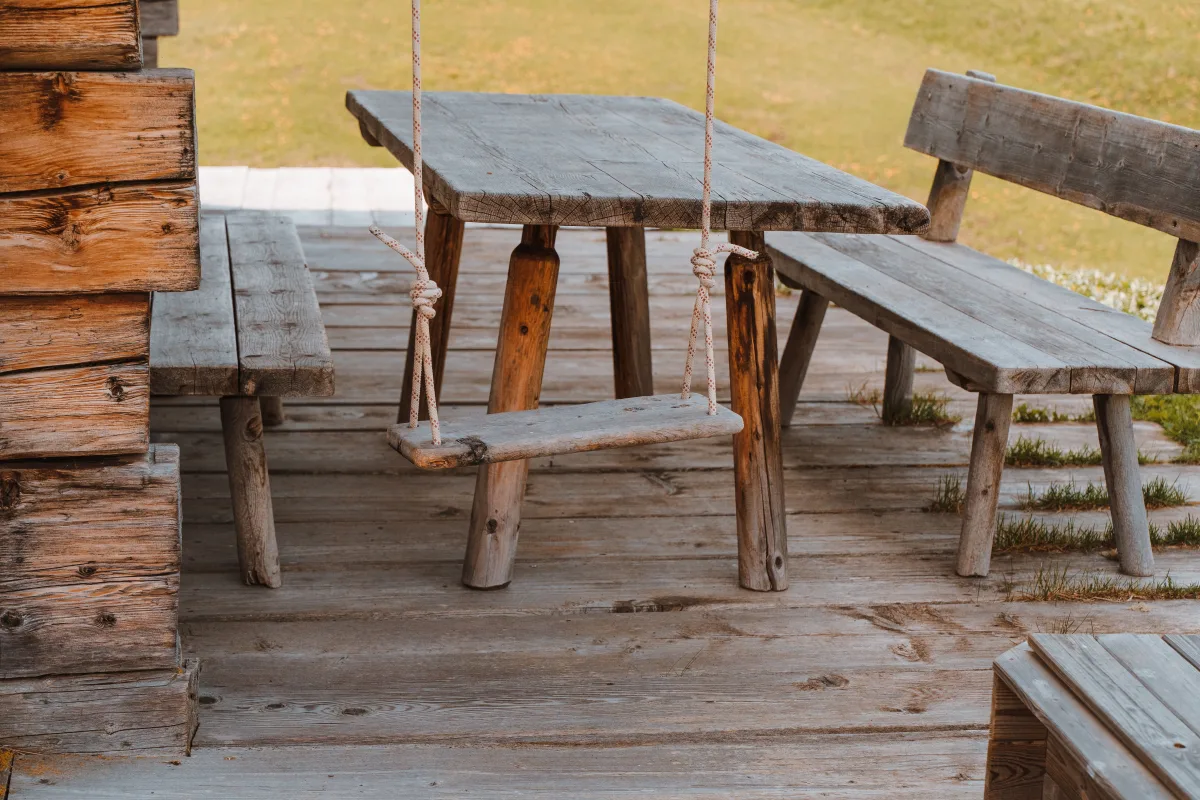
High-density polyethylene (HDPE) poly lumber is manufactured from the same material used in food-grade containers, making it chemically inert and non-toxic outdoors. Many leading brands produce it from recycled plastics — including post-consumer milk jugs — giving it genuine environmental credentials alongside its performance claims.
As PolyCasual.com describes it, poly lumber handles sun, rain, and snow without fading, cracking, or splintering, and it never requires painting, staining, or sealing. Forbes Vetted identifies HDPE as one of the most durable and low-maintenance materials currently available for patio furniture, particularly for climates with fluctuating weather conditions.
Why HDPE is different from ordinary plastic furniture: The color runs all the way through the material, not just on the surface. Surface scratches are far less visible than on painted alternatives. There's no paint layer to chip, no grain to splinter, and no porosity to absorb moisture.
The honest limitations:
- Weight: HDPE is heavier than hollow aluminum. An advantage in wind-prone areas — it won't blow over — but a real consideration if you rearrange your patio frequently or move furniture into storage seasonally.
- Price: typically higher than entry-level metal or wicker sets. The value proposition only makes sense if you plan to keep the furniture long enough to avoid repeated replacement cycles.
Best pick to reference: The POLYWOOD Lakeside collection is Forbes Vetted's top pick in this category — it demonstrates that HDPE now competes aesthetically with wood and metal alternatives while maintaining its performance advantages.
Best for: Anyone who wants to buy once and truly never maintain it. Northeast, Midwest, and Pacific Northwest climates with freeze-thaw cycles are ideal use cases.
2. Cast Aluminum — Why Solid Construction Outperforms Hollow-Tube Metal
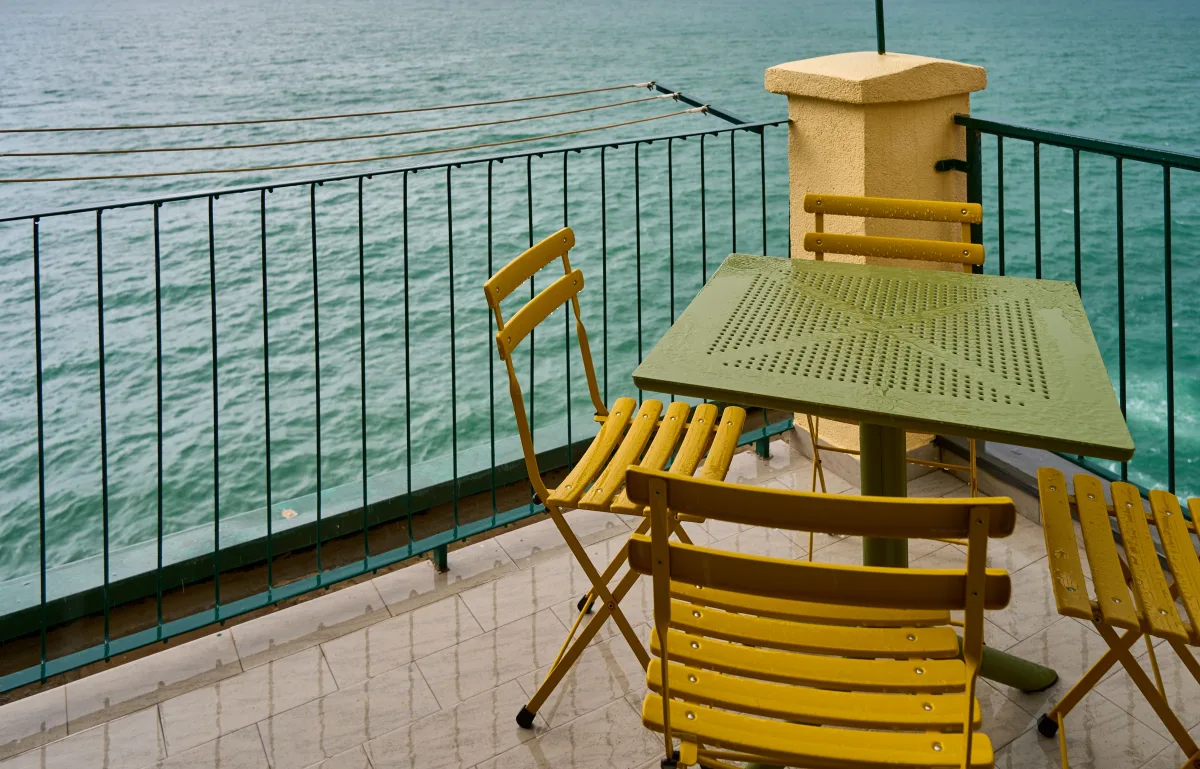
The price difference between cast aluminum and hollow-tube aluminum is real. Understanding why that gap exists makes it much easier to evaluate whether it's worth paying.
Cast aluminum is poured as molten metal into molds, producing a solid, dense piece with no hollow interior. It's naturally rust-proof and typically finished with a multi-stage powder coat that adds UV color durability on top of the inherent corrosion resistance. According to Tropicraftpatio.com's testing team, who measured wall thickness of aluminum frames as a quality metric, thicker walls mean more material, more weight, and more resistance to denting and deformation over time.
The joint failure problem that plagues hollow-tube furniture simply doesn't apply to cast aluminum. There are no hollow interiors to trap water, no welds under internal pressure from freeze-thaw expansion.
Here's the quality question to ask any retailer before you buy:
"Is the powder coat a single-stage or multi-stage application?"
Single-coat finishes are common on budget pieces and show UV-related color fade and chipping within a few years. Multi-stage processes bond more durably to the metal surface and maintain color integrity significantly longer. The answer tells you exactly where the manufacturer made cost trade-offs.
Best for: Permanent installation on stone or brick patios, coastal environments (naturally rust-proof), and areas with strong wind where lightweight furniture is a liability.
3. Grade A Teak — What the Grade Actually Means and When It's Worth It
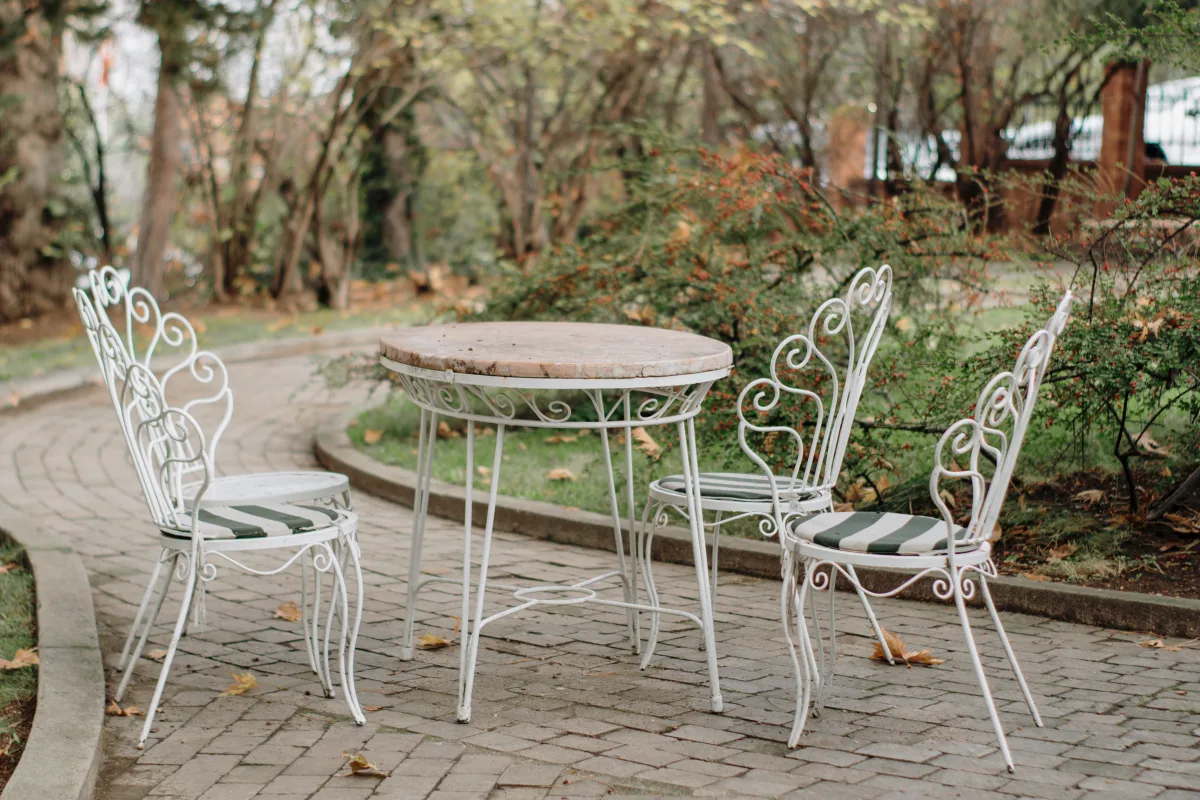
Teak is sold across three commercial grades — A, B, and C — and the difference between them is not cosmetic.
- Grade A comes from the heartwood of mature trees and contains the highest concentration of natural oils that repel water and resist rot.
- Grades B and C include more sapwood, which has lower oil content and requires significantly more active maintenance to perform comparably outdoors.
Wirecutter is direct on this point: among the three grades, only Grade A is considered truly weather-resistant without regular re-sealing. Grade B and C teak is often sold without clear labeling, and the price difference can make lower grades appear to be a bargain. They are not a bargain if you live in a climate that exposes wood to rain, snow, or salt air without consistent maintenance.
The silver-gray patina question: Left untreated, all teak grades weather to a silver-gray color over time. This is natural oxidation — not damage. Many buyers prefer the weathered look. If you want to preserve the original warm honey-brown color, apply teak oil or a penetrating sealant at the start of each season.
One critical maintenance note from Wirecutter: waterproof covers extend teak's life significantly, but they must not be applied when the wood is already wet, and they should not be left on for extended periods in damp environments. A cover trapping moisture against wet wood causes the very rot it's meant to prevent.
Teak + aluminum hybrid: Kingmake Outdoor recommends this combination specifically for Florida and coastal climates. The aluminum provides structural durability and rust resistance; the teak surfaces deliver the warmth and visual richness of natural wood. This setup also reduces the total amount of wood exposed to the elements, lowering maintenance demands compared to all-teak construction.
Best for: Buyers who want natural wood aesthetics, are willing to do seasonal maintenance, and live in coastal, humid, or moderately cold climates.
4. All-Weather Resin Wicker — What to Look For and What to Avoid

All-weather wicker is one of the most visually appealing categories in outdoor furniture — and one of the most variable in actual quality. The visual similarity between high-density resin wicker and low-grade alternatives makes it nearly impossible to evaluate at a glance.
According to Market Research Future's outdoor furniture market data, synthetic wicker is designed to withstand rust, UV degradation, mold, and general wear — but only when the resin density and frame construction meet a meaningful quality threshold.
Two quality checks before you buy:
- Frame material: Aluminum frames are the preferred choice — they resist rust, flex slightly without cracking the woven resin, and stay lightweight. Steel frames are heavier and more susceptible to rust if the powder coat is ever chipped or scratched at joints.
- Resin density: High-density resin maintains its integrity for years; thin resin becomes brittle and begins to crack or fray within a few seasons of UV exposure. There is no universal industry standard for "high density," so ask for the manufacturer's specifications or buy from brands with documented testing results.
Climate fit is narrower than for aluminum or HDPE. Resin wicker is recommended specifically for casual pool areas in Texas and the South — warm climates where freeze-thaw cycles aren't a concern. In the Northeast or Midwest, full-exposure wicker faces repeated freezing and thawing that stresses the weave over time. Covered patios or screened porches extend its useful life in colder regions considerably.
Always pair wicker frames with solution-dyed acrylic cushions rather than standard polyester. The frame may last a decade; polyester cushions in a humid environment may not survive two full seasons before mold becomes a problem.
Best for: Casual, visually warm setups on covered patios, pool decks, or screened porches in warm climates.
Climate-First Buying: Which Material Matches Your Weather Zone?
The most underserved question in outdoor furniture buying isn't "which brand is best?" — it's "which material is actually suited to my climate?" The answer changes meaningfully depending on where you live.
Outer's climate zone material guide maps U.S. regions to specific material recommendations. Here's a summary:
| Climate Zone | Top Material | Why It Works | Secondary Pick |
|---|---|---|---|
| California / West Coast | Cast Aluminum | Lightweight, low-maintenance, handles UV & coastal air | Teak for warmer, natural aesthetic |
| Florida / Gulf Coast | Aluminum + Teak | Both handle humidity, high UV, salt air & frequent rain | Solution-dyed acrylic cushions; HDPE surfaces |
| Northeast (NY, MA, NJ) | Teak or Aluminum | Teak handles freeze-thaw; aluminum suits low-maintenance setups | Engineered stone table surfaces |
| Texas / South | Cast Aluminum | Easy to clean in heat and dust; handles extended outdoor season | All-weather wicker for casual pool areas |
| Pacific Northwest | Cast Aluminum | Rain-resistant, manageable in damp, mild climates | Teak with all-weather covers |
| Midwest | Aluminum or HDPE | Handles extreme temperature swings and seasonal storage demands | Teak for traditional aesthetics |
Florida and coastal environments need special attention. Kingmake Outdoor specifies the right approach for these climates as aluminum frames combined with solution-dyed acrylic cushion fabric — Sunbrella is the most widely recognized brand in this category — and teak or HDPE table surfaces. Standard polyester cushions in a coastal environment are a near-certain mold problem within one humid summer. This isn't a minor inconvenience; it renders cushions unusable and forces early replacement of the most expensive soft goods in the set.
Cushions, Fabrics, and the Details That Determine Long-Term Comfort
Cushion fabric is the component most buyers underweight — and the one that fails first in the majority of outdoor sets. Even a structurally excellent frame becomes frustrating to use when the cushions are faded, moldy, or collapsed after two seasons.
Solution-dyed acrylic (Sunbrella being the most widely recognized example) is the performance standard for outdoor cushion fabric. The key difference from surface-dyed alternatives is where the color lives: in solution-dyed fabric, color is integrated into the fiber before extrusion, so the fiber is the same color all the way through. Fading requires degrading the fiber itself — which is why solution-dyed fabrics retain color dramatically longer under UV exposure.
Three features worth prioritizing in cushions:
- Quick-dry foam inserts: Allow cushions to shed water and dry rapidly after rain. This is the single most effective structural defense against mold growth inside the cushion. Standard foam retains water for days, sustaining conditions for mildew even when the exterior fabric is technically mold-resistant.
- Removable, machine-washable covers: Outdoor cushions accumulate pollen, bird droppings, sunscreen residue, and general grime. Being able to wash the cover without replacing the entire cushion is a real advantage over a 5–10 year ownership period.
- UV-stable thread and zippers: These are overlooked failure points on otherwise quality cushions. Zipper pull tabs and seam threads can degrade faster than the fabric itself if not UV-stabilized.
If you're evaluating your entire patio space — furniture, accents, and greenery — the Best Indoor Plants for 2026 has good options for transitional spaces like covered porches. And if you're refreshing your home's exterior alongside the patio, our Best Interior & Exterior Paint Brands 2026 guide covers the durability standards worth matching to your outdoor investment.
Where to Buy Outdoor Furniture: Retailer Notes
Most of the materials covered in this guide are available across major furniture retailers. Two worth noting for online shoppers:
Wayfair carries a broad range across all four material categories, from entry-level to mid-range. If you're ordering online, read our Wayfair review for 2026 before placing a large order — delivery experience and product quality vary by seller on their marketplace model.
IKEA offers affordable outdoor options but typically at the entry-level of the material quality spectrum. Their pieces are worth considering for covered patios or lower-exposure setups. See our IKEA US review for 2026 for what to expect on quality, assembly, and return policy.
For premium teak and cast aluminum, brand-direct or specialty outdoor retailers (including Neighbor, POLYWOOD, and Tropicraftpatio) often provide better material documentation and longer warranties than mass-market channels.
If you want more context on dining furniture for covered outdoor spaces or screened porches, the Best Dining Room Tables & Chairs for 2026 covers material and construction standards that carry over directly to outdoor dining sets.
Best Time to Buy Outdoor Furniture in 2026
Timing matters if you're buying at full price from major retailers. Forbes Vetted identifies these windows as consistently the best for outdoor furniture discounts:
- Presidents' Day (February)
- Memorial Day (late May) — the most reliable sale season
- Labor Day (early September) — end-of-season clearance
- Black Friday / Cyber Monday (late November)
Early spring is also worth watching. Many brands release new collections before the season begins, and prior-year inventory is discounted to clear shelf space. If you're flexible on color or configuration, this window often offers the best value-to-quality ratio.
Final Recommendation: A Decision Framework by Situation
Rather than a single "best overall" pick, here's a decision framework based on the most common buyer situations:
You want maximum durability with zero maintenance: → HDPE poly lumber. The POLYWOOD Lakeside collection is a well-documented starting point. Expect to pay more upfront; expect to pay nothing in maintenance for a decade or more.
You want a permanent, high-end installation on a stone or brick patio: → Cast aluminum. Prioritize multi-stage powder coating and verify wall thickness specifications before purchasing.
You live in a coastal or high-humidity climate: → Aluminum frames + solution-dyed acrylic cushions (Sunbrella or equivalent) + HDPE or Grade A teak surfaces. Do not use standard polyester cushions in this environment.
You want the warmth of natural wood and are willing to do seasonal maintenance: → Grade A teak only — verify the grade before purchasing. Budget for teak oil or sealant application each season and invest in proper waterproof covers used correctly.
You want a casual, visually warm setup for a covered patio or pool area in a warm climate: → High-density resin wicker over an aluminum frame + solution-dyed acrylic cushions. Verify resin density specs and avoid steel-framed alternatives in humid environments.
You live in the Midwest or Northeast with extreme temperature swings: → Cast aluminum is the lowest-risk primary material. HDPE is an excellent alternative if you prefer a wood-like aesthetic without the maintenance demands of actual wood.
For a broader look at furnishing decisions across your entire home, the Furniture & Appliances Buyer's Guide 2026 and the Best Home Decor Online Stores for 2026 are useful companion reads.
Frequently Asked Questions
What is the most weather-resistant outdoor furniture material overall?
For all-climate, zero-maintenance performance, HDPE poly lumber is the strongest answer. It handles UV, rain, snow, and freeze-thaw cycles without fading, cracking, or splintering — and it never requires sealing or refinishing. Cast aluminum is the closest competitor for structural durability, particularly for permanent patio installations.
Is teak worth the price for outdoor furniture?
Grade A teak is worth the price if you're willing to apply sealant or teak oil seasonally and use proper waterproof covers correctly. A well-made teak piece can last decades, according to Wirecutter. Grade B and C teak at a lower price is not a comparable value — the lower oil content means significantly higher maintenance requirements to achieve similar weather resistance.
How do I know if resin wicker is high quality?
Ask for the resin density specification and verify the frame material. Aluminum frames are preferable to steel. High-density resin resists UV cracking and color fading for years; thin resin becomes brittle within a few seasons. Tropicraftpatio.com's testing team specifically measured resin density as a quality metric — it's a meaningful indicator, not a marketing term.
What outdoor cushion fabric lasts the longest?
Solution-dyed acrylic — Sunbrella being the most widely recognized brand — significantly outlasts standard polyester for UV resistance and mold resistance. Pair it with quick-dry foam inserts and removable, machine-washable covers for the best long-term performance.
When is the best time to buy outdoor furniture?
Memorial Day, Labor Day, Presidents' Day, and Black Friday weekends consistently offer the best discounts at major retailers. Early spring — when brands release new collections and discount prior-year inventory — is also a strong window if you're flexible on color or configuration.
Can outdoor furniture stay outside year-round?
It depends on the material and climate. HDPE and cast aluminum can generally stay outside year-round in most U.S. climates. Grade A teak can remain outdoors but benefits from covers in wet seasons. All-weather resin wicker is best moved to covered storage or at minimum covered with furniture covers in freeze-thaw climates. Standard polyester cushions should always be stored indoors during off-season months.
We may earn a commission when you use our links to make a purchase — at no additional cost to you. This helps fund this independent site. Our editorial assessments are completed before any affiliate link is applied. Full affiliate disclosure → | How we research →