
This guide is based on manufacturer specifications, independent testing sources (Consumer Reports, Wirecutter, Treeline Review), dermatologist guidance, and verified customer feedback. It does not reflect hands-on testing by Trusted Buyer Report. We may earn a commission when you use our links to make a purchase — this never affects our recommendations, which are finalized before any affiliate link is applied. This article was drafted with AI assistance and reviewed by our editorial team before publishing.
Here's the short version if you're in a hurry: the best sunscreen is the one you'll actually use every day. SPF 50 from a formula you enjoy wearing beats SPF 100 from a bottle that's been sitting in your bathroom drawer since April.
Most people don't fail at sun protection because they chose the wrong SPF number. They fail because their sunscreen felt greasy, pilled under makeup, left a white cast, or broke them out — and they quietly stopped using it. This guide is built around that problem. It covers what SPF ratings actually mean, how mineral and chemical formulas compare, and which 2026 products work for specific skin types and needs — from oily and acne-prone to sensitive, deep skin tones, and active lifestyles.
If you're building a broader skincare routine around your SPF, the Beauty Product Reviews & Buying Guides 2026 resource covers complementary categories — cleansers, moisturizers, serums — in similar depth.
How This Guide Was Researched
This guide synthesizes findings from:
- Consumer Reports (2026 sunscreen testing, 100+ products evaluated)
- Wirecutter / NYT (100+ sunscreens reviewed since 2015, updated 2026)
- Treeline Review (face and body sunscreen recommendations with firsthand author use)
- Vogue UK and Vogue Scandinavia (cosmetic testing and K-beauty expertise)
- Dr. Heather D. Rogers, MD at Doctor Rogers Skin Care (dermatologist-curated guide)
- Weather.com (2026 sunscreen review with input from two medical professionals)
- Dataintelo market data on high-SPF product trends
We don't claim hands-on testing. What we do: aggregate the most rigorous sources, cross-reference their findings, and translate the patterns into specific guidance by skin type and use case — so you're not reading six articles to reach one conclusion.
Why Most People Abandon Sunscreen — and How to Find One You'll Stick With
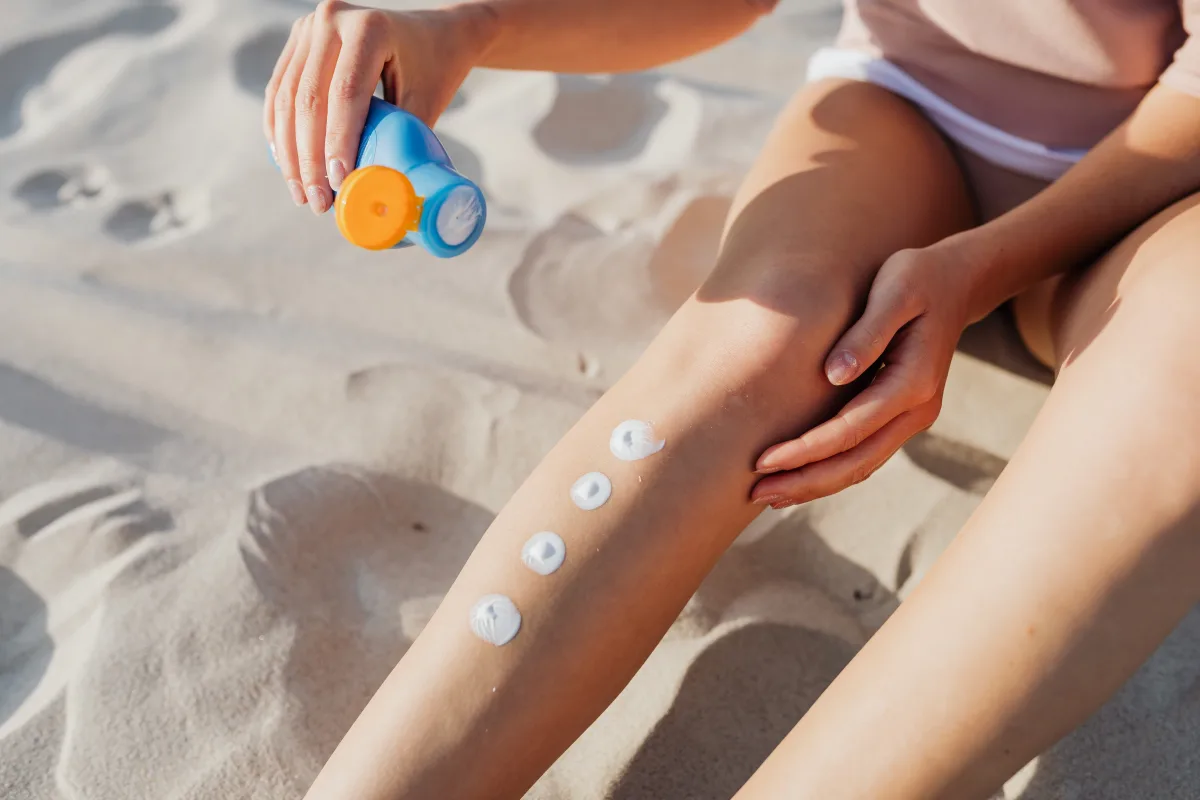
Sunscreen only works if you use it consistently — every day, year-round, not just at the beach or on vacation. That part isn't news. The practical barrier is that most formulas make daily compliance genuinely unpleasant.
The most common reasons people stop using their sunscreen:
- Greasiness: The formula feels heavy by midday, especially in humid weather.
- Pilling: It doesn't layer smoothly under moisturizer and foundation.
- White cast: Mineral formulas leave visible residue on medium and deeper skin tones.
- Breakouts: Occlusive formulas clog pores on acne-prone skin.
- Smell: The medicinal scent makes it feel more like a product than skincare.
Any one of these is enough to make a person rationalize skipping it. And that's the real protection gap — not SPF numbers.
Consumer Reports tested more than 100 sunscreens in 2026, evaluating both protection levels and real-world wearability. Wirecutter has evaluated more than 100 sunscreens since 2015, and both organizations consistently find wide variation — not just in SPF accuracy, but in texture, finish, and how a formula behaves on skin after an hour of wear.
The 2026 market has responded with genuinely better products. Silicone-based finishes create a smoother, non-greasy feel. Tinted mineral formulas reduce white cast. Hybrid moisturizer-SPF products cut down morning routine steps. Lightweight gel and serum textures borrowed from Korean beauty have raised the standard for wearability across the whole category.
The most effective thing you can do for your sun protection isn't choosing SPF 50 versus SPF 100. It's matching your sunscreen to your skin type — so you actually use it.
For context: Neutrogena Clear Face Sunscreen Lotion SPF 50 earns consistent high ratings specifically because it doesn't feel greasy, dries matte, and doesn't clog pores — qualities that make it realistic for oily or acne-prone skin. By contrast, Wirecutter found that Aveeno Baby Continuous Protection Sensitive Skin Sunscreen Lotion SPF 50 took significantly longer to rub in than most physical sunscreens they tested and consistently left a white cast. Both are from reputable brands. The difference is formulation fit.
What SPF 30, 50, and 100 Actually Mean for Your Skin

SPF (Sun Protection Factor) measures how well a sunscreen filters UVB rays — the rays primarily responsible for sunburn and a major driver of skin cancer risk. It does not directly measure UVA protection, which is why the broad-spectrum label matters: a product labeled broad-spectrum has been tested to filter both UVA and UVB. Both types cause cumulative damage, but UVA penetrates more deeply and is the primary driver of photoaging.

Here's the math, stated plainly:
| SPF Level | UVB Rays Blocked |
|---|---|
| SPF 15 | ~93% |
| SPF 30 | ~97% |
| SPF 50 | ~98% |
| SPF 100 | ~99% |
The gap between SPF 50 and SPF 100 is one percentage point of additional UVB filtering. For most daily users, that difference is far smaller than the impact of applying enough product (about one ounce for the body) and reapplying every two hours.
This doesn't mean high-SPF products are pointless. For people with photosensitivity, a history of skin cancer, or extended outdoor exposure, every fraction matters. But the commercial framing around ultra-high SPF products can mislead consumers into thinking they have more error margin than they do. According to market data from Dataintelo, products like Banana Boat Sport Ultra SPF 100, Coppertone Sport SPF 100, and Hawaiian Tropic Sheer Touch SPF 70 show strong year-over-year growth — consumer demand for the ultra-high SPF segment is real, even as dermatologists note that reapplication habits matter more.
Water resistance: A label claiming 40-minute water resistance means the product maintains its rated SPF through two 20-minute water immersion cycles. An 80-minute claim requires four cycles. No sunscreen is waterproof — that term is no longer permitted on labels — and reapplying after toweling off is always necessary.
Mineral vs. Chemical Sunscreen: A Practical 2026 Comparison
Mineral sunscreens (also called physical sunscreens) use zinc oxide, titanium dioxide, or both as active ingredients. They sit on top of the skin and reflect or scatter UV rays. Chemical sunscreens use organic compounds like avobenzone, oxybenzone, or octinoxate, which absorb UV energy and release it as heat.
Neither is universally better. Here's how they actually compare:
| Mineral | Chemical | |
|---|---|---|
| Skin compatibility | Better for sensitive, acne-prone, reactive skin | May irritate sensitive skin (some filters) |
| White cast | Common (less so with tinted formulas) | None |
| Feel/finish | Can be heavier; improved in modern formulas | Lighter, blends easily |
| Environmental concerns | Generally reef-safer (non-nano zinc oxide) | Oxybenzone/octinoxate restricted in Hawaii + some regions |
| Best for | Babies, sensitive skin, reef-safe use | Daily wear, deeper skin tones, active use |
| Absorption concern | Minimal — sits on skin | Some filters detected in bloodstream (FDA studying) |
Hybrid formulas are increasingly common in 2026. Products like Supergoop Mineral Play Lotion SPF 30 — which contains 17.9% zinc oxide alongside butyloctyl salicylate — aim to deliver the skin-compatibility benefits of mineral filters with the cosmetic feel of chemical formulations, according to dermatologist Dr. Heather D. Rogers at Doctor Rogers Skin Care.
What about sunscreen sticks? Mineral or chemical, sticks are useful for spot reapplication — the nose, ears, shoulders — during activity. But according to Wirecutter, no stick they tested is the best choice for full-body application. They also cost significantly more per ounce than lotions. For full-body coverage, a lotion format delivers better value and more consistent application.
Best Face Sunscreens in 2026 — Picks by Skin Type
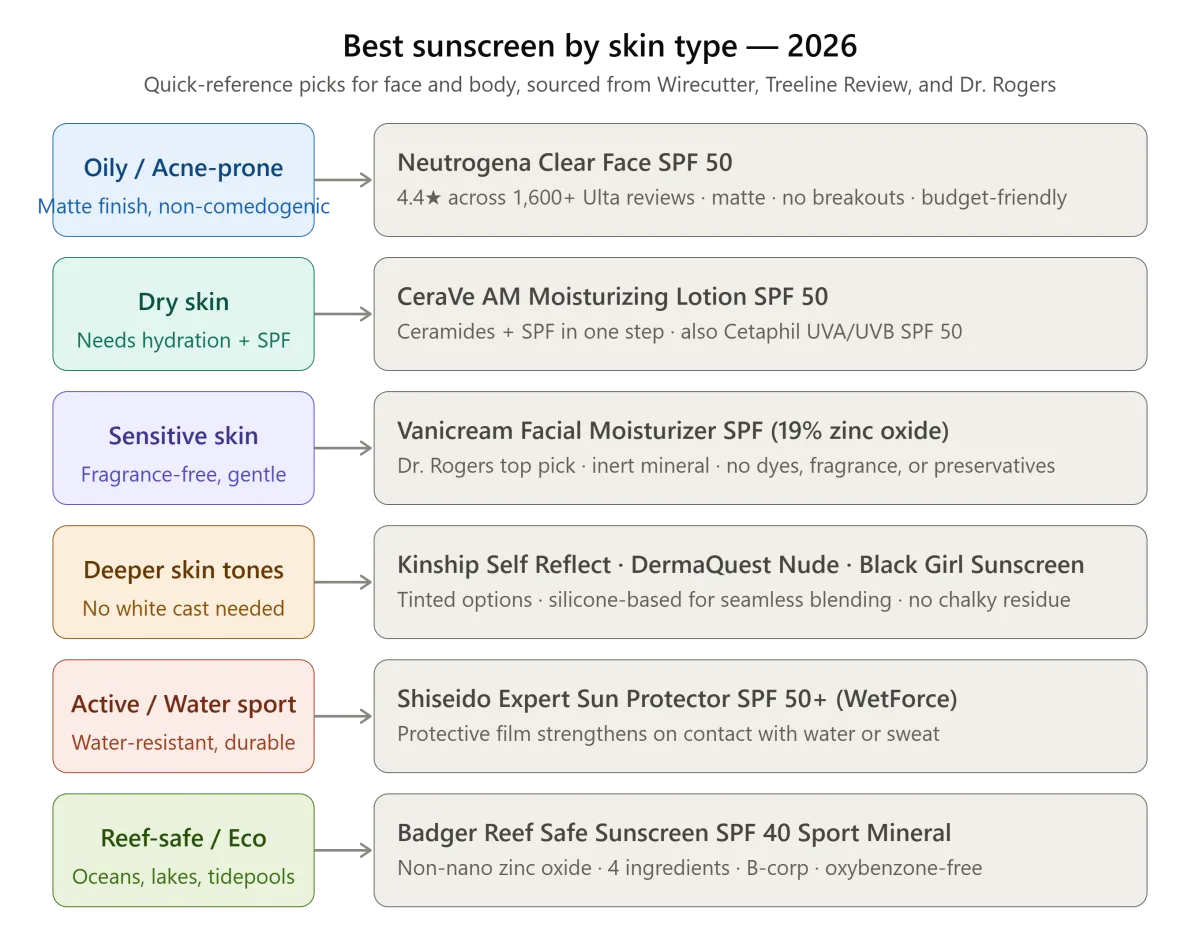
Face sunscreens face a higher bar than body formulas. They sit under makeup, interact with serums and moisturizers, and need to stay comfortable through a full day. A formula that feels fine on your arm can pill, cause breakouts, or feel suffocating on your face. Here are specific picks organized by skin type, sourced from independent testing and dermatologist guidance.
Best Sunscreen for Oily and Acne-Prone Skin
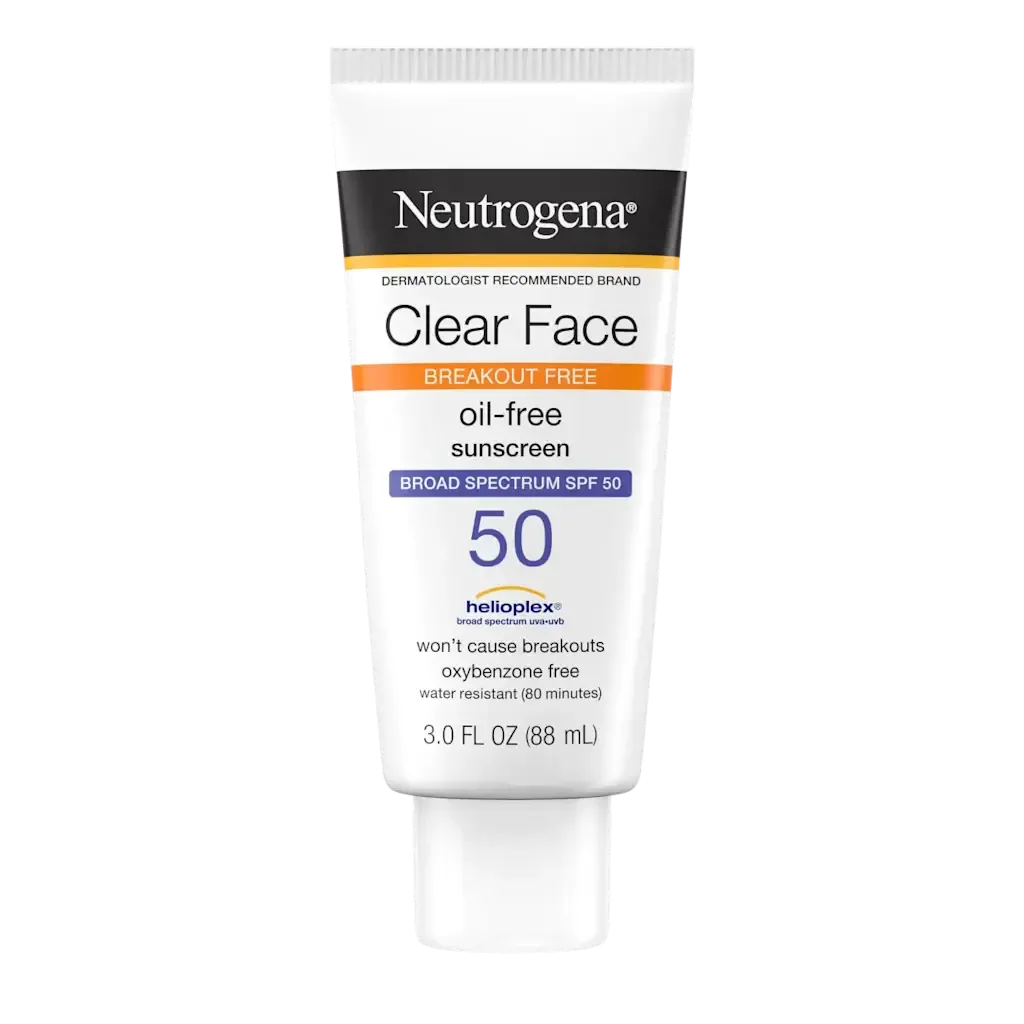
Neutrogena Clear Face Sunscreen Lotion SPF 50 is the standout. According to Weather.com's 2026 sunscreen review, it holds 4.4 stars across more than 1,600 ratings on Ulta — reviewers consistently cite its non-greasy feel, matte finish, and absence of breakouts. One buyer put it directly: "It doesn't clog my pores or cause breakouts, which is a big win for my acne-prone skin. It wears well under makeup."
At its price point, Neutrogena Clear Face is one of the most accessible and reliable daily-use options in this category.
Best Sunscreen for Dry Skin
Hybrid SPF-moisturizer formulas work well here. CeraVe AM Facial Moisturizing Lotion SPF 50 and Cetaphil UVA/UVB Defense SPF 50 Daytime Moisturizer are both widely available and combine sun protection with skin barrier support. For a more elevated option, Supergoop Play Everyday Lotion SPF 50 is recommended by the author at Treeline Review as her personal daily face formula when she wants extra hydration.
Best Sunscreen for Sensitive Skin
Vanicream Facial Moisturizer SPF — which contains 19% zinc oxide — is specifically recommended by Dr. Rogers for sensitive skin. High-percentage zinc oxide minimizes irritation risk because the active ingredient is inert: it sits on the skin rather than being absorbed. For sensitive skin that also needs to avoid fragrances, dyes, and chemical preservatives, Vanicream is formulated to meet all of those conditions simultaneously.
For mineral stick reapplication, Wirecutter identifies Aveeno Kids Continuous Protection Zinc Oxide Mineral Sunscreen Stick SPF 50 as one of the better values in the physical stick category.
Best Sunscreen for Deeper Skin Tones
White cast is the main obstacle here, and it's a real one with many mineral formulas. Three options that address it well:
- DermaQuest Sunscreen in Nude: silicone-based finish, tinted shade options that blend into a wider range of skin tones. Recommended by Dr. Rogers for its cosmetic elegance.
- Kinship Self Reflect: silicone-free but still cosmetically elegant, provides a subtle glow without chalky residue.
- Black Girl Sunscreen: specifically formulated to be invisible on deeper skin tones, with a strong following for this reason.
Best K-Beauty and Lightweight Gel Options
Korean beauty sunscreens introduced textures that feel more like a serum than traditional sunscreen — a format shift that the broader market is still catching up to.
- Isntree Watery Sun Gel: the personal daily face sunscreen of the author at Treeline Review, ordered as a Korean import.
- Beauty of Joseon Relief Sunscreen: highlighted by Vogue UK as a standout K-beauty option.
- ISDIN Eryfotona Actinica: lightweight milky texture available in tinted and non-tinted versions, noted by Dr. Rogers for its mid-weight feel between traditional mineral formulas and full K-beauty gels.
Best Body Sunscreens in 2026 — Coverage, Value, and Water Resistance
Body sunscreen priorities differ from face formulas in two practical ways. First, you're covering a much larger surface area — which means cost-per-ounce matters. If a formula feels too expensive to apply generously, you'll under-apply and reduce your actual protection. Second, cosmetic elegance still matters, but the bar is lower: you don't need it to sit under foundation.
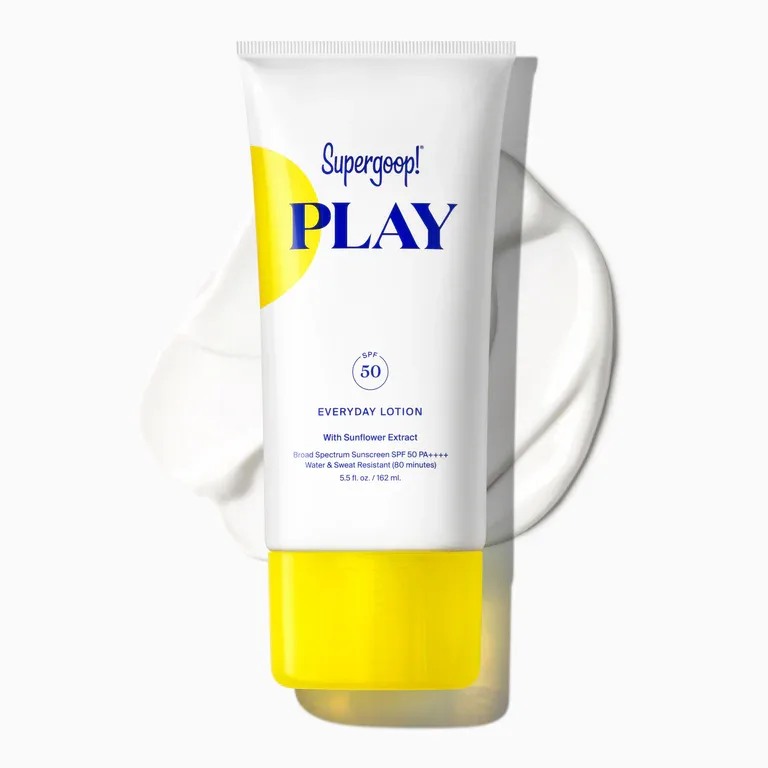
Supergoop Play Everyday Lotion SPF 50 tops multiple 2026 body sunscreen roundups. The author at Treeline Review uses it personally for both face and body, citing its balance of protection, texture, and all-day wearability.
Sun Bum Original Sunscreen Lotion is another regular pick from the same author. Widely available at drugstores, beach shops, and outdoor retailers, it has a pleasant coconut scent and broad-spectrum protection. For those who find fragrance irritating, fragrance-free alternatives like Vanicream or Neutrogena Ultra Sheer exist at comparable price points.
Shiseido Expert Sun Protector Lotion SPF 50+ is a standout for water sports and high-sweat activity. According to Vogue Scandinavia, it uses Shiseido's WetForce technology — the formula's protective film actually strengthens upon contact with water or sweat, rather than simply degrading more slowly. That's a meaningful functional advantage for swimmers, surfers, and outdoor athletes.
A note on sprays: Convenient for large surface areas, but spray formulas require thorough rubbing in to ensure even coverage and should never be sprayed directly onto the face. They're a practical mid-day reapplication tool, but not a replacement for a proper lotion application at the start of the day.
What Dermatologists Actually Recommend in 2026
Dermatologists approach sunscreen with a different hierarchy than most consumers. Protection efficacy and daily compliance come first; cosmetic elegance matters because a formula a patient won't wear is clinically irrelevant.
Dr. Heather D. Rogers at Doctor Rogers Skin Care provides one of the most detailed clinician-curated sunscreen guides available in 2026. Her personal choice for high-sun-exposure days is Pavise — a formula that combines antioxidants and DNA repair enzymes with a silicone-based finish and refillable packaging. The antioxidant component is worth understanding: UV exposure generates free radicals that cause oxidative damage beyond what SPF filtering alone addresses. Topical antioxidants (vitamin C, niacinamide, or the enzymes in Pavise) can reduce that secondary pathway — especially relevant for extended outdoor days.
For daily wear under makeup, Dr. Rogers recommends DermaQuest Sunscreen in Nude and Kinship Self Reflect as the most cosmetically elegant options that patients actually use consistently. For sensitive skin, she directs patients toward Vanicream Facial Moisturizer SPF with its 19% zinc oxide. For a glowy non-matte finish, she suggests Innbeauty Mineral Sun Glow (14% zinc oxide, butyloctyl salicylate, three shade options).
Weather.com's 2026 sunscreen roundup involved interviews with two medical professionals alongside firsthand product testing — a methodology that helps bridge clinical recommendation and daily real-world use.
The dermatologist takeaway: Match your sunscreen to your context. A lightweight serum-texture formula is right for a city commute; a water-resistant, antioxidant-enriched formula is right for a full beach day. Having two products for different conditions is a reasonable approach if budget allows.
If you're building a more complete anti-aging routine around your SPF, our guide to best anti-aging skincare products in 2026 covers how retinol, peptides, and antioxidant serums work alongside daily sun protection — and which to layer first.
Sunscreens for Specific Needs: Reef-Safe, Melasma, and Active Lifestyles

Standard top-10 lists often miss readers with specific requirements. Here are targeted picks for three underserved use cases.
Reef-Safe Sunscreen
Badger Reef Safe Sunscreen SPF 40 Sport Mineral Sunscreen wins the Best Reef Safe Face Sunscreen category at Treeline Review. The formula contains only four ingredients, uses non-nano zinc oxide (which doesn't penetrate coral tissue the way nanoparticle zinc oxide can), and avoids oxybenzone and octinoxate — the two filters restricted by Hawaii, Palau, and several other marine-protected jurisdictions.
Badger is a woman-owned, US-based B-corp with certified sustainable sourcing. For use in oceans, lakes, or tidepools, Treeline Review cites it as their top brand recommendation.
Other reef-safer brands to look for: Thinksport, Raw Elements, and Babo Botanicals — all mineral-only, oxybenzone-free, and available at major outdoor and natural grocery retailers.
Sunscreen for Melasma and Hyperpigmentation
For melasma-prone or post-inflammatory hyperpigmentation (PIH) skin, consistent broad-spectrum SPF is non-negotiable — UV exposure directly triggers and worsens both conditions. Vogue Scandinavia highlights a dual-action formula that combines very high broad-spectrum protection with pigmentation-correcting actives, formulated specifically for melasma-prone skin.
Important context: no sunscreen alone reverses existing pigmentation. It prevents worsening. Pairing it with targeted treatments (retinoids, vitamin C, azelaic acid) — and understanding how to build that stack — is covered in our best skincare routines for 2026 guide, which breaks down morning versus night routines by skin type.
Sport and Active Lifestyle Sunscreen
Tizo Ultra Zinc — noted by Dr. Rogers — is water-resistant for 40 minutes and suitable for both face and body in active contexts. Shiseido Expert Sun Protector Lotion SPF 50+ with WetForce technology strengthens rather than simply resists water exposure, making it particularly useful for swimming and watersports.
For reapplication during outdoor activity, mineral sticks are practical. As Wirecutter notes, they should supplement a proper lotion application at the start of the day — not replace it. Sticks work well for spot-treating the nose, shoulders, and ears between activities.
How to Apply Sunscreen Correctly: The Mistakes That Cost You Protection
Even the best sunscreen fails if applied incorrectly. The most common errors:
1. Using too little. Most people apply 25–50% of the recommended amount. For the face: a nickel-sized amount is a reasonable minimum. For the body: approximately one ounce (about a shot glass) covers an average adult fully. Under-application directly reduces your effective SPF.
2. Applying too late. Chemical sunscreens need about 15–20 minutes to bind to skin before UV exposure begins. Mineral sunscreens work immediately, which is one practical advantage for morning routines when you're short on time.
3. Skipping reapplication. No sunscreen lasts all day. Reapplication every two hours of sun exposure is the standard guidance — and immediately after swimming or toweling off, regardless of the water-resistance rating.
4. Missing common spots. The ears, back of the neck, lips, and tops of feet are consistently under-protected. For lips, SPF lip balm (SPF 30+) is worth adding to your routine — it's the only form of sun protection most people never think about.
5. Skipping it on cloudy days or in winter. UV radiation reaches your skin year-round. Up to 80% of UV rays penetrate cloud cover. Daily SPF is a year-round habit, not a seasonal one.
Men and Sunscreen: The Gap Worth Closing
Skin cancer is the most common cancer in the United States, and men over 50 are at disproportionately higher risk — partly due to lower rates of daily sunscreen use. The barriers are mostly about product experience: formulas that feel greasy, routines that feel complicated.
The 2026 market has addressed this with lightweight, fast-absorbing options designed for simple routines. Our dedicated guide to best men's skincare brands in 2026 covers SPF options that fit naturally into a minimal skincare routine — including 2-in-1 moisturizer-SPF products that reduce the number of steps to one.
Where to Buy: Sephora, Ulta, and Online
Most of the sunscreens in this guide are available across multiple retailers. A few buying notes:
- Sephora carries the premium and K-beauty tier: Supergoop, ISDIN, Kinship, Shiseido, and DermaQuest are all available. For a deep look at what to expect from Sephora's loyalty program and shopping experience, our Sephora review for 2026 breaks it down, including how the Beauty Insider rewards stack against Ulta's program.
- Ulta carries both mass-market and prestige options: Neutrogena, CeraVe, Vanicream, Sun Bum, and Supergoop are all stocked. Our Ulta vs. Sephora comparison for 2026 helps you decide where to shop based on brand availability, points value, and return policies.
- Amazon, Dermstore, and brand DTC sites are worth checking for Korean beauty imports (Isntree, Beauty of Joseon) and brands with limited physical retail presence.
Quick Comparison: Best Sunscreens by Skin Type and Use Case
| Use Case | Top Pick | SPF | Key Feature |
|---|---|---|---|
| Oily/Acne-prone | Neutrogena Clear Face SPF 50 | 50 | Matte, non-comedogenic |
| Dry skin | CeraVe AM Moisturizing Lotion SPF 50 | 50 | Ceramides + SPF combined |
| Sensitive skin | Vanicream Facial Moisturizer SPF | 30–50 | 19% zinc oxide, fragrance-free |
| Deeper skin tones | Kinship Self Reflect / DermaQuest Nude | 32–30 | No white cast, tinted options |
| K-beauty/Lightweight | Isntree Watery Sun Gel | 50 | Serum-like texture |
| Body/Active | Supergoop Play Everyday Lotion | 50 | All-day wearability |
| Water sports | Shiseido Expert Sun Protector | 50+ | WetForce strengthens on contact |
| Reef-safe | Badger Sport Mineral SPF 40 | 40 | Non-nano zinc oxide, B-corp |
| Dermatologist pick (face) | Pavise / DermaQuest Nude | Varies | Antioxidants + DNA enzymes |
| Budget daily | Neutrogena Ultra Sheer SPF 50 | 50 | Widely available, affordable |
FAQ: Sunscreen Questions People Actually Search
Is SPF 50 enough, or do I need SPF 100? For most daily use, SPF 50 (which blocks ~98% of UVB) is sufficient. SPF 100 (~99% blockage) offers a marginal additional benefit that reapplication habits affect more than the number on the label. If you have a history of skin cancer or photosensitivity, the extra margin has more value.
Can I use body sunscreen on my face? Technically yes, but face-specific formulas are designed to be non-comedogenic, lighter, and compatible with makeup. Body formulas often contain heavier emollients that can clog pores or feel greasy on facial skin.
How often do I need to reapply sunscreen? Every two hours of sun exposure, and immediately after swimming or heavy sweating — regardless of water resistance rating.
What does "broad-spectrum" mean? A broad-spectrum sunscreen has been tested and confirmed to protect against both UVA (aging, deep penetration) and UVB (burning, cancer risk). Always look for this label alongside SPF.
Is sunscreen safe for babies? The American Academy of Pediatrics recommends keeping infants under 6 months out of direct sunlight. For babies 6 months and older, mineral sunscreens (zinc oxide, titanium dioxide) are preferred over chemical formulas. Badger Baby, Babyganics, and Thinkbaby are widely recommended.
Does sunscreen expire? Yes. Most sunscreens are formulated to last 3 years from manufacture date, and the FDA requires an expiration date if the product doesn't maintain stability for 3 years. An expired sunscreen may have degraded active ingredients and less protection than labeled.
Are chemical sunscreens dangerous? The FDA has been studying dermal absorption of certain chemical filters (oxybenzone, avobenzone, octinoxate, octocrylene) since 2019. Their preliminary findings showed measurable blood levels after application, but — importantly — the FDA has stated that these findings don't mean these filters are unsafe; it means more research is needed. If you prefer to avoid chemical filters while the research continues, mineral sunscreens are a well-validated alternative.