This guide is based on manufacturer specifications, independent expert sources, and verified customer feedback aggregated from GearJunkie, SupBoardGuide, Red Equipment, and market research reports. It does not reflect hands-on testing by Trusted Buyer Report. We may earn a commission when you use our links to make a purchase — commissions are added only after our assessment is complete and never influence our rankings.
This article was drafted with AI assistance and fact-checked by our editorial team before publishing.
The Bottom Line (Before You Read Anything Else)
The single most expensive mistake in kayaking and paddleboarding is buying equipment designed for a different paddler in a different environment. The best gear in 2026 is not the most reviewed product — it's the one that matches your water type, skill level, storage constraints, and actual budget.
Start with these four questions before you look at a single product page:
- Where will you actually paddle? (Flatwater lake, ocean, river, surf?)
- How experienced are you — honestly?
- Where will you store and transport this?
- Does smart technology (GPS, app connectivity) match your real paddling context?
Work through those answers first. The sections below give you the frameworks to act on them.
Why 2026 Is a Genuinely Different Year to Buy Paddle Sports Gear
The global canoeing and kayaking equipment market is projected to reach USD 10,240.6 million by 2029, growing at a compound annual rate of approximately 2.5%, according to Data Bridge Market Research. That growth is being driven by two converging forces: a broad surge in outdoor wellness participation since 2020, and meaningful advances in materials and technology that make 2026 equipment genuinely better — not just more expensive.
Two changes matter most for buyers right now.
Smart technology has moved from novelty to practical differentiator. GPS-integrated kayaks with safety alerts, route tracking, and smartphone connectivity are now commercially available, not prototype. Market Research Future identifies the high-tech equipment segment as projected to grow 25% over the next five years — meaning features that currently carry a premium will become mainstream within the decade.
The inflatable vs. hardshell performance gap has closed significantly. Woven drop-stitch construction, multi-layer PVC, and proprietary laminates (like Red Paddle Co's MSL1000) have produced inflatable SUPs that rival rigid boards in stiffness and tracking. GearJunkie's hands-on testing of the NRS Clean 96 SUP found its Z/Blend Core woven drop-stitch construction made the board 20% stiffer and 15% lighter than standard knit drop-stitch boards. That's not marginal — it fundamentally changes who should be buying an inflatable versus a hardshell.
If you're just starting to research the broader outdoor gear landscape alongside this decision, the 2026 Outdoor & Sports Gear Buyer's Guide covers how to assess value and quality across equipment categories beyond paddle sports.
The Real Cost of Getting the Match Wrong
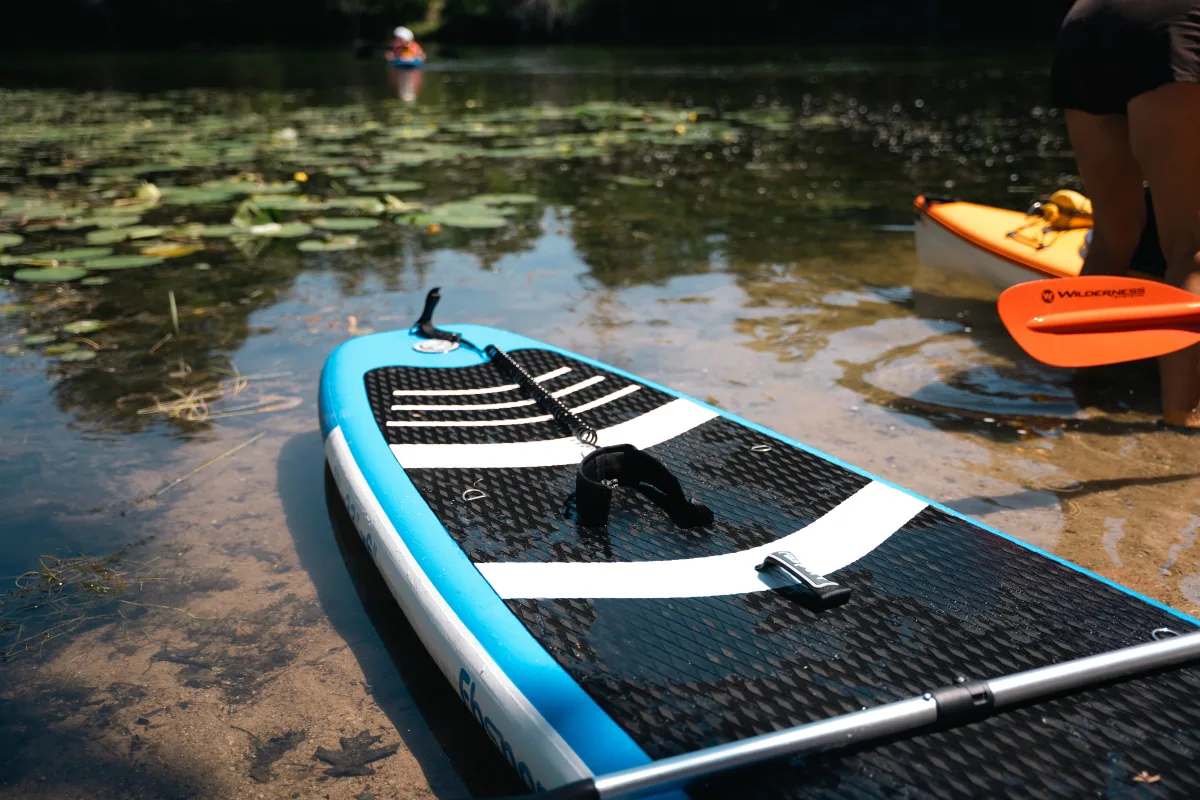
Here's the scenario that plays out every summer. You rent a wide, stable recreational kayak on vacation, spend three hours paddling without difficulty, and come home certain you've found your sport. Reviews push you toward a sleek touring kayak — it looks fast, reviewers love it, and it photographs beautifully. You buy it. Three sessions in, it's sitting in your garage because it demands a level of balance and technique you haven't built yet, and your local reservoir has enough chop to make every outing feel like work.
WifiTalents' 2026 Kayak Industry Statistics, compiled by Christina Müller, estimates approximately 18.6 million Americans now participate in kayaking — a large share of whom are relative newcomers. A growing market with millions of new entrants means more product variety and more opportunity to buy the wrong thing for your actual situation.
The framework for avoiding this is straightforward: identify your water type, skill level, storage reality, and budget before you evaluate brands. Everything below builds on that sequence.
Kayak vs. Paddleboard: Which Is Right for You?

If you're undecided between the two, the choice comes down to four practical factors: physical goals, water environment, storage and transport, and how much versatility you need from one piece of equipment.
When a Kayak Makes More Sense
Kayaks offer a lower center of gravity, better efficiency over longer distances, and a significantly lower wind profile — critical on open water where a standing SUP paddler acts like a sail. Seated paddling also puts less stress on knees and ankles, making kayaks a better fit for paddlers with lower-body joint concerns. For loaded touring, overnight trips, or paddling in choppy coastal conditions, a kayak's enclosed hull and bulkhead storage provide safety margins that a SUP simply cannot match.
If you're also interested in freshwater fishing from a vessel, the Best Fishing Gear & Equipment 2026 Guide covers sit-on-top kayaks and fishing-specific configurations worth comparing.
When a Paddleboard Makes More Sense
Paddleboarding engages your core, glutes, and stabilizing muscles in ways seated kayaking doesn't, making it a more complete fitness workout for many people. Inflatable SUPs pack into a carry bag roughly the size of a large backpack, eliminating the need for roof racks or a trailer. They're also more versatile: a quality all-around inflatable SUP can serve as a yoga platform, a fishing platform, or — with a kayak seat attachment — a seated paddling craft. According to SupBoardGuide, all-around iSUPs are specifically recommended for paddlers who want to cover multiple activities — SUPing, kayaking, fishing, and yoga — from a single board.
The Hybrid Middle Ground
Several inflatable SUPs now include D-ring mounts and kayak seat compatibility that genuinely works. A noted YouTube review of a leading 2026 inflatable observed that the kayak conversion using a "2 plus one" rear setup performed well for short to medium sessions, though the reviewer flagged that shorter, wider boards feel cramped in kayak mode. The hybrid option suits beginners who want flexibility before committing — but it won't outperform a dedicated kayak or a dedicated SUP in their respective conditions.
One practical sizing note from Pop Board Co's 2026 inflatable guide: wider boards in the 34–36 inch range are more stable and forgiving; narrower boards in the 30–32 inch range are faster and more responsive. When estimating your needs, add your body weight plus any gear, a dog, or a child — then choose a board rated for at least 20–25% more than that combined total. A board loaded near its weight limit becomes sluggish and harder to control. That margin isn't marketing buffer; it's a performance and safety factor.
What Smart Technology Actually Adds — and What It Doesn't
Smart features in 2026 kayaking and paddleboarding equipment fall into two categories: genuinely useful tools for specific paddling contexts, and connectivity features that sound impressive but rarely get used in practice.
GPS and Safety Alerts: Useful for the Right Paddler
GPS integration in premium kayaks enables route tracking, distance logging, and navigation — real value for touring paddlers covering unfamiliar coastlines or multi-day river routes. Safety alert systems that detect capsizing, prolonged inactivity, or drift beyond a preset boundary address a genuine risk for solo paddlers in remote environments. Market Research Future specifically identifies these features as enhancing both user experience and safety, not purely as marketing additions.
For a recreational paddler doing two-hour loops on a familiar local lake, the same GPS system adds cost without adding meaningful safety benefit. A waterproof phone mount and a free GPS app delivers most of the same functionality at a fraction of the price.
The honest filter: Do you regularly paddle solo in open water, unfamiliar coastlines, or remote environments? If yes, smart safety features are worth evaluating seriously. If no, they probably aren't.
Fitness Tracking and Social Integration
Smartphone connectivity for performance tracking — stroke rate, distance, calories, heart rate via wearable pairing — is increasingly common and genuinely motivating for fitness-oriented paddlers. WifiTalents' industry data notes that social media has become a significant driver of consumer behavior in the kayak market, shaping both equipment expectations and destination choices. If tracking and sharing sessions keeps you paddling more consistently, connectivity features carry real value.
Two practical concerns that reviews often underemphasize: battery life in cold water conditions (lithium batteries lose meaningful capacity below 50°F), and repairability of integrated electronics if a component fails mid-season. Ask manufacturers directly about both before purchasing smart-integrated equipment.
Materials and Construction: What the Specs Actually Mean
Equipment specifications use technical language that sounds precise but is meaningless without context. Here's what the key terms tell you about real-world performance.
Drop-Stitch Construction in Inflatable SUPs
Drop-stitch construction connects two PVC layers with thousands of interlocking threads, allowing the board to be inflated to high PSI without bulging — producing a rigid surface rather than a soft, flexible one.
The critical 2026 distinction is between woven and knit drop-stitch. Woven construction interlocks threads more tightly, producing a stiffer and lighter board. The NRS Clean 96, tested hands-on by GearJunkie, uses Z/Blend Core woven drop-stitch and is 20% stiffer and 15% lighter than equivalent knit-construction boards. That stiffness translates directly to better energy transfer with each stroke — less flex means less wasted effort.
Multi-layer PVC adds puncture resistance and durability. According to Coherent Market Insights' Stand Up Paddleboard Market report, multi-layer PVC drop-stitch boards can withstand impact from rocks, boat traffic, and other obstacles — making them practical for rocky lake shores and river environments where a hardshell board would face greater damage risk.
MSL Construction in Premium Inflatables
Red Paddle Co's Monocoque Structural Laminate (MSL) technology fuses PVC layers under heat and pressure rather than gluing them, eliminating the adhesive failure points that cause delamination over time. The 11'0" Compact MSL1000 board uses their highest-specification version of this material. According to Red Equipment, the result is exceptional stiffness, stability, and responsiveness across lake, river, and coastal conditions. The 32-inch width makes it accessible to a range of skill levels without sacrificing performance.
Paddle Materials: Where Weight Matters Most
Your paddle is your engine, and a heavy one causes cumulative fatigue that shortens sessions and reduces enjoyment. Most bundled kit paddles are heavier than they should be.
SupBoardGuide rates the iRocker carbon fiber shaft paddle with reinforced nylon blade as the best kit paddle currently available — notably lighter and better than expectations for a bundled accessory. By contrast, the BOTE paddle with its ABS plastic blade and aluminum shaft is described as noticeably heavy, which becomes apparent on sessions longer than an hour.
For hardshell kayaks: polyethylene hulls are durable and affordable but heavy; fiberglass offers a better stiffness-to-weight ratio at higher cost; carbon fiber delivers the best performance at the highest price point. For most recreational kayakers, fiberglass is the practical sweet spot.
| Hull/Paddle Material | Weight | Durability | Best For |
|---|---|---|---|
| Polyethylene | Heavy | Excellent | Budget buyers, rough handling |
| Fiberglass | Medium | Good | Most recreational to intermediate paddlers |
| Carbon fiber | Lightest | Good (less impact-resistant) | Performance / touring |
| Aluminum shaft paddle | Heavy | Very good | Entry-level, occasional use |
| Carbon fiber shaft paddle | Lightest | Good | Regular paddlers, longer sessions |
Matching Equipment to Your Water Environment
No single piece of equipment performs optimally in every environment. Here is a direct breakdown by water type:
- Flatwater lakes and calm rivers: Wide all-around SUPs (34–36 inches) or recreational kayaks with flat hulls. Tracking matters more than speed. A stability track center fin — like the Glidewing Fin highlighted in inflatable SUP reviews — improves straight-line paddling on open flatwater.
- Ocean and coastal paddling: Longer boards and sea kayaks with better tracking, higher volume, and lower wind profile. Sea kayaks with sealed bulkheads provide critical buoyancy if the hull floods.
- Whitewater rivers: Purpose-built whitewater kayaks with rocker (upward bow/stern curve), reinforced hulls, and low volume for quick directional changes. These are specialist tools — not interchangeable with flatwater kayaks and not appropriate for beginners.
- Racing and fitness: The Red Paddle Co 14'0" Elite MSL 800 exemplifies this category — a slender profile with a narrow nose that cuts through water with minimal drag, designed for speed and efficiency over stability.
- SUP surfing: Shorter boards around 9'0" with more rocker for wave responsiveness. Red Paddle Co's 9'2" Compact MSL 1000 is built specifically for this use case.
- Multi-environment versatility: The Red Paddle Co 11'0" Compact MSL1000 at 32 inches wide handles lakes, rivers, and coastal waters competently — a genuine all-rounder for paddlers who don't want multiple boards.
Essential Safety Equipment: What You Should Never Paddle Without
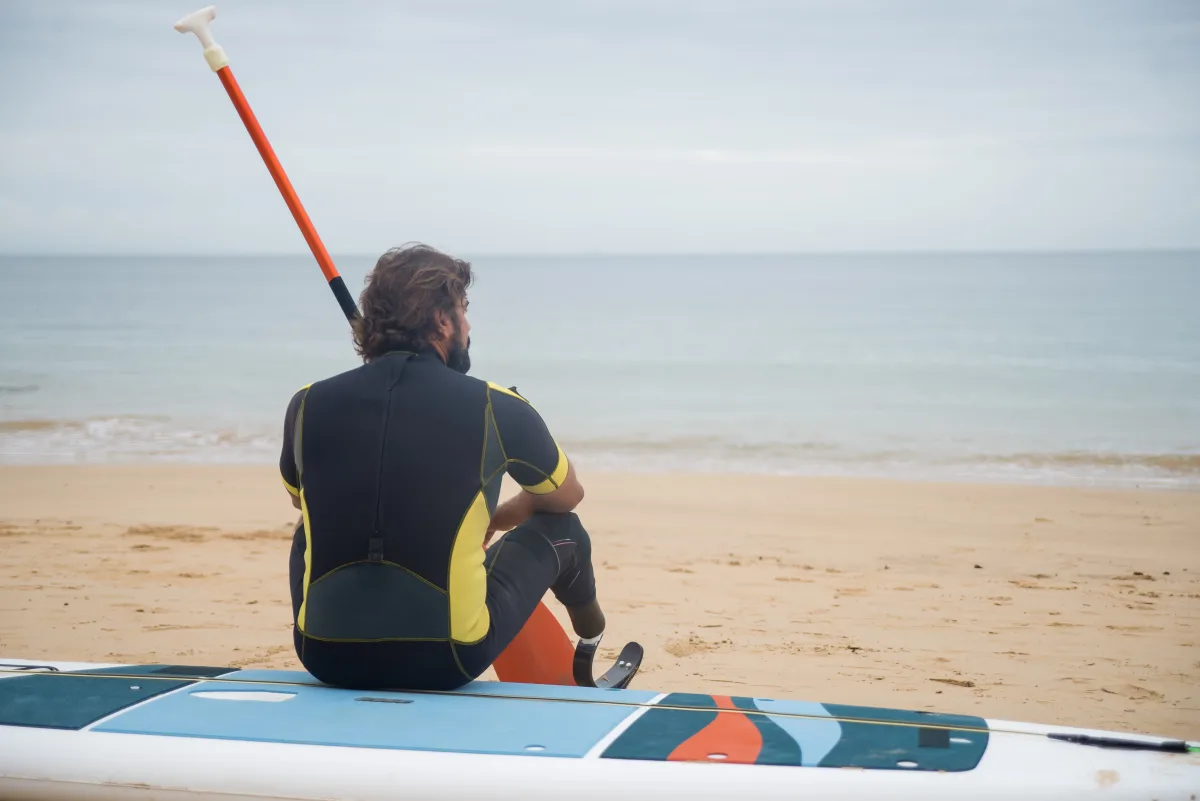
Safety gear is where the gap between knowing and doing carries real consequences. These are baseline requirements, not optional extras.
Personal Flotation Device (PFD)
A PFD is legally required for kayakers in most U.S. jurisdictions and strongly recommended for all SUP paddlers in open water. The critical variable is fit and comfort: a PFD that restricts your paddle stroke or feels uncomfortable will end up strapped to your deck instead of your body. Try it on before buying, and paddle in it if possible. Inflatable belt-pack PFDs are popular for SUP paddlers who find traditional foam vests too restrictive.
For U.S. Coast Guard requirements on personal flotation devices, refer to the USCG Boating Safety division directly — requirements vary by vessel type, age, and state.
Leash
A leash connects you to your board after a fall. In open water or surf, your board is your largest flotation device — losing it in a current or wind can escalate a minor fall into a serious situation. Coiled leashes are standard for flatwater; straight leashes are used in surf. Never use a coiled leash in whitewater, where it can become an entanglement hazard.
Dry Bag, Whistle, and Communication
A dry bag protecting your phone, keys, and emergency items is low-cost, high-return. A whistle attached to your PFD is required safety equipment in many states and weighs almost nothing. For solo paddlers in remote or open-water environments, a GPS device or satellite communicator provides a meaningful safety margin that a smartphone cannot — cell coverage ends well before open water does.
Cold Water Awareness
Cold water immersion is the leading cause of paddling fatalities and is consistently underestimated. Water at 60°F can incapacitate an unprotected swimmer within minutes. Dress for the water temperature, not the air temperature. A wetsuit or drysuit in cold conditions is basic risk management, not overcaution. This applies year-round in northern climates where spring and fall air temperatures feel comfortable while water temperatures remain dangerously cold.
Accessories That Actually Make a Difference
Beyond the primary vessel, a focused set of accessories measurably improves comfort and practicality:
- Electric pump: Inflating a SUP manually to 15 PSI takes significant effort and risks inconsistent inflation. An electric pump eliminates that friction and ensures correct pressure every session. Worth the investment if you paddle more than a few times per season.
- Kayak seat for SUP: Converts your paddleboard for longer, more relaxed paddles. Most quality all-around iSUPs include D-ring mounts compatible with aftermarket kayak seats.
- Polarized sunglasses: Reduce water-surface glare, improve visibility of underwater obstacles, and reduce eye fatigue on long sessions. Genuinely useful, not just comfort gear.
- Roof rack or kayak cart: For hardshell kayaks, a quality roof rack protects both vehicle and hull. A kayak cart makes solo transport from car to water significantly easier — worth more than most people expect until they've carried a hardshell alone.
- Repair kit: Every inflatable board should ship with a basic repair kit. Know how to use it before you need it. A small puncture is a minor inconvenience if you're prepared, and a trip-ending problem if you're not.
If you're comparing the cost of paddling gear against other active outdoor pursuits — hiking, climbing, cycling — the Best Camping & Hiking Gear 2026 and Best Rock Climbing Gear 2026 guides follow the same use-case-first framework and are worth reading alongside this one.
Where to Buy: Retailer Notes for 2026
REI remains a strong option for both kayaking and paddleboarding equipment, particularly if you're an active member — their co-op model returns dividends and provides access to used gear sales that can significantly reduce entry costs. Our 2026 REI Review covers membership value, their return policy, and what categories REI tends to price most competitively versus specialty retailers.
For online purchases, prioritize retailers that offer free return shipping on large items (a full-size paddleboard is expensive to ship back), clear weight capacity disclosures in product listings, and pump/accessory bundles — the difference in bundle quality between retailers on the same board can be meaningful.
Frequently Asked Questions
What is the best type of paddleboard for a complete beginner?
A wide all-around inflatable SUP in the 10'6" to 11'0" range with a width of 32–34 inches. This combination provides the stability to build confidence, the versatility to try different activities, and the portability to make paddling logistically easy. As SupBoardGuide notes, all-around iSUPs with higher weight capacities and quality construction work well for both beginners and more advanced paddlers as skills develop.
Are inflatable paddleboards as good as hardshell boards?
For recreational and all-around use, yes — modern inflatables using woven drop-stitch or MSL construction perform comparably to hardshell boards. The NRS Clean 96's Z/Blend Core construction (20% stiffer, 15% lighter than standard knit drop-stitch, per GearJunkie) demonstrates how far the technology has advanced. For high-performance racing or advanced surfing, dedicated hardshell boards still hold an edge, but the gap has closed meaningfully since 2022.
Do I need a GPS-equipped kayak?
Only if you regularly paddle solo in open water, unfamiliar coastlines, or remote environments where cell coverage is unreliable. For recreational paddling on familiar local waters with reliable cell service, a waterproof phone mount and a free GPS app delivers most of the same value. Smart safety features are a worthwhile investment for specific use cases — not a universal upgrade worth the premium for casual paddlers.
What should I look for in a kayak paddle?
Three factors in order of importance: shaft material (carbon fiber shaft reduces cumulative fatigue significantly over aluminum on sessions longer than 90 minutes), blade size (larger blades move more water but require more effort per stroke — match to your fitness level and cadence preference), and feathering angle (the offset between blade faces, which reduces wind resistance on the recovery stroke). For regular paddlers covering multiple sessions per week, a carbon fiber or carbon-composite shaft is worth the price premium over aluminum.
How do I determine what weight capacity I actually need?
Add your body weight, gear, and any passengers or pets — then choose a board or kayak rated for at least 20–25% more than that combined total. A board loaded near its maximum rated capacity becomes sluggish, unstable, and harder to control in any conditions. The extra margin isn't a marketing buffer — it's a performance and safety factor.
Is paddleboarding or kayaking better for fitness?
Paddleboarding activates more muscle groups simultaneously — core, glutes, back, and stabilizing muscles throughout the lower body — making it a more complete fitness workout for most people. Kayaking provides excellent upper-body and cardiovascular conditioning and is lower-impact on knees and ankles. The better fitness choice is whichever one you'll actually do consistently, which in practice often comes down to the storage and transport equation rather than the exercise science.
A Decision Framework: Four Questions Before You Buy
The best kayaking and paddleboarding equipment in 2026 is the equipment that matches your specific situation. Run through these four questions before you evaluate any product:
1. Define your primary water environment. Flatwater lake, coastal ocean, moving river, or surf? Each demands different hull shapes, widths, and construction priorities. Buying for the environment you'll actually paddle — not the one you hope to eventually reach — produces dramatically better outcomes.
2. Assess your skill level honestly. Beginners need stability and forgiveness. Experienced paddlers can trade stability for speed or maneuverability. Buying ahead of your skill level doesn't accelerate development — it creates frustration and gear that collects dust.
3. Solve your storage and transport problem first. If you live in an apartment without vehicle roof access, a hardshell kayak is logistically impractical regardless of its performance merits. An inflatable SUP you'll actually use beats a hardshell that stays in storage. The best gear is gear you can realistically get to the water.
4. Match smart technology to your actual paddling context. Solo open-water touring in unfamiliar environments? GPS and safety features are worth serious consideration. Weekend recreational paddling on a familiar lake? A waterproof phone mount and a GPS app covers you at a fraction of the cost. Don't pay for features your paddling context doesn't require.