Quick verdict: The Nike LeBron 23 leads basketball shoes overall; the Adidas Trionda Pro is the definitive soccer match ball of 2026. But neither is the right pick for most recreational players — this guide cuts through the hype to match gear to your real playing context, not a professional benchmark.
Research methodology: This guide synthesizes manufacturer specs, independent lab results from RunRepeat and WearTesters, verified buyer feedback, and industry market data from Business Research Insights, Mordor Intelligence, and L.E.K. Consulting. It does not reflect hands-on testing by Trusted Buyer Report. All sources are cited.
We may earn a commission when you use our links to make a purchase. This does not influence our rankings, which are finalized before any affiliate link is placed.
The Real Question Isn't "What's Best?" — It's "Best for What?"
You're standing in a sporting goods aisle — or more likely scrolling through an online store at midnight — staring at fifteen basketball shoes and a wall of soccer balls, all claiming to be the best of 2026. The professional athlete on the packaging is not you.
Your Tuesday pickup game, your kid's Saturday league, your recreational futsal session — none of those scenarios appear in the marketing copy. So here's the only question that matters: what gear performs best for how you actually play?
This guide answers that directly. It also covers apparel, cleats, surface matching, brand analysis, and a decision framework by player type at the end — so you can skip straight to the section that applies to you.
If you're building out a broader sports kit beyond basketball and soccer, our 2026 outdoor sports gear buyer's guide covers everything from trail running to water sports in the same research-first format.
Head-to-Head: The Best Basketball Shoe vs. the Best Soccer Ball in 2026
Two products sit at the professional ceiling in their respective sports this year.
According to RunRepeat's 2026 basketball shoe guide — which combines lab testing with on-court evaluation across traction, cushioning, support, and energy return — the Nike LeBron 23 earns the best overall ranking. On the soccer side, The Soccer Factory identifies the Adidas Trionda Pro as the definitive professional match ball of 2026, serving as the official FIFA World Cup ball engineered for 16 host cities across North America.
What makes these benchmarks is engineering specificity. The LeBron 23 is built as an all-position performer — it doesn't sacrifice traction for cushioning, which is why it tops the overall category rather than leading any single metric. The Adidas Trionda Pro solves a different problem: consistency across radically different climates. Its four-panel thermally bonded shell absorbs virtually no water, so the ball plays identically in minute 90 as in minute 1, whether in Vancouver's rain or at Mexico City's altitude. It also houses an AI chip for real-time officiating data — a feature that matters at the professional level but is irrelevant to most recreational players.
The takeaway: These products represent what professionals trust when results matter. Understanding their design priorities is how you determine whether those priorities match your own game — or whether you're buying a solution to a problem you don't have.
Best Basketball Shoes in 2026 by Category
Basketball shoe performance is position- and style-dependent in ways a single "best" ranking cannot capture. RunRepeat's 2026 testing identifies six distinct performance categories, and the leaders are different shoes for different player profiles.
| Category | Top Pick 2026 | Best For |
|---|---|---|
| Best Overall | Nike LeBron 23 | All positions, versatile playing styles |
| Best Traction | Nike KD 18 | Guards, perimeter players, quick-cut movers |
| Best Shock Absorption | Nike G.T. Hustle 3 | Big men, high-impact/contact players |
| Best Energy Return | Nike G.T. Cut 3 Turbo | Explosive athletes, transition players |
| Best Lightweight | Nike Sabrina 3 | Speed-first players, smaller guards |
| Best Ankle Support | New Balance TWO WXY V5 | Players with ankle history, unpredictable surfaces |
Nike KD 18 — Best for Guards and Perimeter Players
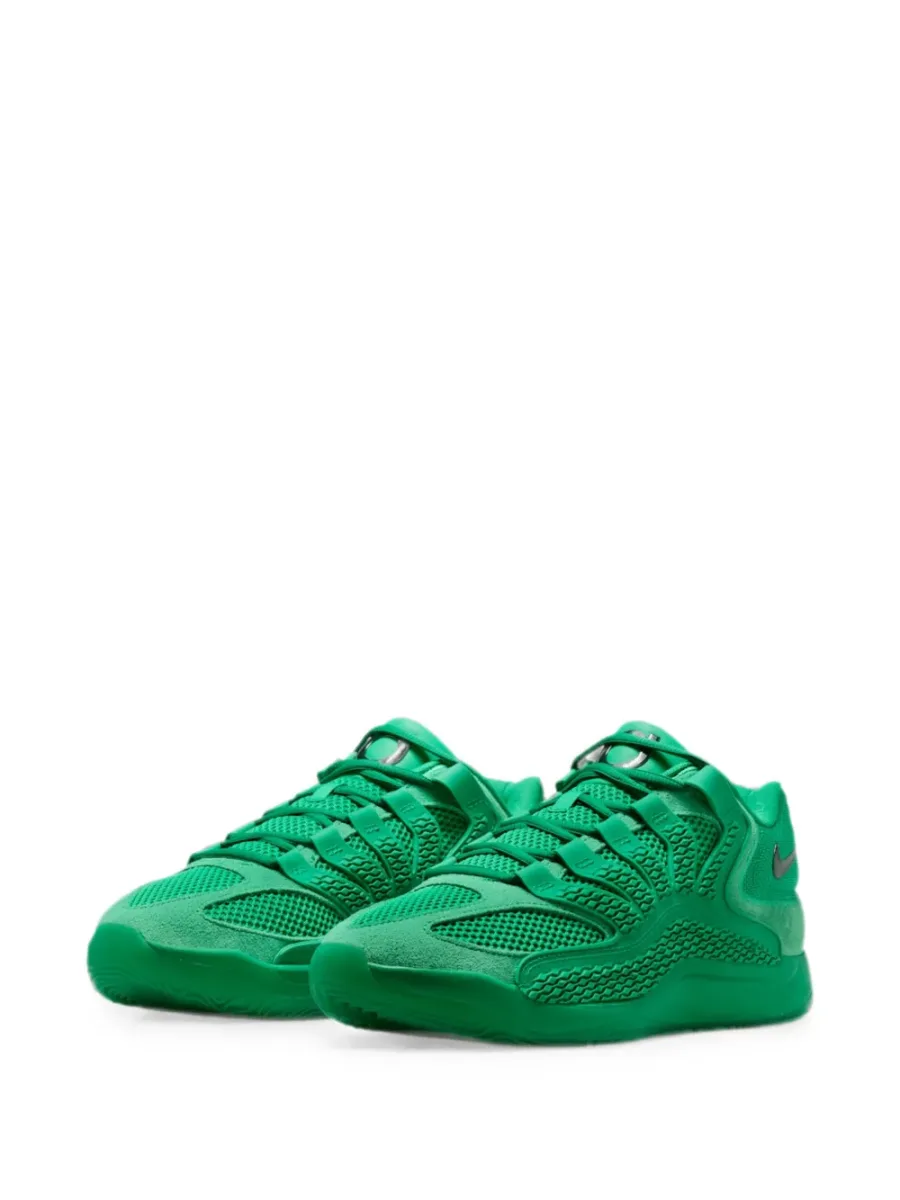
The KD 18 leads traction testing, making it the logical choice for guards and perimeter players whose game depends on sharp cuts and rapid direction changes. If your first step is your primary weapon, traction failure is your biggest liability — and this shoe addresses that directly. It's purpose-built for speed-first movers who live on the perimeter.
Nike G.T. Hustle 3 — Best for Physical, High-Contact Players
Players who absorb heavy physical contact — post players, power forwards, anyone spending time in the paint — get more practical value from the G.T. Hustle 3's superior shock absorption than from the LeBron 23's all-around balance. The distinction matters because cushioning that feels plush during casual wear can compress and lose effectiveness under repeated high-impact landings.
New Balance TWO WXY V5 — Best for Ankle Protection
The TWO WXY V5 leads ankle support testing, which matters more than most recreational players acknowledge. Ankle sprains are the most common basketball injury, and players with a history of instability — or those on older, less-maintained courts — benefit significantly from the additional lateral containment. This is not a shoe you choose for aesthetics; you choose it because your ankles have a documented vulnerability.
Under Armour Curry 4 — The Best Value Pick
The Curry 4 sits outside the Nike-dominated top of 2026 rankings while still earning consistent praise from WearTesters as one of the best guard shoes ever produced. It offers responsive low-profile cushioning, strong traction, and a sock-like fit that WearTesters describes as hall-of-fame level support — at a price point well below flagship models.
The critical caveat: Sizing accuracy is non-negotiable with this shoe. The fit is designed to conform to your foot precisely, and going even a half-size off significantly degrades the experience. If you're buying online, size carefully and check the brand's fit guide.
Best Soccer Balls in 2026: Match Day, Training, and Youth Picks
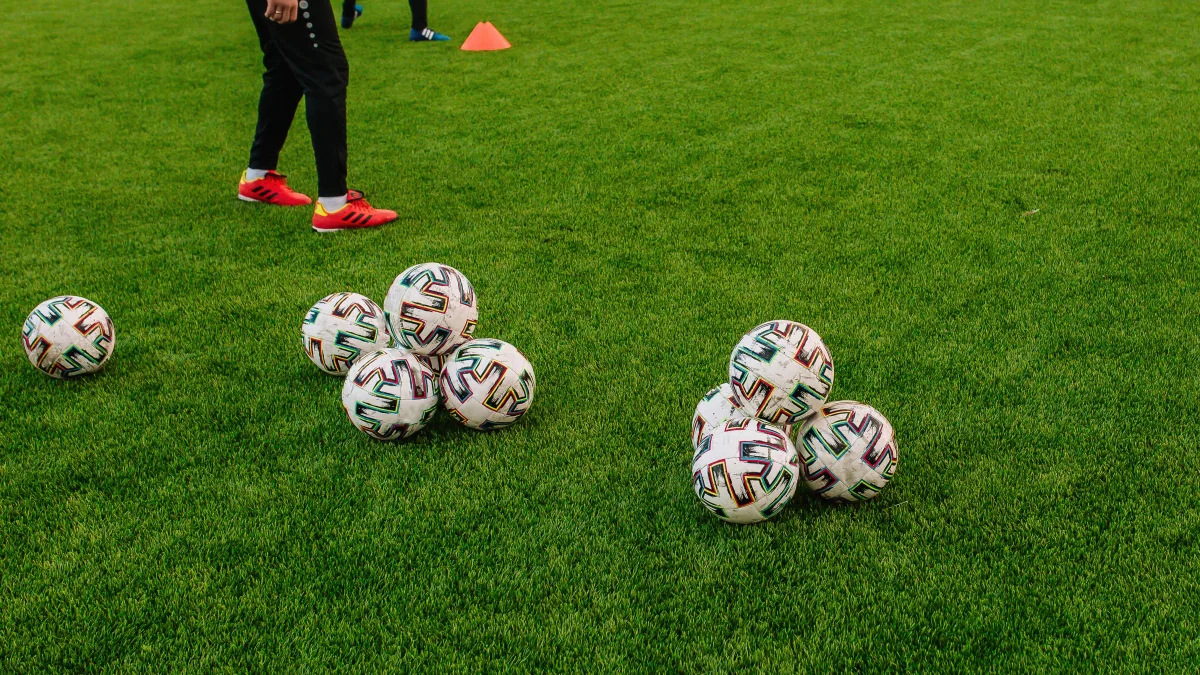
The global soccer balls market is valued at USD 3.32 billion in 2026 and is projected to reach USD 7.41 billion by 2035, growing at a CAGR of 9.32%, according to Business Research Insights. Recreational usage drives 46% of total sales. Yet counterfeit products account for 17% of soccer balls sold globally — meaning a significant portion of buyers are paying for performance they're not actually receiving. Buying from authorized retailers is not brand loyalty; it's basic quality assurance.
The three tiers of soccer balls serve genuinely different purposes, and conflating them is a common and costly mistake.
Professional Match Balls
Adidas Trionda Pro — the clear leader. Its four-panel thermally bonded construction eliminates the seam irregularities that affect flight in hand-stitched balls, and its water resistance means weight and feel don't change in wet conditions. The AI chip is a professional officiating tool — it adds cost without adding playing benefit for recreational users.
If you're competing at a serious amateur or semi-professional level and want the same ball used at the World Cup, this is the correct choice. If you're playing twice a week in a local league, it is not.
Nike Flight Ball — the alternative elite pick. Aerowsculpt groove technology reduces drag and stabilizes trajectory on powerful strikes. The flight consistency on hard strikes is measurably better than standard balls — a genuine performance advantage for technically advanced players who take long-range shots or deliver driven crosses.
Training Balls
Adidas Trionda Training Ball — shares design DNA with the Pro version, including the recognizable wave aesthetic, but at a price point that makes daily use practical. According to The Soccer Factory, it delivers consistent professional-adjacent feel without the match-ball cost. Using a Pro match ball for daily training accelerates wear on an expensive product unnecessarily. This is the rational alternative for serious players who train frequently.
Youth and Beginner Balls
Young players need a ball that feels forgiving without being structurally cheap. The Trionda Training Ball hits this mark well. Eco-friendly soccer balls made from recycled materials have also increased by 26% in global production share, per Business Research Insights — giving youth programs an environmentally conscious option without compromising durability.
Ball Construction: The Most Important Technical Variable
- Thermally bonded: Best water resistance and flight consistency — ideal for competitive play in varied conditions
- Machine-stitched: Durable and affordable — the right choice for regular training
- Hand-stitched: Traditional feel but absorbs more water over time — suited for dry conditions or recreational use
Match the construction to the conditions you actually play in.
Soccer Cleats in 2026: Surface Matching Matters More Than Brand
Cleat selection has more direct impact on performance — and injury risk — than brand preference alone. Yet it's the decision most recreational players make based on aesthetics rather than surface compatibility.
Soccer cleats are engineered for four distinct surfaces. Using the wrong type increases both injury risk and traction failure:
| Cleat Type | Surface | Stud Design |
|---|---|---|
| Firm Ground (FG) | Natural grass, dry to moderate | Conical or bladed studs for grip without locking |
| Soft Ground (SG) | Wet, muddy natural grass | Fewer, longer studs penetrate deeper |
| Artificial Grass (AG) | Synthetic turf | Short, numerous studs distribute pressure |
| Turf (TF) | Hard artificial/indoor surfaces | Rubber nubs, not for outdoor grass |
Using FG cleats on artificial turf distributes stud pressure unevenly, increasing stress on the ankle and knee over time. AG cleats exist specifically to prevent the foot from locking into synthetic fibers. This is documented and avoidable — confirm your primary surface before purchasing.
Position Influences Cleat Priorities
- Forwards often prioritize lightweight construction and thin uppers for better ball feel on finishing and dribbling
- Defenders and central midfielders may prioritize durability and lateral stability, since their game involves more physical contact and directional changes under pressure
- Goalkeepers need grip and lateral push-off capability more than sprint speed
Nike and Adidas dominate the professional cleat market, with Puma identified by Cognitive Market Research as a key competitor across football and soccer equipment.
If you're spending significant time outdoors — whether for sports or recreation — our best hiking boots guide for 2026 applies the same surface-matching logic to trail and outdoor footwear.
Basketball & Soccer Apparel in 2026: What Performance Clothing Actually Does
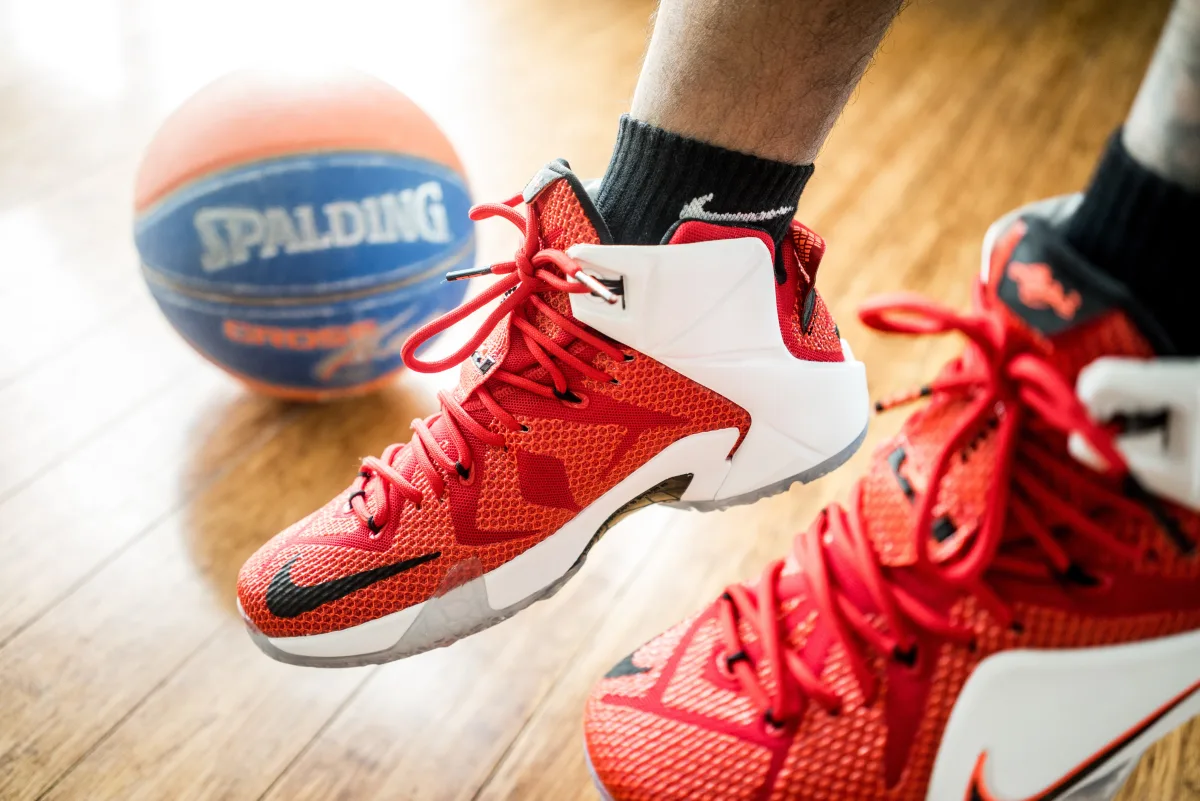
Performance apparel falls into two functional categories: moisture management and compression. Understanding which one you actually need prevents paying a premium for technology that doesn't address your situation.
Compression Apparel — Who Actually Benefits
Compression shorts and tights have the most evidence-backed functional benefit among basketball and soccer apparel items. Graduated compression supports muscle groups during exertion and may reduce delayed-onset muscle soreness during recovery. This matters most for players who:
- Log extended minutes or play multiple games in a day
- Are managing lower-body fatigue from training loads
- Have a history of quad or hamstring issues
For a player who plays one 40-minute recreational game per week, the compression benefit is minimal. Compression base layers under soccer shorts are increasingly common among amateur players managing hamstring or quad fatigue — but for most youth players, freedom of motion is the functional priority, not compression.
Moisture-Wicking Fabrics — Genuine Comfort, Not Performance Magic
Moisture-wicking jerseys and shorts reduce chafing and heat buildup during play. This is a real comfort benefit, but it does not directly improve athletic output. The practical value is distraction reduction — you're not adjusting your jersey during a critical possession.
A well-fitted moisture-wicking jersey from a mid-tier brand delivers this benefit as effectively as a premium one. Fit matters more than brand at this level of the decision. The L.E.K. Consulting 2026 US Footwear, Apparel and Accessories Brand Heat Index confirms Nike, Adidas, and Under Armour all carry strong athletic apparel recognition with U.S. consumers — the functional differences between their core lines are narrower than their price gaps suggest.
How the North American Basketball Shoe Market Shapes What's Available
The North American basketball shoes market is growing at a CAGR of 3.455% through 2033, according to Cognitive Market Research. That scale explains why the category receives disproportionate innovation investment — the margin on premium signature shoes is substantial.
Online retail is the fastest-growing distribution channel, projected to grow at 8.98% from 2026 to 2031 per Mordor Intelligence. Sports and specialty stores held a 38.92% market share in 2025 but the trajectory is clear. Nike and Adidas have both advanced their direct-to-consumer models significantly, meaning buying from brand channels often provides better size availability and exclusive colorways.
A dynamic worth understanding: Signature models drive outsized online visibility because brands can showcase unlimited colorways without shelf-space constraints. A shoe's prominence is partly a marketing outcome, not purely a performance signal. The Under Armour Curry 4 outperforms shoes that cost significantly more in specific test categories, but it receives less front-of-store placement than higher-margin flagship models. Independent testing tells a different story than shelf position.
Brand Heat in 2026: Which Brands Are Winning Consumer Trust?
The L.E.K. Consulting 2026 Brand Heat Index surveyed approximately 6,000 U.S. consumers to measure brand momentum across purchase intent, word-of-mouth, and cultural relevance. Nike, Adidas, and Under Armour dominate the athletic footwear and performance apparel categories tracked.
Adidas benefits substantially from its FIFA World Cup official ball status in 2026, which elevates brand visibility across both equipment and footwear simultaneously. That halo effect is real and measurable in consumer surveys — but it does not mean every Adidas product outperforms its competitors. Cross-referencing brand heat data with independent lab results is how you separate genuine quality signals from marketing momentum.
Final Recommendation: A Decision Framework by Player Type
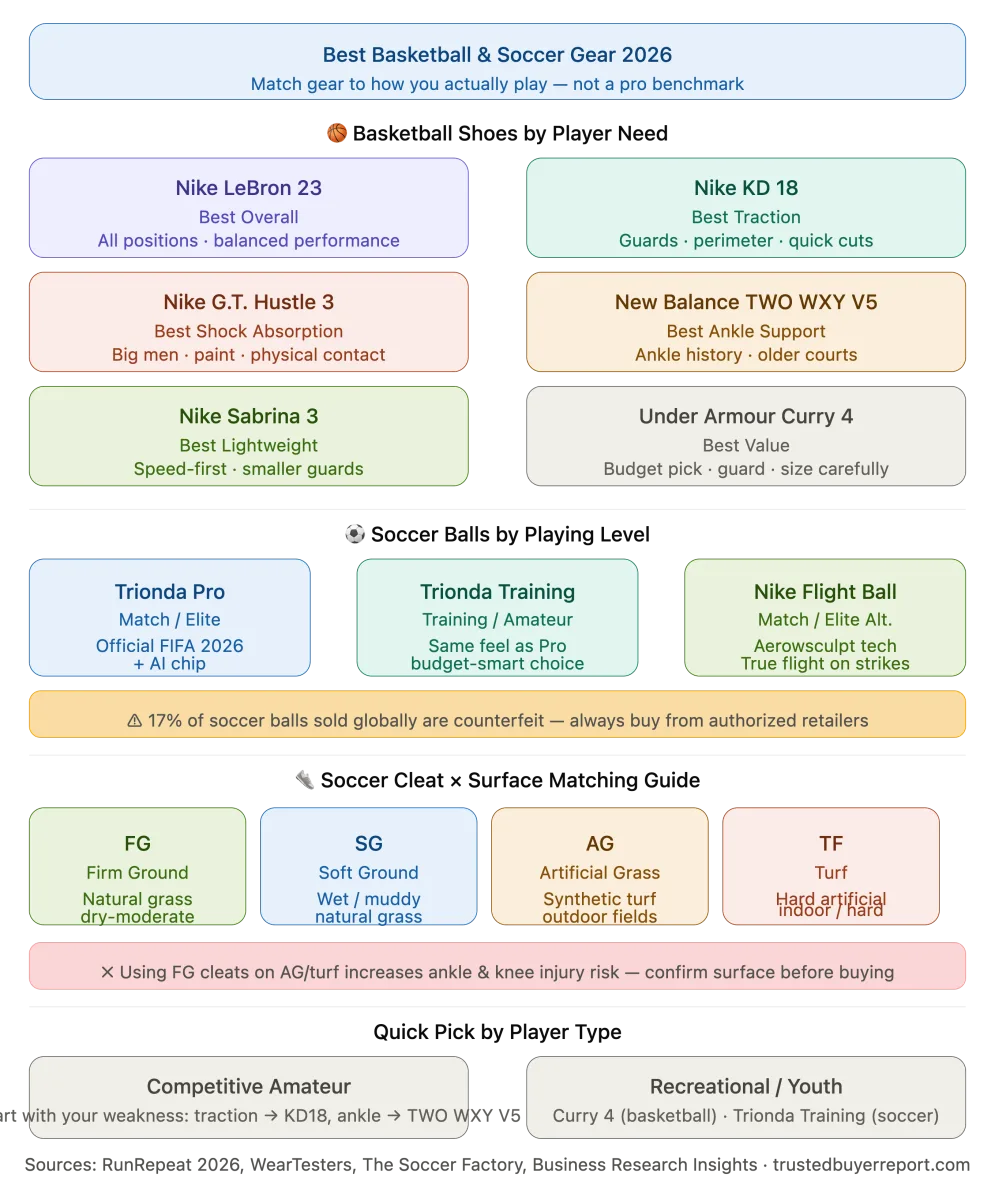
Competitive Amateur Basketball Player
Start with your position and primary weakness. If traction is your limiting factor on your home court, the Nike KD 18 addresses that directly. If you have ankle history, the New Balance TWO WXY V5 is the correct starting point regardless of what your teammates wear. The Nike LeBron 23 is the right choice only if you genuinely need all-around performance without a specific weakness a category leader addresses better.
Recreational or Youth Basketball Player
The Under Armour Curry 4 delivers professional-grade guard performance at a justifiable price point. Size carefully — the sock-like fit is the shoe's greatest asset and its most common point of failure when sized incorrectly. For youth players, prioritize fit and lightweight construction over compression or premium cushioning technology.
Competitive Amateur Soccer Player
Verify your primary playing surface before choosing cleats — this decision outweighs brand preference. For match balls, the Adidas Trionda Training Ball gives you consistent professional-adjacent feel without the cost of the Pro version. Reserve the Trionda Pro for actual competitive matches if budget allows.
Recreational or Youth Soccer Player
The Adidas Trionda Training Ball is the correct ball choice at this level. Buy from authorized retailers to avoid the counterfeit market, which accounts for 17% of soccer balls sold globally. For cleats, AG or TF options are appropriate for most recreational facilities — confirm the surface type before purchasing.
Budget-Conscious Players Across Both Sports
RunRepeat's 2026 testing includes a dedicated budget category for basketball shoes, confirming that core performance is achievable without flagship pricing. In soccer, the training ball tier delivers consistent feel for skill development at a fraction of match-ball cost. For apparel, a well-fitted mid-tier option from any of the three major brands outperforms an ill-fitting premium one in practical terms.
Branching Out: Other Sports Gear Covered in Our 2026 Guides
If basketball and soccer are part of a broader active lifestyle, you may find our other 2026 buying guides useful:
- Racket sport players can find tested picks and frame analysis in our best tennis equipment guide for 2026, including a breakdown of string tension and court surface considerations
- Golfers evaluating club sets, rangefinders, and bags will find our best golf equipment deals for 2026 covers everything from beginner sets to premium irons
- Cyclists, particularly those considering e-bikes for commuting or cross-training, should check our best electric bikes guide for 2026
- REI members or anyone evaluating the co-op for their sports gear needs will find our REI 2026 review covers membership value, gear quality, and return policy in depth
Frequently Asked Questions
Is the Nike LeBron 23 worth it for recreational players?
It depends on your specific needs. The LeBron 23 earns its best-overall ranking because it balances traction, cushioning, support, and energy return without a significant weakness in any category. If you play multiple positions or have no specific performance deficit, it's a strong all-around choice. But if you have a clear need — ankle support, maximum traction, lightweight speed — a category-specific shoe like the New Balance TWO WXY V5 or Nike KD 18 will serve you better, likely at less cost.
What's the difference between the Adidas Trionda Pro and the Trionda Training Ball?
The Trionda Pro is the official FIFA World Cup 2026 match ball, featuring a four-panel thermally bonded shell with virtually zero water absorption and an embedded AI chip for officiating data. The Training Ball shares the same visual design and similar feel but is built for repeated daily use at a lower cost. The AI chip and match-grade construction are absent in the training version — for recreational and youth players, those omissions are irrelevant. The Training Ball is the practical choice.
Does playing surface really matter that much for soccer cleats?
Yes — more than most recreational players realize. Using firm ground cleats on artificial turf distributes stud pressure unevenly across the foot, increasing stress on the ankle and knee over time. Artificial grass cleats use shorter, more numerous studs specifically to prevent the foot from locking into synthetic fibers. The injury risk from mismatched cleat-surface combinations is documented and completely avoidable. Confirm your primary surface type before purchasing.
Are eco-friendly soccer balls a viable performance option in 2026?
For youth programs and recreational use, yes. Eco-friendly balls made from recycled materials have increased by 26% in global production share, and several options now meet durability standards comparable to conventional training balls. At the professional match level, traditional thermally bonded construction still leads for flight consistency and water resistance.
Which basketball shoe brand is most dominant in 2026 — and does it matter?
Nike holds the dominant position in both the RunRepeat lab rankings and the L.E.K. consumer brand heat index for 2026. However, dominance in market share does not equal dominance in every performance category — the Under Armour Curry 4 and New Balance TWO WXY V5 both lead their respective categories over more prominent Nike models. Brand should follow performance category, not the other way around.
This article was drafted with AI assistance and reviewed by our editorial team before publishing. Affiliate disclosure: Trusted Buyer Report may earn a commission from purchases made through links on this page, at no extra cost to you. Read our full editorial methodology →