Affiliate Disclosure: We may earn a commission when you use our links to make a purchase, at no extra cost to you. Our recommendations are finalized before any affiliate link is applied. Full disclosure → | AI Disclosure: This article was researched and drafted with AI assistance, then reviewed and fact-checked by our editorial team. Editorial standards →
Most parents don't realize that the baby formula aisle is one of the most aggressively marketed spaces in all of consumer goods — not a pharmacy shelf where every option is equally safe and nutritious. The global infant formula market is valued at $51.89 billion in 2026 and projected to nearly triple to $89.73 billion by 2035, according to Towards Healthcare's infant formula market analysis. When a category grows that fast, every brand has a commercial incentive to claim superiority. "Organic." "Closest to breast milk." "Brain-boosting." The problem: most of those claims multiply faster than the evidence supporting them.
This guide cuts through the noise. We've synthesized FDA surveillance data, independent contaminant lab results from Consumer Reports, and nutritional analysis from sources like Wirecutter and Gimme the Good Stuff to give you a decision framework — not a marketing brochure.
Bottom line up front: For most healthy full-term infants, a cow's milk-based formula with lactose as the sole carbohydrate, a whey-dominant protein ratio, and added DHA, ARA, and prebiotics represents the gold standard in ingredient quality. Store brands (like Target's Up & Up) often match or outperform premium-priced options on both ingredient profile and contaminant testing. Organic is not automatically safer — it depends on what else is in the formula.
How We Researched This Guide
This guide does not reflect hands-on formula testing by Trusted Buyer Report. It is based on FDA regulatory data, independent lab testing published by Consumer Reports, nutritional analysis by Wirecutter (New York Times), expert guidance from registered dietitians cited in Gimme the Good Stuff's 2026 formula guide, and market intelligence from Towards Healthcare and Future Market Insights. We cite our sources so you can verify every claim directly. As part of our comprehensive Baby & Kids Product Reviews and Safety Guides for 2026, this guide is one of several resources designed to help parents make safer, more informed decisions.
Is Baby Formula Actually Safe in 2026? What FDA Testing Found
The most important question — and the one formula marketing carefully sidesteps — is contaminant safety. The short answer: cautiously reassuring, but not uniformly safe across all brands.
The FDA launched Operation Stork Speed, described on the FDA's Infant Formula Product Testing Results page as "the largest and most comprehensive examination of chemical contaminants in infant formula available on the U.S. market." Contaminants tested include lead, mercury, cadmium, arsenic, PFAS compounds, and pesticides. The agency's overall conclusion: infant formula is safe. That's a meaningful, measured statement from a regulatory body that doesn't typically overstate reassurance.
Here's the nuance: the FDA also acknowledges its market basket testing doesn't capture every product or every batch, and ongoing monitoring continues.
Independent testing tells a more differentiated story. Consumer Reports tested 41 baby formulas specifically for lead and arsenic — and found that some formulas showed concerning contaminant levels while others performed significantly better. Premium price doesn't predict safety performance. Some mid-range and store-brand formulas tested cleaner than their expensive counterparts.
Why do these contaminants matter for infants specifically?
- Lead: Associated with neurodevelopmental effects even at low exposure levels in early life.
- Inorganic arsenic: A known carcinogen and developmental toxicant.
- PFAS: Linked to immune disruption and hormonal effects in developing systems.
None of this is cause for panic — formula is a tightly regulated food product. But it is cause for informed brand selection. Check the FDA's Infant Formula Homepage for the most current testing results, and cross-reference with Consumer Reports' published findings when making your choice.
How to Read a Baby Formula Label: Ingredients That Actually Matter
Every FDA-regulated formula sold in the U.S. must meet minimum nutritional requirements. What separates formulas in practice is what happens above that floor. Here are the three label elements that matter most.
1. Carbohydrate Source
Lactose is the gold standard. It's the primary carbohydrate in breast milk and the most natural fit for infant digestion. When you see lactose listed as the sole carbohydrate, that's a meaningful positive signal.
Some formulas substitute corn syrup solids or sucrose. These aren't inherently dangerous — corn syrup solids are sometimes medically appropriate in hypoallergenic formulas where lactose reduction is necessary — but in a standard formula for a healthy full-term infant, lactose-only is the preferred choice.
2. Whey-to-Casein Protein Ratio
Breast milk in early lactation runs approximately 60% whey / 40% casein. Whey protein is more easily digested and absorbed. Formulas vary considerably:
- Up & Up Advantage Premium: 52% whey / 48% casein (close to breast milk profile)
- Happy Baby Organic Stage 1: 60% whey (matches early breast milk)
- Earth's Best Organic: 30% whey / 70% casein (more casein-dominant, slower digestion)
Per Wirecutter's 2026 baby formula analysis, whey-dominant ratios are generally preferable for healthy full-term infants.
3. Key Added Nutrients — What to Look For
| Nutrient | Why It Matters |
|---|---|
| DHA & ARA | Fatty acids linked to brain and eye development; now standard in most formulas |
| 2'-FL (human milk oligosaccharide) | A prebiotic specific to breast milk; supports gut microbiome development |
| FOS & GOS | Prebiotic fibers that promote beneficial gut bacteria; having both provides broader coverage |
| Lutein | Antioxidant present in breast milk; associated with eye health |
| Taurine & L-carnitine | Amino acids in breast milk; support metabolic and neurological function |
| Nucleotides | Building blocks for DNA/RNA; support immune system development |
Ingredients Worth Scrutinizing
Palm oil is used in many formulas to approximate breast milk's saturated fat profile, but some research suggests it may reduce calcium and fat absorption compared to other fat blends. Carrageenan — a thickener found in some ready-to-feed formulas — has been the subject of ongoing debate about infant gut health, though it has not been banned by regulatory agencies. Gimme the Good Stuff's 2026 formula guide flags cheap sweeteners, skim milk, and seed oils as ingredients to minimize, and prioritizes grass-fed milk and whey for their more favorable fatty acid profiles.
Types of Baby Formula: Which One Is Right for Your Baby?
Formula type should be driven by your infant's specific physiology — not marketing categories. Here's a practical breakdown.
Cow's Milk-Based Formula is appropriate for most healthy full-term infants. This accounts for the majority of the market — Future Market Insights projects it will represent 50% of 2026 formula market share. The protein comes from cow's milk but is modified for infant digestion.
Soy-Based Formula is lactose-free, making it appropriate for infants with galactosemia (a rare metabolic condition) or for families with dietary preferences around animal products. The American Academy of Pediatrics does not recommend soy formula as a first-line treatment for colic or fussiness, and it's not recommended for premature infants without specific medical guidance.
Hypoallergenic (Extensively Hydrolyzed) Formula is designed for infants with a confirmed cow's milk protein allergy. The protein is broken into smaller fragments less likely to trigger an immune response. Brands like Enfamil Nutramigen and Similac Alimentum fall here. These formulas are more expensive and have a taste some infants initially reject.
Amino Acid-Based (Elemental) Formula is the most broken-down option — used for severe allergies, eosinophilic esophagitis, or significant malabsorption. Always used under pediatrician guidance.
Goat Milk Formula is growing in popularity, particularly among parents who report better tolerance than cow's milk formula. Goat milk has lower levels of alpha-s1 casein, which may explain anecdotal reports of easier digestion. When sold in the U.S., it must meet identical FDA nutritional standards as cow's milk formula.
European Formulas (HiPP, Lebenswert Bio, Nara Organics) appeal to parents prioritizing EU-standard ingredient restrictions. Key trade-offs: these formulas are not FDA-approved for the U.S. market, they're imported through gray-market channels, and supply reliability is less predictable than domestic products. EU regulations do prohibit sucrose in standard infant formula and impose stricter limits on certain additives — but the lack of FDA oversight is a real consideration.
Ready-to-Feed vs. Powder vs. Liquid Concentrate
Ready-to-feed is the safest format for newborns and immunocompromised infants — no water mixing, no dilution risk. Also the most expensive. Powder is most economical and has the longest shelf life once opened. Liquid concentrate falls in between. For healthy infants after the newborn stage, powder from brands with strong contaminant test results is a practical choice.
Organic vs. Conventional Baby Formula: What Does the Research Show?
Organic formula often costs 30–50% more per ounce than conventional. Whether that premium is justified depends on what you're actually getting.
What organic certification means: Ingredients produced without synthetic pesticides, herbicides, or GMOs. It does not mean superior macronutrient ratios, better protein quality, or higher DHA content. Both organic and conventional formulas must meet identical FDA minimum nutritional requirements.
What it doesn't guarantee: Consumer Reports' contaminant testing found concerning levels in some organic formulas — and safer results in some conventional ones. The organic label alone is not a predictor of contaminant safety.
The honest trade-off: Organic formulas may reduce infant exposure to pesticide residues. Whether that reduction is health-significant at formula-intake levels isn't definitively established in the scientific literature. For parents who apply the precautionary principle around synthetic chemical exposure, organic is a reasonable choice — provided the formula also has strong ingredient quality in other respects (lactose-based carbs, favorable whey ratio, full nutrient suite).
Earth's Best Organic uses lactose as its sole carbohydrate and includes DHA, ARA, lutein, taurine, L-carnitine, nucleotides, and FOS. Happy Baby Organic Stage 1 adds dual FOS/GOS prebiotics and a 60% whey ratio. Bobbie Organic, which appeared in Consumer Reports' safer formula findings, has positioned itself on clean-label organic ingredients with composition closer to European standards.
The bottom line: ingredient quality and contaminant test results matter more than the organic label alone.
Top Baby Formula Picks for 2026: What Trusted Sources Recommend
Rather than ranking by brand recognition, here's what three credible independent sources found when they evaluated formulas systematically.
Best Overall: Up & Up Advantage Premium Infant Formula (Target Store Brand)
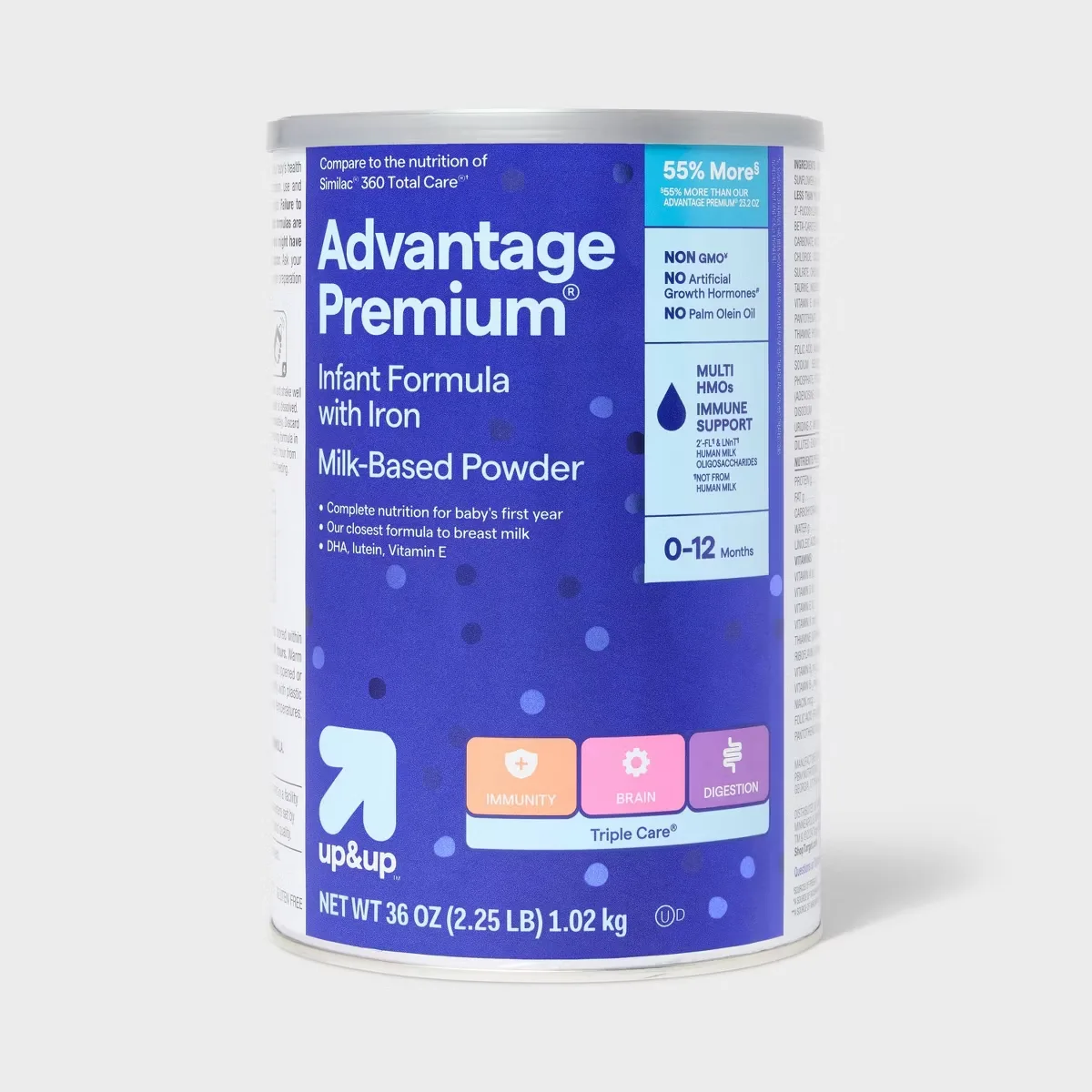
Wirecutter's analysis identified Up & Up Advantage Premium as a standout for its ingredient profile at a significantly lower price point than premium brands. It uses lactose as its sole carbohydrate, delivers a 52% whey / 48% casein protein ratio, and includes DHA, ARA, lutein, taurine, L-carnitine, nucleotides, and the prebiotic 2'-FL. The information gain here: a store brand outperforming many premium-branded formulas on ingredient composition is a finding most formula marketing won't tell you.
Best for: Budget-conscious parents who don't want to sacrifice ingredient quality. Watch for: Occasional Target stock availability; keep a backup option identified.
Best Organic (U.S.): Bobbie Organic Infant Formula
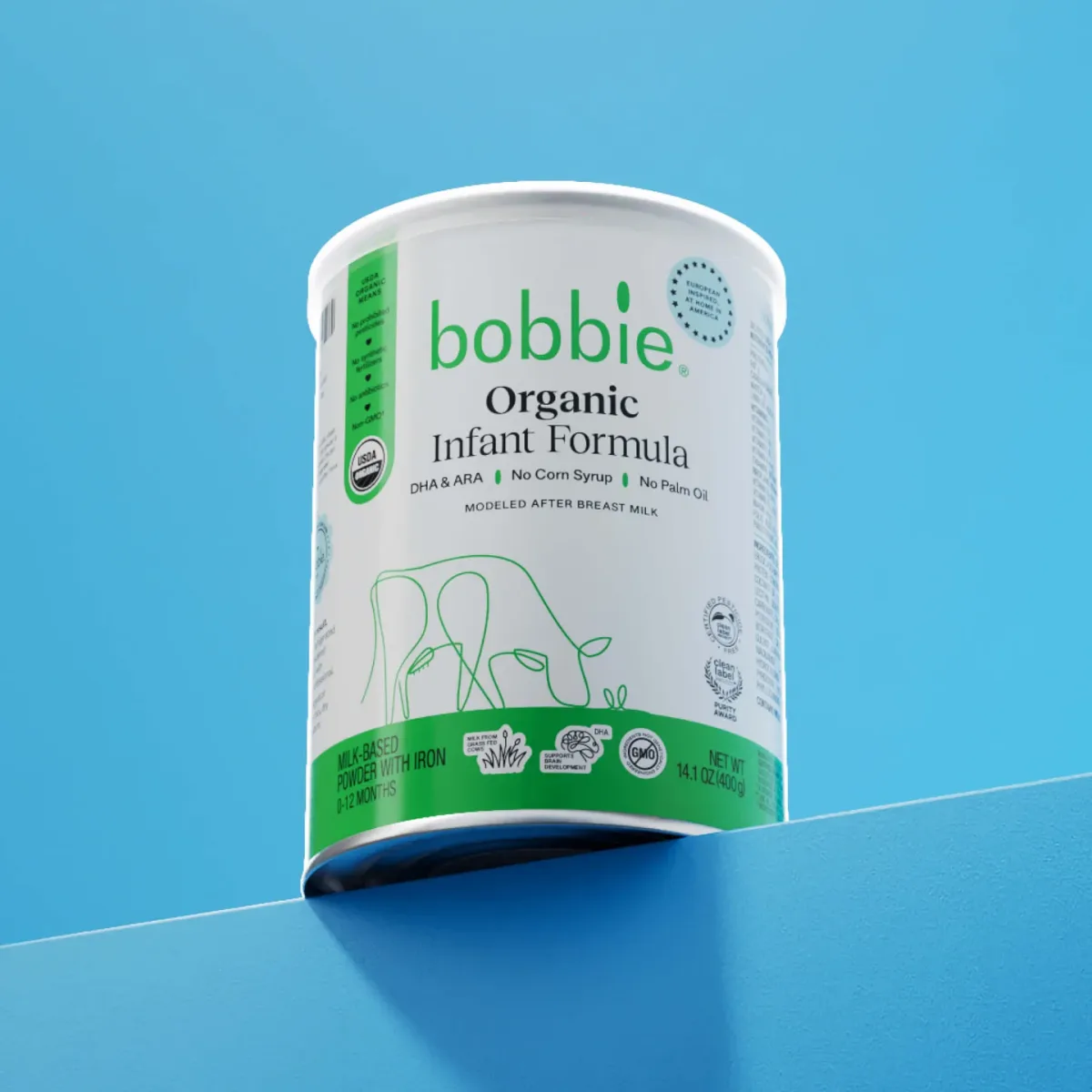
Bobbie appeared in Consumer Reports' safer-results list and has built its brand around clean-label organic ingredients with a composition closer to EU standards. It's USDA-certified organic, uses lactose, and avoids corn syrup solids. Higher price point than Earth's Best, but the contaminant testing performance and ingredient transparency are differentiators.
Best for: Parents who want an organic formula with strong safety testing results.
Best Dual Prebiotic: Happy Baby Organic Infant Formula Stage 1
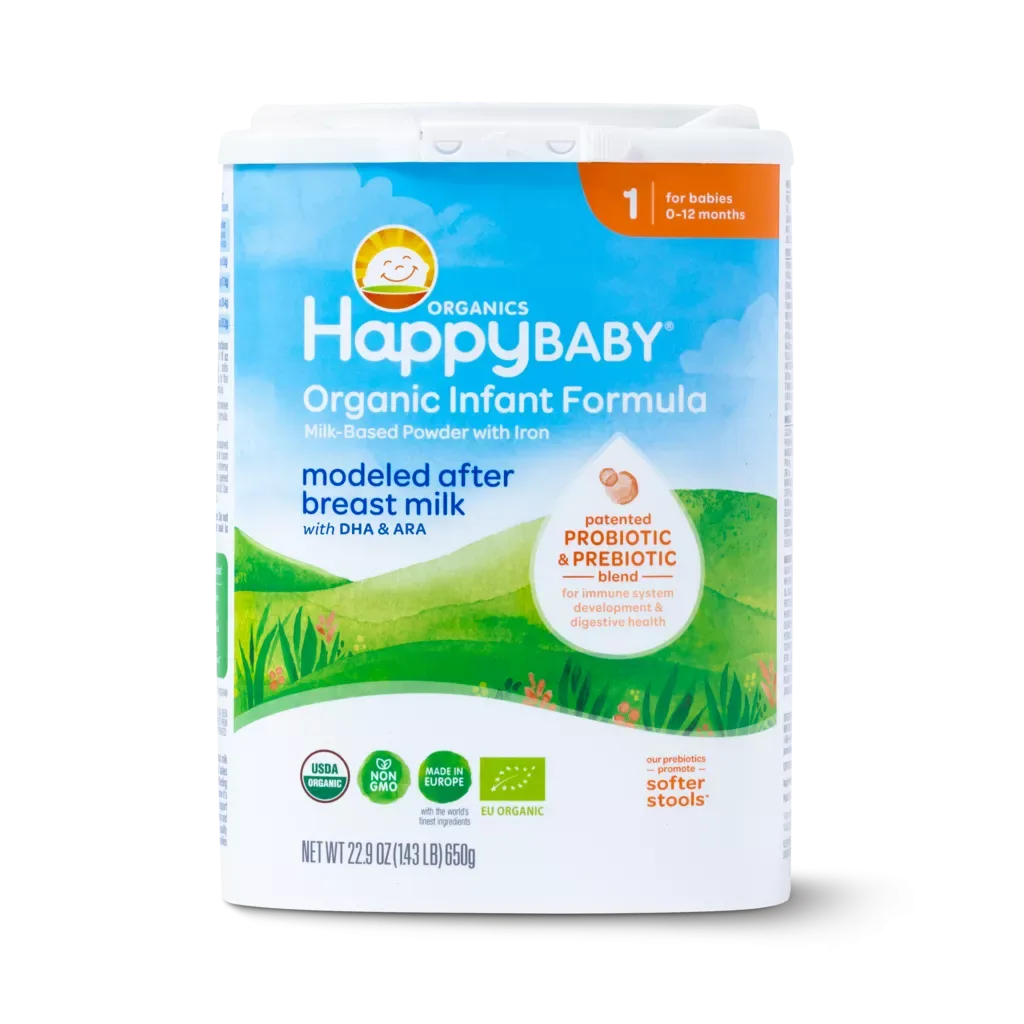
Happy Baby Organic delivers a 60% whey protein ratio (closest to early breast milk among the organic options reviewed) and includes both FOS and GOS prebiotics. The dual prebiotic content is a meaningful differentiator — broader prebiotic coverage means more comprehensive support for gut microbiome development.
Best for: Parents prioritizing gut health and a whey-dominant protein ratio. Consideration: 30% whey / 70% casein ratio in Earth's Best makes Happy Baby Stage 1 the stronger choice for most healthy infants in the organic category.
Best Organic (Budget): Earth's Best Organic Dairy Infant Formula
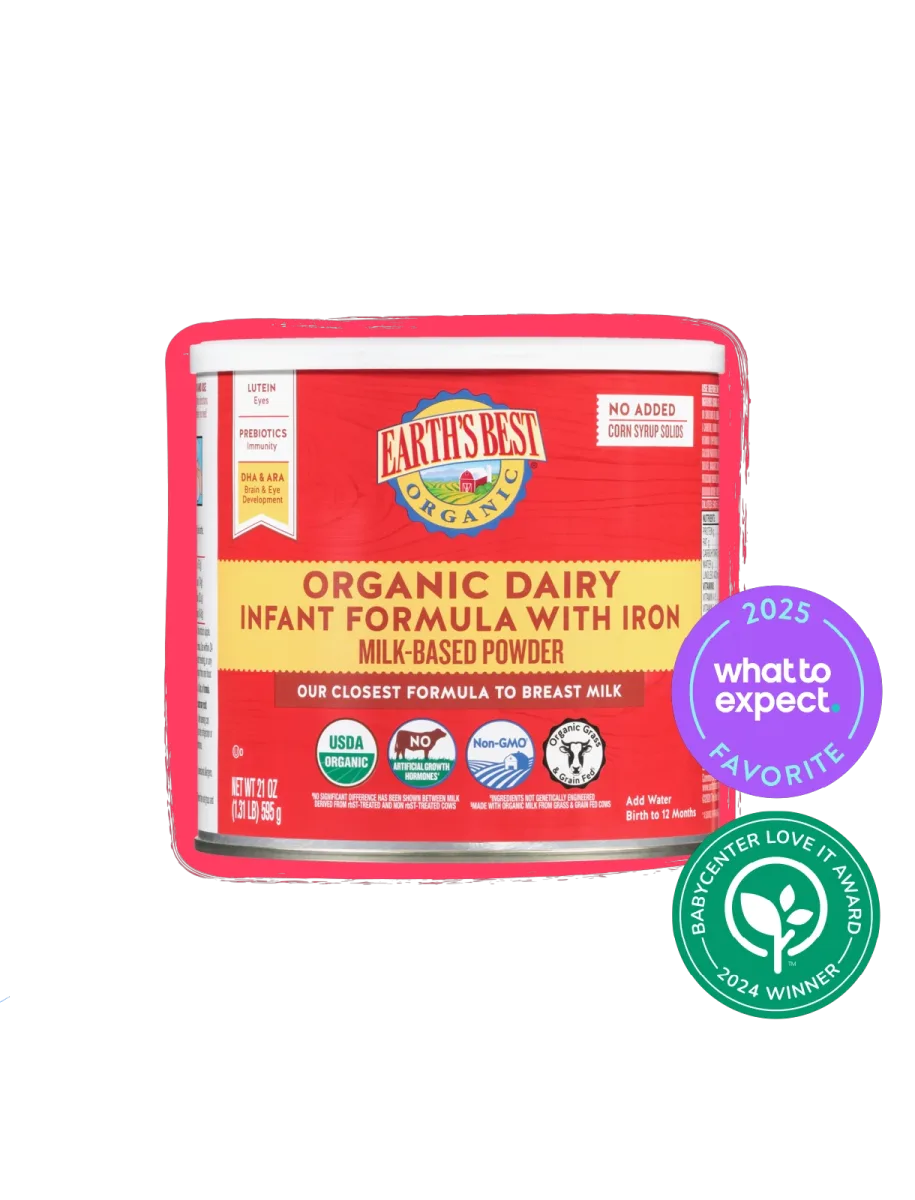
Earth's Best uses lactose as its sole carbohydrate and includes DHA, ARA, lutein, taurine, L-carnitine, nucleotides, and FOS. The 30% whey / 70% casein ratio is more casein-dominant, which some infants digest more slowly. It's widely available and less expensive than Bobbie.
Best for: Families who want an accessible, widely available organic option.
Best Hypoallergenic: Enfamil Nutramigen
For infants with confirmed cow's milk protein allergy, Enfamil Nutramigen is a physician-recommended extensively hydrolyzed formula. It's widely available through major retailers and insurance coverage is often available with a prescription.
Best for: Infants with diagnosed cow's milk protein allergy. Confirm diagnosis with your pediatrician before switching.
Best for Contaminant-Conscious Parents: Similac 360 Total Care Ready to Feed
Consumer Reports' contaminant testing results identified Similac 360 Total Care Ready to Feed as a safer option on lead and arsenic. Ready-to-feed also eliminates the water-mixing variable entirely. Higher cost per serving, but appropriate for newborns and parents prioritizing minimal contaminant exposure.
Best for: Newborns and parents for whom contaminant minimization is the primary concern.
Essential Baby Feeding Products in 2026: Bottles, Nipples, and Prep Tools
Formula selection is only one part of the feeding equation. Bottle and nipple quality significantly affects feeding comfort, gas, and colic symptoms. If you're also researching the best baby food brands for organic purees and age-appropriate nutrition, the same principles apply: ingredient transparency and independent testing matter more than marketing claims.
What to Look for in Baby Bottles
Anti-colic design is the primary functional differentiator. Bottles with venting systems (internal vents, collapsible inserts, or angled designs) reduce the air infants ingest during feeding, which reduces gas and fussiness. Top-rated options in this category include Dr. Brown's Original Narrow Neck (vent system reduces air in the feeding stream), Philips Avent Anti-Colic (external air vent on teat collar), and Comotomo Natural Feel (wide-neck, silicone body designed for breastfed babies transitioning to bottle).
Material matters: BPA-free plastic, borosilicate glass (heavier but durable and chemical-free), and silicone are the primary options. Glass bottles are favored by parents minimizing plastic exposure but weigh more and break if dropped.
Nipple flow rate must match your infant's age and feeding pace. Most manufacturers offer Stage 1 (newborn/slow flow), Stage 2 (3+ months), and faster flow options. Using a flow rate that's too fast can cause choking; too slow causes frustration. Your pediatrician can advise if your infant shows feeding difficulty.
Bottle Sterilization: What You Actually Need
For newborns and infants under 3 months, sterilization after every use is recommended by the CDC's infant formula preparation guidance. Options include:
- Electric steam sterilizers (Philips Avent, Dr. Brown's): fastest and most convenient; sterilize multiple bottles in ~10 minutes
- Microwave steam bags: portable and inexpensive but bottle compatibility varies
- Boiling in water for 5 minutes: effective, free, no equipment required
After 3 months in a household with clean water, thorough washing with hot soapy water or a dishwasher is generally sufficient. Discuss with your pediatrician if your infant is premature or immunocompromised.
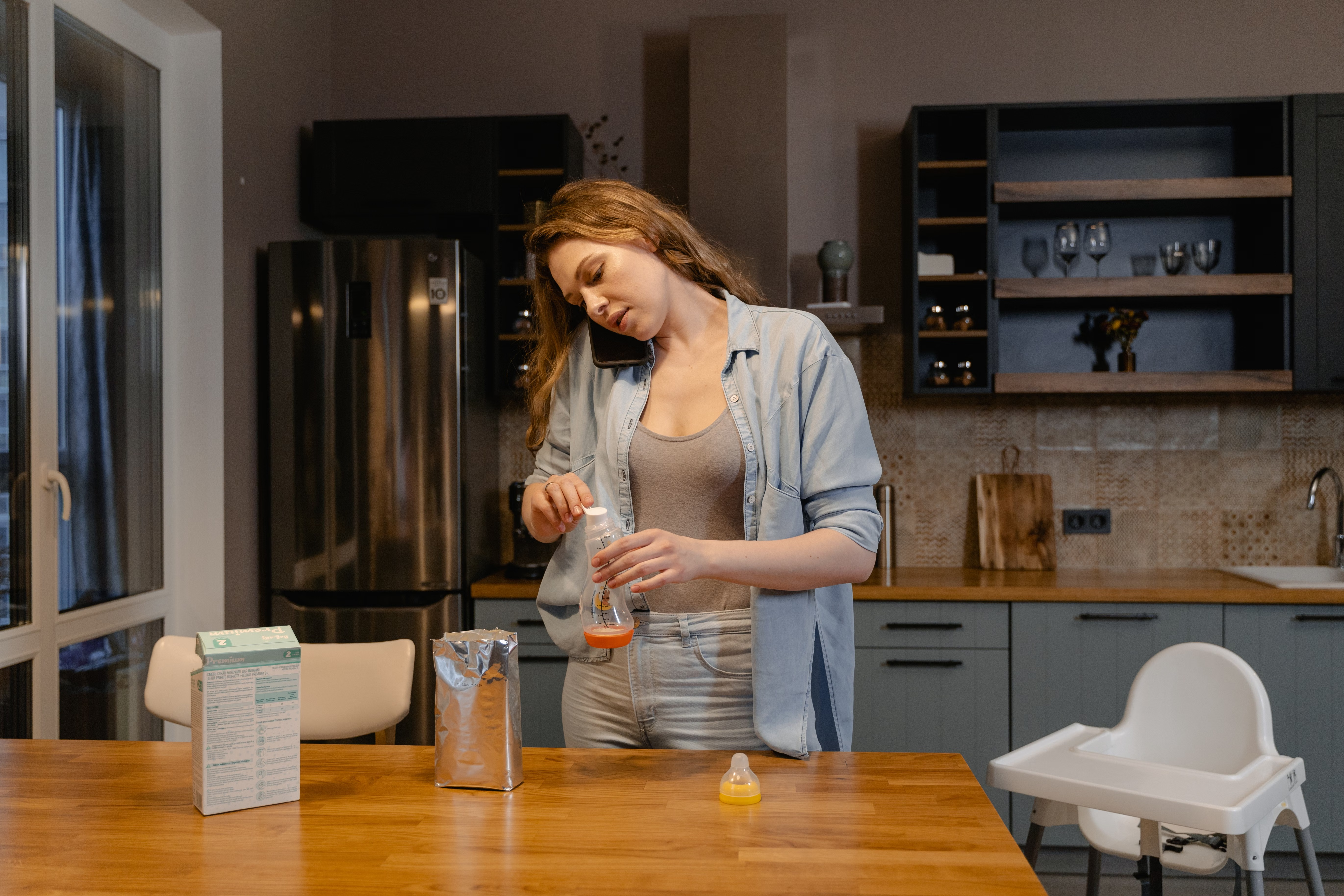
Formula Preparation: Getting It Right
Incorrect formula preparation is a more common source of infant feeding problems than most parents realize.
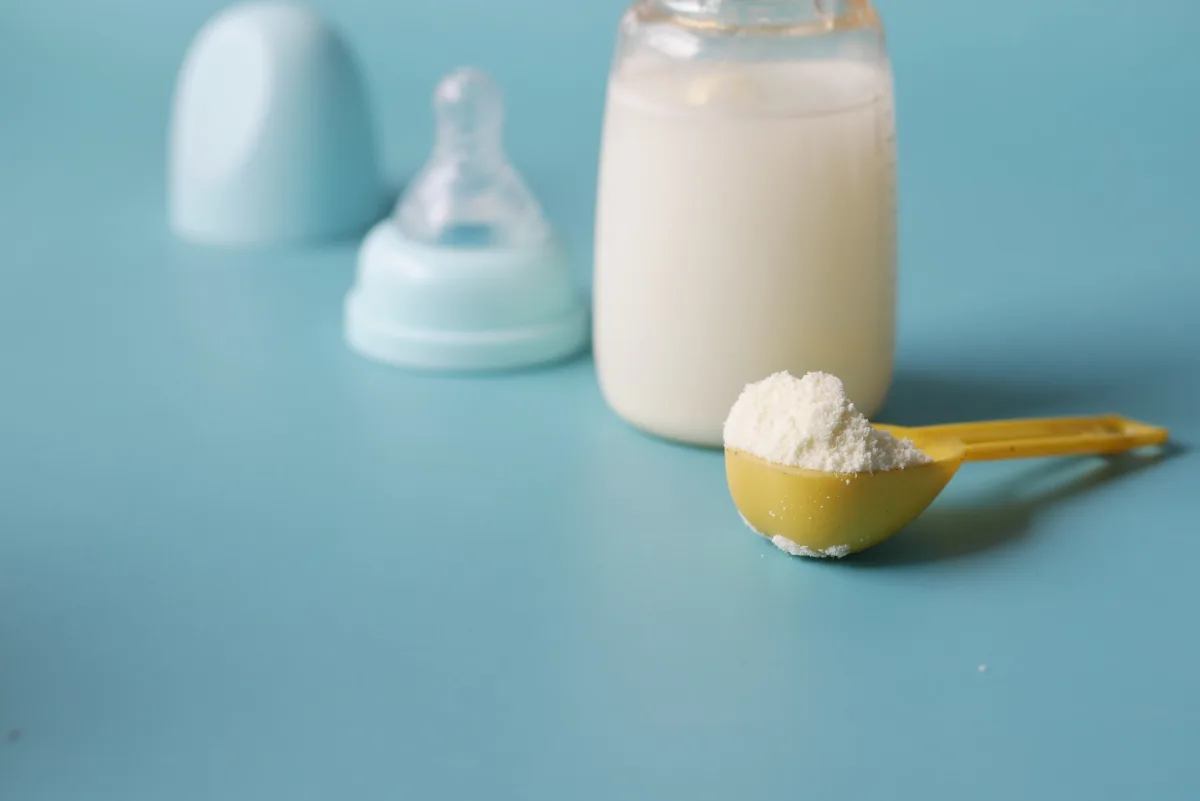
- Always follow the scoop-to-water ratio on the label exactly. Over-concentrated formula can strain infant kidneys; over-diluted formula can cause dangerous electrolyte imbalance.
- Use safe water. The CDC recommends using fluoride-free water or boiling tap water for infants under 4 months.
- Prepare only what you'll use. Prepared formula should be used within 1 hour at room temperature or 24 hours refrigerated.
- Formula prep machines (like the Baby Brezza) are popular for overnight convenience but require regular descaling and exact calibration. Several consumer complaints have cited dispensing errors when machines are not properly maintained.
How to Choose the Right Baby Formula: A Decision Framework
Here's a practical decision tree based on infant need — not marketing category:
Is your infant full-term and healthy with no known allergies? → Start with a cow's milk-based formula with lactose as the sole carbohydrate and a whey-dominant protein ratio. Up & Up Advantage Premium, Happy Baby Organic Stage 1, or Bobbie Organic are strong starting points based on ingredient profiles and/or contaminant testing.
Does your infant show signs of cow's milk protein allergy (blood in stool, significant eczema, severe vomiting)? → Talk to your pediatrician before switching. Extensively hydrolyzed formula (Enfamil Nutramigen, Similac Alimentum) requires diagnosis confirmation.
Is your infant premature or has special nutritional needs? → Premature infants often require specialized formulas with higher calorie density. This is a medical decision — follow NICU and pediatrician guidance.
Do you want to minimize pesticide exposure? → Choose organic — but prioritize ingredient quality (lactose-based, whey-dominant) over the organic label alone. Check Consumer Reports' contaminant testing results.
Is your budget a primary constraint? → Store brands at major retailers (Target's Up & Up, Costco's Kirkland Signature ProCare) have performed well in both ingredient analysis and contaminant testing. They're a rational, evidence-based choice.
Are you considering European formula? → Understand the trade-offs: EU ingredient standards in some respects are stricter (e.g., sucrose prohibition), but these formulas are not FDA-approved for the U.S. market, are imported through unofficial channels, and supply can be unpredictable. If you choose this route, source from established importers with clear supply chain documentation.
What Parents Should Know About the 2022 Formula Shortage — And How It Changed the Market
The 2022 Abbott Nutrition recall and subsequent U.S. formula shortage wasn't just a supply disruption — it was a trust disruption. Parents who had never thought critically about formula safety suddenly found themselves reading ingredient labels, researching manufacturing facilities, and questioning whether products they'd trusted for months were actually safe.
That disruption accelerated several meaningful market changes:
- Domestic manufacturing expansion. Multiple manufacturers have invested in additional U.S. production capacity to reduce single-source dependency.
- Imported formula diversification. The FDA temporarily relaxed import restrictions, which brought more European and international brands to U.S. consumers and permanently widened the consideration set.
- Independent contaminant testing focus. Consumer Reports' 2023–2026 formula testing programs were a direct response to consumer demand for third-party safety verification — demand that the shortage created.
- Store brand investment. Retailers including Target and Costco invested in qualifying their store-brand formulas against independent testing standards.
The shortage is over, but its legacy is a more fragmented market with more options, more scrutiny, and — for informed parents — more data to work with.
Baby Formula Frequently Asked Questions
How long can I use the same formula before switching? There's no requirement to switch formulas at specific ages. Most full-term infants use standard infant formula through 12 months, after which whole cow's milk becomes appropriate. Formula designed for 6–12 months ("Stage 2" or "follow-on" formula) is not nutritionally necessary if your infant is growing well on standard formula — the marketing around stage transitions often doesn't reflect a genuine nutritional need.
Is it safe to switch formulas? Yes, in most cases. Gradual transitions (mixing old and new formula for a few days) can reduce digestive adjustment issues, but many infants tolerate a direct switch without problems. If you're switching to hypoallergenic formula, confirm the clinical need with your pediatrician first.
What's the difference between infant formula and toddler formula? Toddler formula (marketed for ages 12–36 months) is not recommended by the American Academy of Pediatrics as a substitute for cow's milk in healthy toddlers. It's typically higher in sugar and lower in protein than infant formula, and nutritionally inferior to a balanced toddler diet with whole milk.
Is homemade baby formula safe? No. The FDA strongly advises against homemade baby formula. Precise nutrient balance is critical for infant development, and homemade recipes carry serious risks of nutritional deficiency, contamination, and incorrect electrolyte balance. There are no safe homemade alternatives to regulated commercial formula.
Does the type of water I use for formula matter? Yes. The CDC recommends using fluoride-free water or boiling tap water for infants under 4 months. Well water should always be tested and boiled. If your municipal water is fluoridated, discuss with your pediatrician whether to use filtered or bottled low-fluoride water for formula preparation.
Completing Your Baby's Setup
Formula and feeding gear are just one part of building a safe, functional nursery. If you're also evaluating baby monitors, you can find our analysis of the best baby monitors in 2026 — video, audio, and smart options, including picks that work well with feeding schedule tracking apps. For nursery furniture decisions — cribs, changing tables, and storage — our best nursery furniture sets guide for 2026 covers safety certifications and what matters most for long-term use.
When your infant grows into solid foods, our best baby food brands guide for 2026 covers organic purees, pouches, and age-appropriate options using the same evidence-based framework applied here.